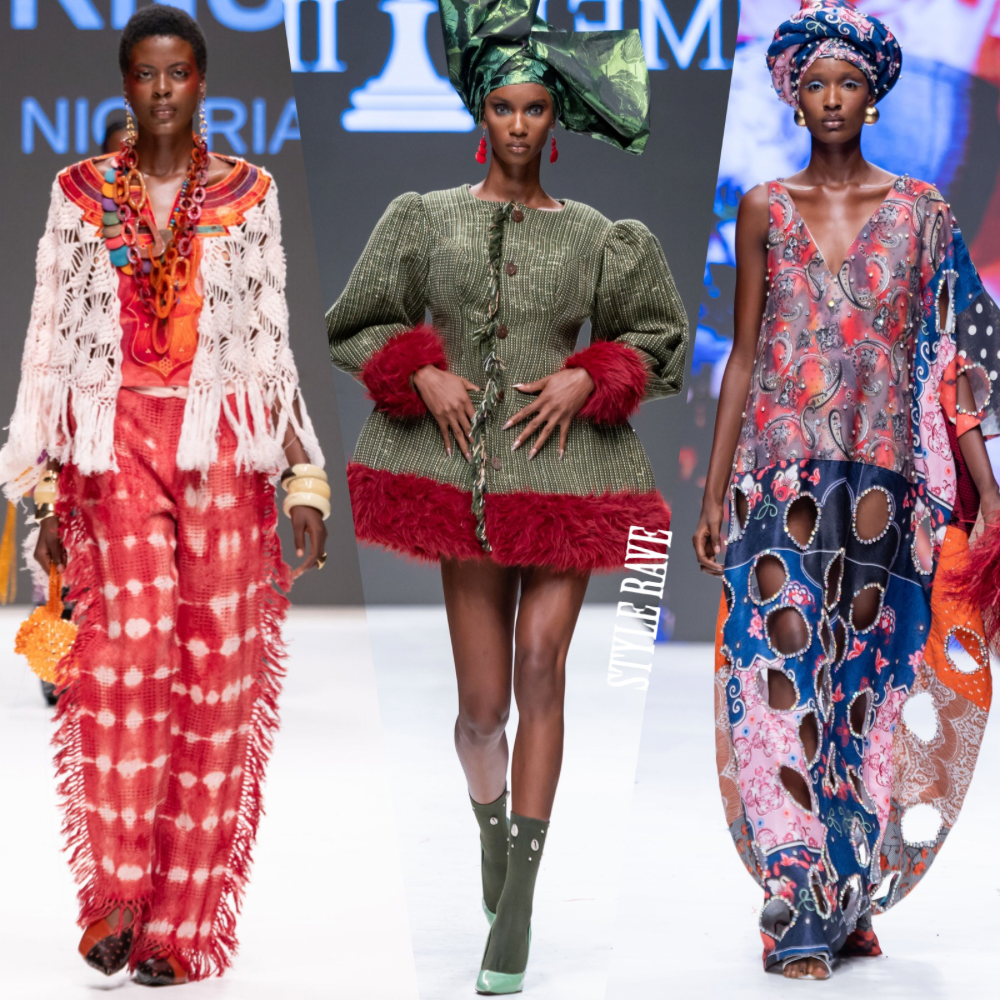


Lagos Fashion Week 2026 brought together some of the biggest voices in African fashion and business for four days of conversations on what it takes to build a stronger, more sustainable fashion industry. Besides the runway presentations, the 16th edition featured discussions on artisan welfare, business financing, overconsumption, intellectual property, brand partnerships and the challenges facing designers looking to expand into international markets.
Held under the theme “CRAFTED: Heritage. Innovation. Circular Futures.,“ the event featured industry figures including Omoyemi Akerele, Imran Amed, Aisha Ayensu and Adeju Thompson, alongside business leaders, investors and creative entrepreneurs. Its accompanying Fashion Business Series examined the realities of running fashion businesses, while showroom presentations connected designers with buyers and the press. The four-day on-site program eventually closed with a surprise runway appearance by Lagos State Governor Babajide Sanwo-Olu.
Day 1 Opens with Discussions on African Artisans and Fashion Business Sustainability

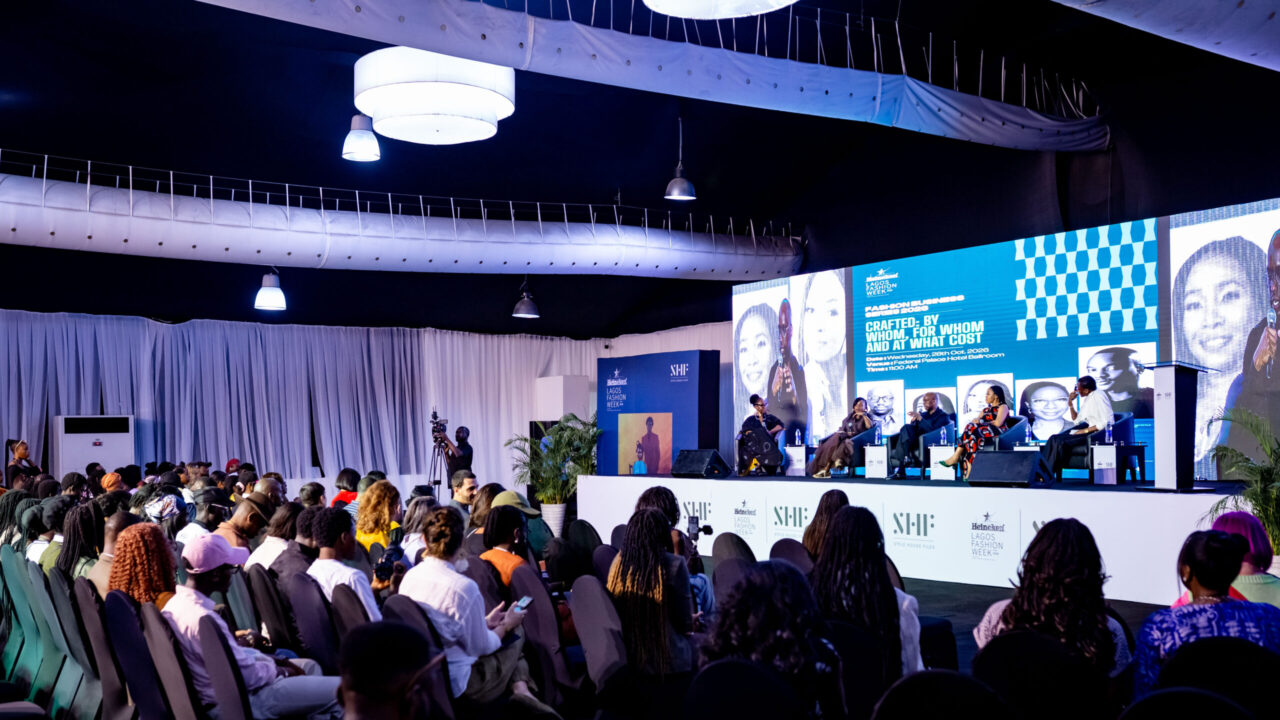
The first day began with a Fashion Business Series session titled “Crafted: By Whom, For Whom and at What Cost?” Moderated by media personality and digital strategist Ayo Lawal, the discussion featured Sunny Dolat, Ifebuche Madu, Aisha Ayensu and Dr. Christine Checinska, Senior Curator of Africa and Diaspora Textiles and Fashion at the V&A.
The panel examined how fashion brands could improve the visibility of textile artisans and establish more equitable, long-term relationships with the craftspeople whose skills underpin African fashion. Christie Brown founder Aisha Ayensu emphasized the importance of building sustainable relationships with artisans, pointing to their contribution to the success of African fashion businesses.

Other sessions addressed fashion business modelling, franchising and commercial sustainability. In “Beyond the Runway: Are You Making Money or Just Making Sales?,“ Akindele Phillips, Founder and Managing Partner at We Practice Africa, encouraged entrepreneurs to establish proper business processes, maintain accurate financial records and build companies that perform beyond their online presence.
The day’s final panel, “Capital That Fits: Unlocking Tailored Financing for Nigeria’s Fashion Industry,“ explored funding opportunities for creative businesses, with particular attention to financial accountability and the documentation required to support business growth.
Day 2 Brings Industry Leaders Together to Discuss Fashion’s Future

Day 2 opened with a fireside conversation between Lagos Fashion Week founder Omoyemi Akerele and Imran Amed, Founder and CEO of The Business of Fashion. The discussion explored curiosity as a tool for navigating change, with Amed reflecting on his transition from management consulting into fashion and the founding of his global fashion business platform.
The day’s programming also examined personal care, overconsumption and the commercial challenges facing African designers. A NIVEA-sponsored session, “Wearable Confidence: The Intersection of Skincare, Body Care and Personal Style,“ featured Kie Kie, Akin Faminu and Stan Nze. The speakers discussed how grooming, skincare and personal style contribute to individual confidence while challenging the perception that personal care is exclusively a feminine concern.

Another notable session, “Manifesto – The Culture of More: Breaking Up with Overconsumption,“ brought together industry voices to examine the global culture of overproduction and constant newness. The discussion challenged the tendency to frame overconsumption as primarily an African problem.
Meanwhile, “From Craft to Commerce: Protecting and Commercialising IP in Circular Fashion” addressed intellectual property rights, manufacturing limitations and the need for stronger contractual agreements to protect designers and their creative work.
Day 3 Sees Omoyemi Akerele Receive Leadership Award as Industry Discussions Continue

Lagos Fashion Week 2026 continued its industry-focused programming on Day 3 with discussions on sustainable fashion financing, creative partnerships and the influence of fashion tastemakers. One of the day’s major developments came when Lagos Fashion Week founder and CEO Omoyemi Akerele received the Excellence in Commercial and Creative Leadership Award from U.S. Consul General Brandon Hudspeth.
The day’s business sessions opened with “Off the Runway: Financing a Sustainable African Fashion Industry in a Changing Climate.“ Moderated by journalist Yinka Adegoke, the panel featured representatives from the International Finance Corporation, AFC Capital Partners and the sustainable fashion sector. Discussions centered on access to investment, capacity building and stronger regulatory and intellectual property frameworks to support African fashion businesses.
Another session, “Regenerative Collaboration: What If Fashion Was About More Than Just a Product?,“ brought together Nigerian designer Nkwo Onwuka and her longtime business partner Beatrice Oola to discuss their ONU shoe project and its connection to African circular fashion practices.

Meanwhile, “Redefining Fashion” examined the influence of creators and tastemakers on consumer behavior. Speakers Kiky Festus and Monica Awe-Etuk discussed authentic brand partnerships, personal style and the importance of maintaining audience trust, with Festus urging brands to give creators greater freedom in communicating with their communities.
Outside the panel sessions, Hudspeth hosted an exclusive gathering attended by designers, creative leaders and industry stakeholders. Akerele’s award recognized her leadership in building Lagos Fashion Week over the past 15 years. She has transformed it into a platform connecting Nigerian designers with international buyers, retailers, and markets.
Day 4 Focuses on Financing, Capacity, and Commercial Growth

The fourth day continued the business-focused programming with “Scaling with Invention: Capital, Capacity & Growth.“ Moderated by Abby Ogunpolu, Lagos Fashion Week’s Contributing Editor for BusinessDay, the session featured Abiola Adelana, Head of Tourism and Creative Art Business at Sterling Bank, and Adeju Thompson, Founder and Creative Director of Lagos Space Programme.
The conversation examined how fashion entrepreneurs could balance creative ambitions with commercial realities, covering funding options, production management, international wholesale logistics and strategic business relationships. Adelana also highlighted the importance of character, integrity and values in building businesses capable of achieving long-term sustainability.

The discussion continued with “From Buzz to Business: Turning Demand into Lasting Growth,“ moderated by Tejumola Maurice-Diya, Founder of The Fashioned Museum. Panelists included Rukky Ladoja of Dye Lab, Kikelola Ojewale of Dentons ACAS-LAW and Ijeoma Balogun of Redrick Public Relations.
The speakers examined operational resilience, marketing decisions and the role of brand collaborations in business expansion. Ladoja encouraged independent designers to prioritize customer data and measurable returns rather than follow generic marketing trends. Balogun, meanwhile, outlined how strategic partnerships could help brands either strengthen their existing market position or reach entirely new audiences.
Polo Avenue’s Olamoniso Nduka Discusses Luxury Retail Readiness

Retail partnerships also featured prominently in the final day’s programming through a fireside chat titled “Becoming Retail-Ready: Partnerships, Terms and Delivery.“
In conversation with Abby Ogunpolu, Olamoniso Nduka, Head of Commercial at Polo Avenue, discussed how luxury retailers connect international brands with African fashion labels across Nigeria and Dubai.
Nduka highlighted the requirements for designers looking to enter multi-brand luxury retail, including standardized line sheets, scalable production capacity and clearly defined wholesale margins. The discussion emphasized that creative talent alone is not enough to secure retail opportunities; designers must also understand delivery expectations and the commercial requirements of wholesale partnerships.
Alongside the panel sessions, the ALÁRA showroom continued to host collections from Orange Culture, Oshobor, Ajanéé and Maliko, giving buyers and members of the press an opportunity to engage with the designers’ latest work.
Babajide Sanwo-Olu Makes Surprise Runway Appearance as On-Site Shows Close

The on-site runway presentations concluded with an unexpected appearance by Lagos State Governor Babajide Sanwo-Olu, who made a surprise walk on the runway. His appearance provided a memorable closing moment as the four-day on-site program came to an end.
The 2026 edition was title-sponsored by Heineken, with NIVEA, MTN, Bank of Industry, Lord’s Gin, Molped, Nigerian Exchange Group, Africa Finance Corporation and Lush Hair among its key partners.
Lagos Fashion Week 2026 Takes Its Industry Conversations Beyond the Runway
With its combination of business discussions, showroom experiences and runway presentations, Lagos Fashion Week 2026 placed the development of African fashion businesses alongside the celebration of design and craftsmanship. Across the sessions, industry professionals returned to several interconnected priorities: better support for artisans, accessible financing, stronger intellectual property protection, sustainable production and more effective routes into international retail.
The conversations also reinforced the central idea behind this year’s “CRAFTED” theme: the future of African fashion depends not only on the creativity of its designers but also on the people, partnerships and business structures that allow the industry to grow.
Featured image: Lagos Fashion Week
—Read Also