

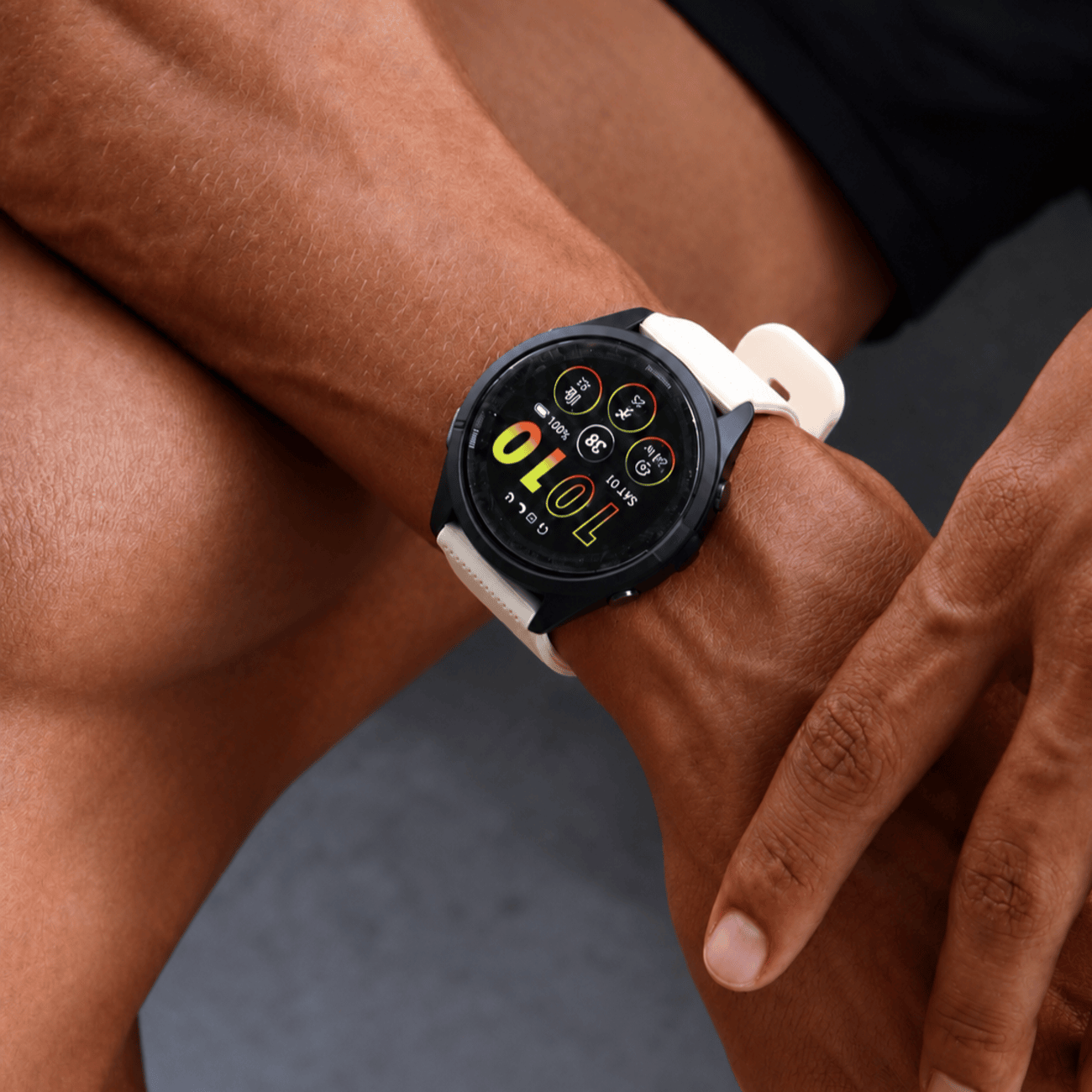

Most smartwatches are designed to keep you connected. The Garmin Forerunner 265S is designed to help you understand how you train, recover, and perform, which is why it stands out for Android users who want fitness to be more than a secondary feature. Its appeal isn’t one spectacular specification, but how its training, recovery, GPS, and health data work together.
That distinction becomes clearer after a few days of wearing it. The watch is constantly collecting information, but the useful part is what Garmin does with that information. Your sleep can influence your training recommendations, recent workouts can affect recovery guidance, and your performance during a run can be placed against a wider picture of your fitness. It feels less like a watch that records exercise and more like a training companion that happens to sit on your wrist.
The Smartwatch Is Really a Training Tool
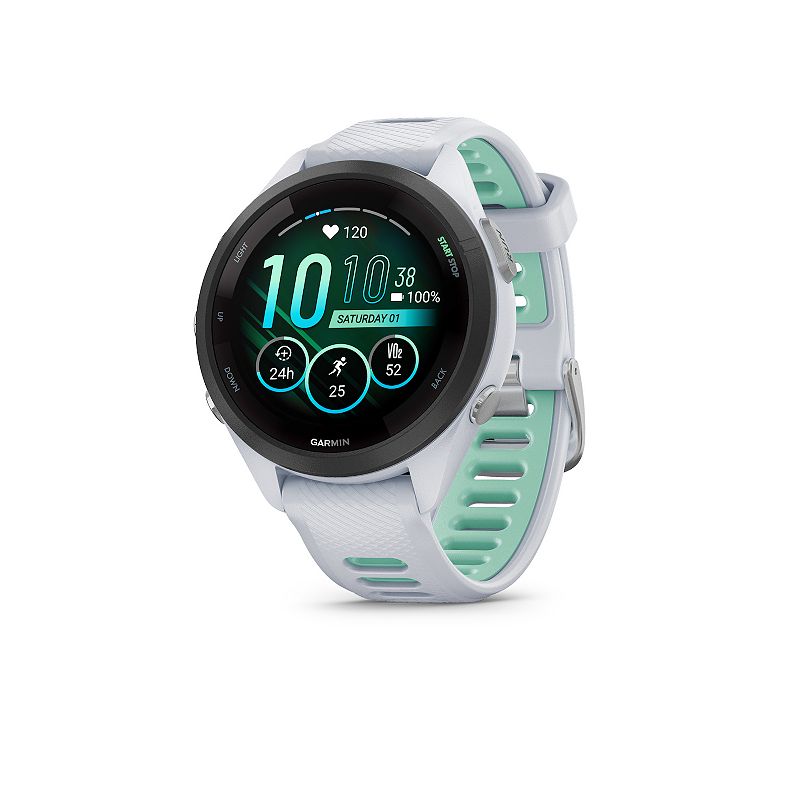
The Forerunner 265S has the hardware you’d expect from a modern smartwatch, including a 1.1-inch AMOLED display, touchscreen controls, smart notifications, music, Garmin Pay, and smartphone connectivity. But those features are not what define it.
The more interesting experience begins when you stop thinking about individual workouts. Training Readiness considers sleep, recovery, training load, and other data to help determine how prepared you are for a demanding session. Training Status looks at your recent activity and performance to give you a broader picture of your training. Daily Suggested Workouts then use that information to recommend workouts that can change as your performance and recovery change.
That creates a useful feedback loop: train, recover, assess, and adjust.
It Understands That Fitness Doesn’t End When the Run Does
One of the biggest differences between the Forerunner 265S and a basic fitness tracker is how much attention it gives to everything happening between workouts.
Morning Report brings sleep, HRV status, and other information together at the start of the day. Sleep Coach offers guidance around your sleep needs, while Body Battery provides an estimate of your available energy based on factors including sleep, stress, and activity. Nap Detection can account for daytime sleep, too.
None of these features magically tell you how your body feels. What they do is give you more information to consider before deciding whether today’s workout should be a hard interval session, an easy run, or a recovery day.
For people who are serious about consistency, that can be more valuable than another screen filled with numbers after every workout. The emphasis shifts from simply documenting what you have already done to using that information to make decisions about what comes next.
Running Is Where the 265S Gets Serious
Shop here
The Forerunner name makes its priorities obvious, and the 265S backs that up with a remarkably deep collection of running tools.
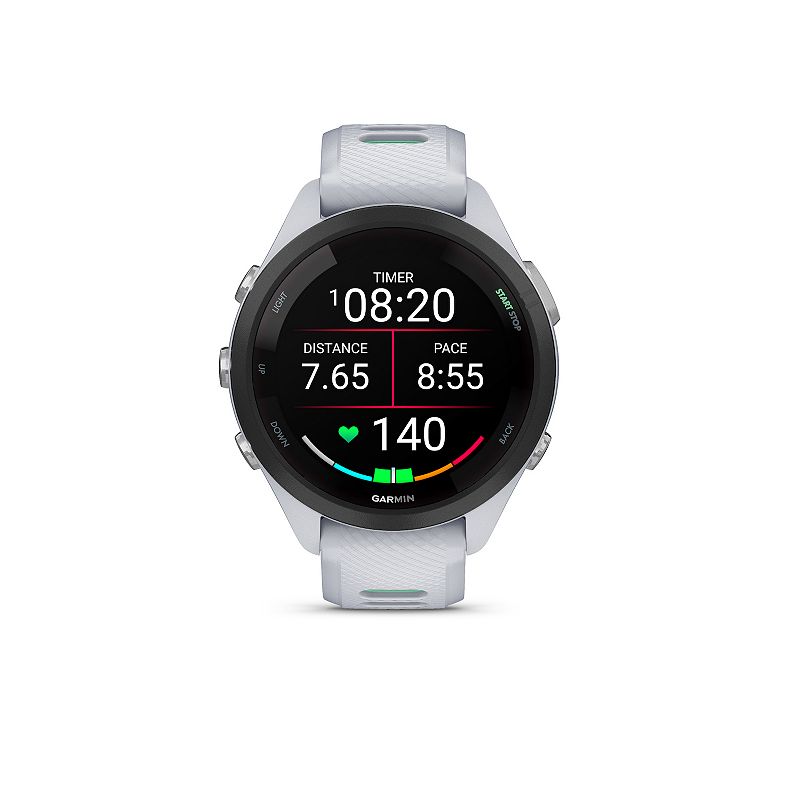
It tracks metrics including cadence, stride length, running power, Performance Condition, VO2 max, Training Effect, and training load. PacePro can help structure your pacing strategy around a particular distance or course, while Race Predictor provides estimated times for the 5K, 10K, half-marathon, and marathon.
Then there is GPS. SatIQ technology and multi-band GPS are designed to improve positioning accuracy while managing battery consumption, which becomes particularly useful when you’re running through environments where satellite signals can be more complicated.
The watch also supports track running, trail running, ultra running, cycling, swimming, triathlon, and other activities. So although running is its foundation, you don’t have to be a one-sport athlete to get value from it.
That broader activity support also makes the watch more practical for people whose training changes with the season or who simply prefer not to stay within one discipline.
The Smaller Case Doesn’t Mean Smaller Ambitions
The “S” in Forerunner 265S refers to its smaller physical format, not a stripped-down feature set. The watch measures 41.7mm across, weighs 39 grams, and fits wrists measuring roughly 115 to 178mm.
That lighter construction matters during sleep and long training sessions, when a bulky watch can become something you notice constantly. The 1.1-inch AMOLED display still gives the watch a colorful, modern interface, while physical buttons remain available alongside the touchscreen.
It is also rated to 5 ATM, so swimming and wet-weather training are well within its intended use.
The smaller case is particularly relevant for anyone who finds many performance-oriented watches too large for comfortable all-day wear. Here, Garmin manages to keep the training-focused feature set without making the physical design feel unnecessarily imposing.
Android Users Get More Than Notifications
The smartwatch-for-Android conversation often starts and ends with notifications. The Forerunner 265S goes further.
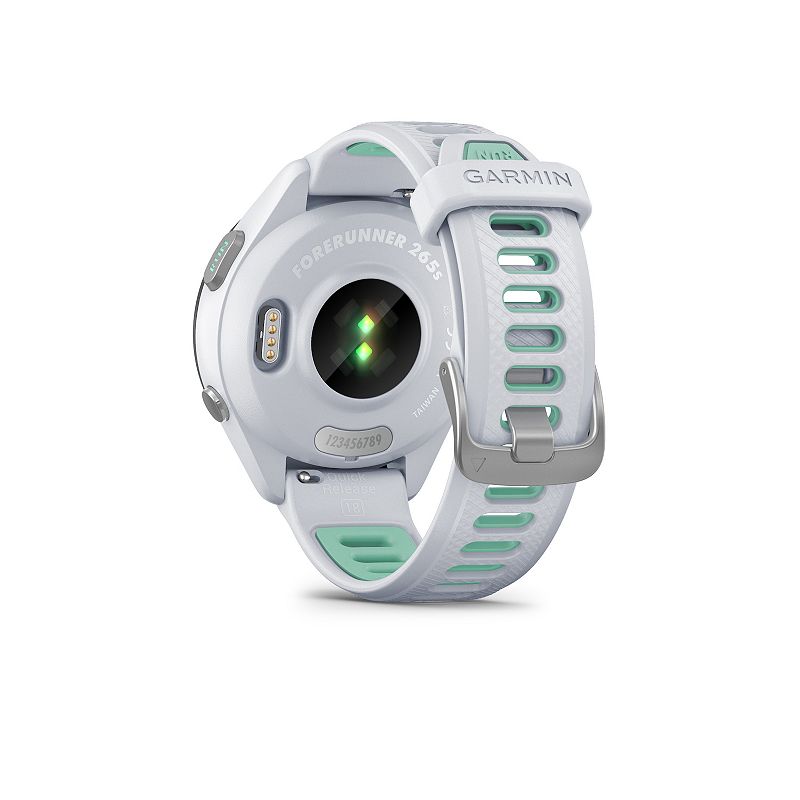
When paired with an Android phone, it can display notifications, allow text responses or call rejection with preset responses, control smartphone music, and work with Google Maps for turn-by-turn directions. Music can also be stored on the watch for phone-free listening through supported services, while Garmin Pay handles contactless payments where supported.
Those features make the 265S easier to live with when you’re not exercising without distracting from its primary purpose. You can leave your phone behind for parts of a workout while still retaining access to some of the conveniences that make a smartwatch useful in everyday life.
Battery Life Fits the Training Philosophy
A fitness watch becomes less useful when you constantly have to take it off to charge. Garmin rates the Forerunner 265S for up to 15 days in smartwatch mode, up to 24 hours in GPS-only mode, and up to 15 hours with all-systems GNSS and multi-band enabled.
That matters because the watch’s most useful insights depend on continuity. If it is tracking sleep overnight and training during the day, more of the data that informs features such as Training Readiness and Body Battery remains connected.
Longer battery life also reduces one of the less glamorous frustrations of wearable technology: remembering to charge another device at precisely the time you want to wear it. For a watch built around continuous tracking, that practicality matters.
The Case for the Forerunner 265S
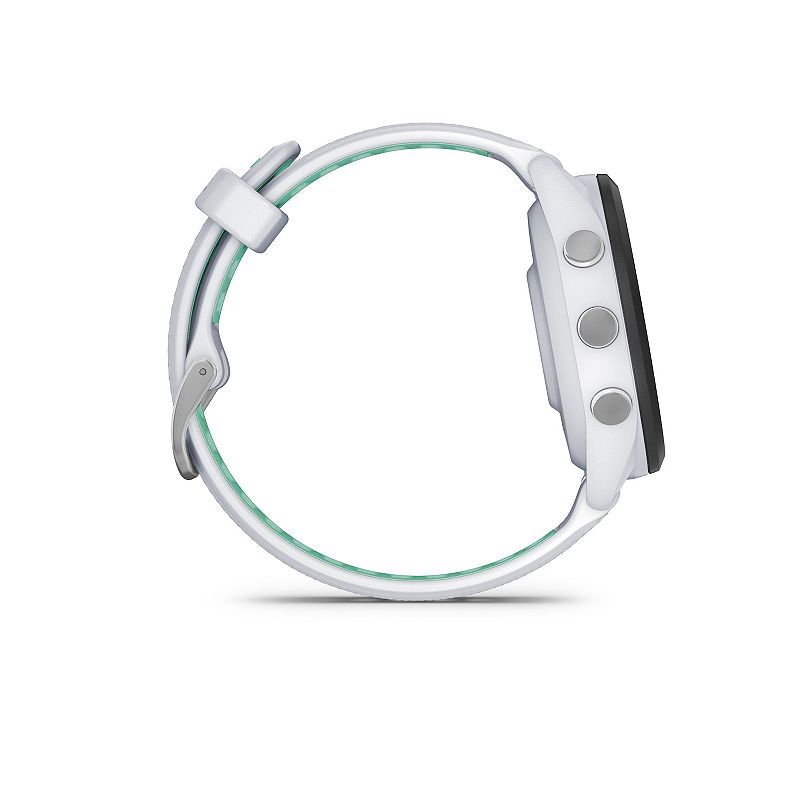
The Garmin Forerunner 265S makes sense because it does not confuse fitness with simply recording activity. Its real strength is the relationship between training data, recovery information, GPS performance, and everyday health tracking.
For an Android user who wants a smartwatch that takes fitness seriously without becoming impractical outside the gym or running route, the Garmin Forerunner 265S offers a particularly focused approach. It is a watch built around the question that matters after the novelty of counting steps wears off: What should I do with the information my body is giving me?
Rather than overwhelming the wearer with isolated statistics, its various features are designed to place those numbers into a broader training context. That makes the Forerunner 265S less about collecting data for its own sake and more about turning that data into a useful part of your routine.
Featured image: Garmin
—Read Also