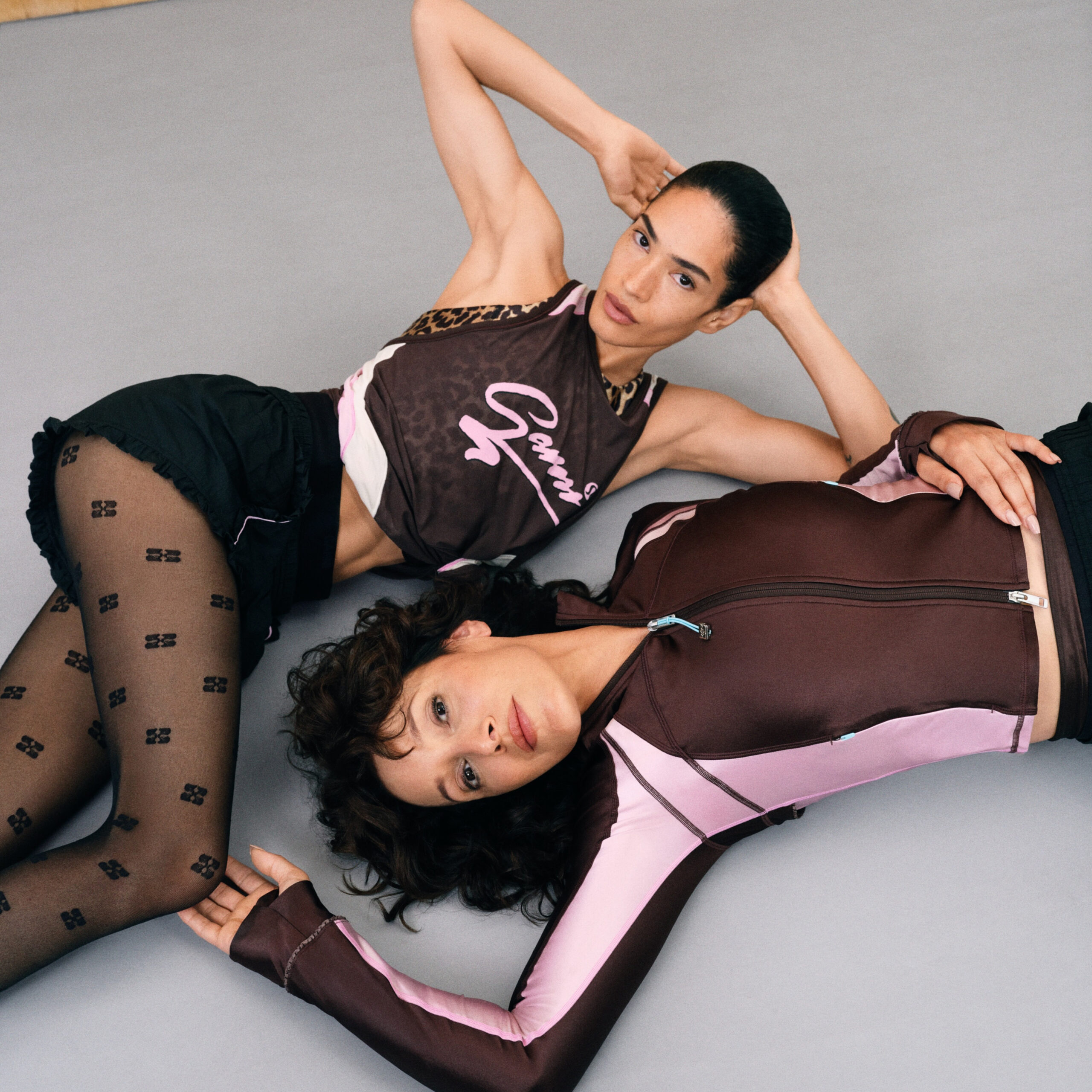



For men looking to elevate their personal style, rings are one of the simplest ways to add character, confidence, and individuality to an outfit. A well-chosen ring can sharpen tailoring, add an edge to casual layers, or bring subtle texture to an otherwise minimalist wardrobe.
In 2026, men’s ring styling is less about following rigid rules and more about understanding proportion, placement, materials, and balance. The goal isn’t to load up your hands with jewelry; it’s to make every piece look intentional. Whether you prefer a polished metal band, a rugged signet, or a sculptural design, the right ring should complement your hands, clothing, and overall proportions.
There’s no single formula that works for everyone. Wear one statement piece on its own, combine complementary metals, or build a considered stack. What matters is how each piece works with the others. The real secret is balance: your rings should complement your style, not compete with it.
Understanding Ring Anatomy: Finger by Finger
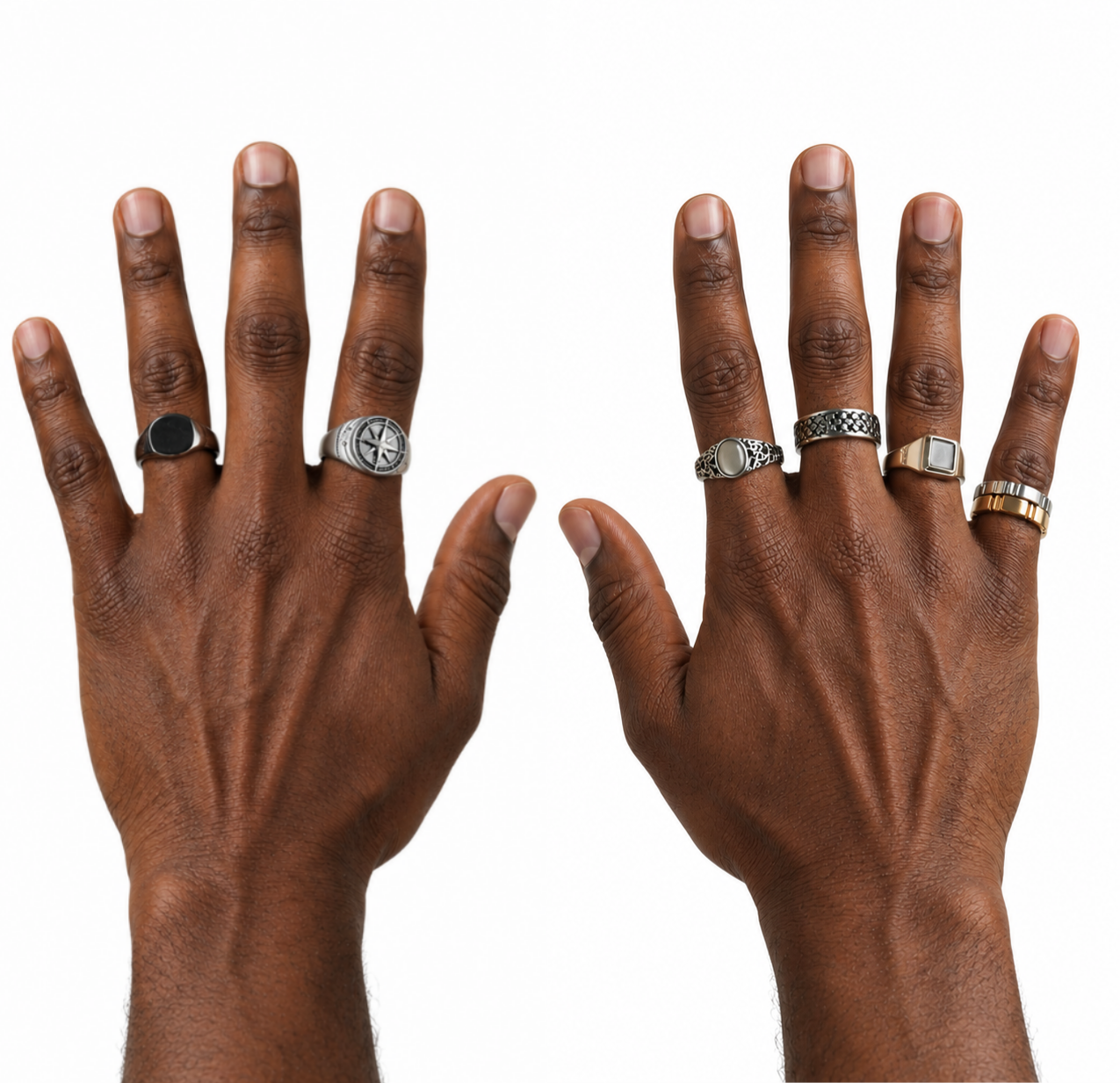
Where you wear a ring changes how it looks because each finger has its own visual weight and cultural associations. The same band that appears discreet on a pinky can look commanding on an index finger or surprisingly bold on a thumb. Choosing the right finger, therefore, isn’t simply about tradition; it’s about understanding proportion, visual weight, comfort, and the message you want your jewelry to convey.
Your hand creates a natural frame for accessories. Longer fingers can accommodate wider bands, while shorter fingers often benefit from cleaner proportions. However, there are no hard restrictions. The best approach is to understand the visual effect first, then decide whether you want to follow or break convention.
The Pinky Finger: Signet Territory
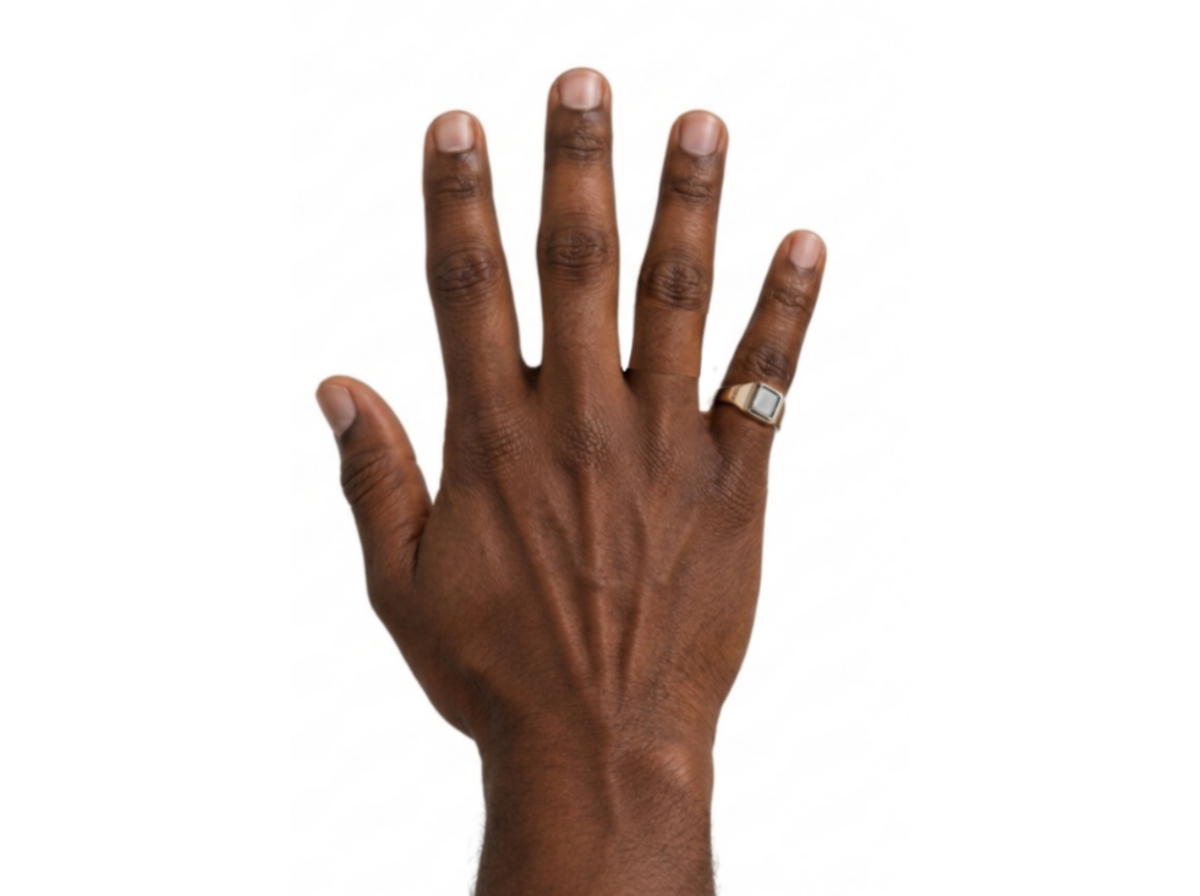
The pinky remains the classic home for signet rings. Historically associated with family crests, personal seals, and inherited jewelry, the signet still carries a sense of heritage without demanding attention. Because it sits toward the edge of the hand, it can also work comfortably alongside a watch or bracelet.
Since the pinky is the smallest finger, proportion matters especially here. A compact signet, slim band, or modest engraved face will usually suit it more naturally than an oversized design. If you want a refined introduction to men’s rings, the pinky is often the easiest place to begin.
A signet also offers plenty of room for personalization. Choose a traditional engraved face for a heritage-inspired look, or try a plain geometric version for something more contemporary.
The Ring Finger: Beyond the Wedding Band
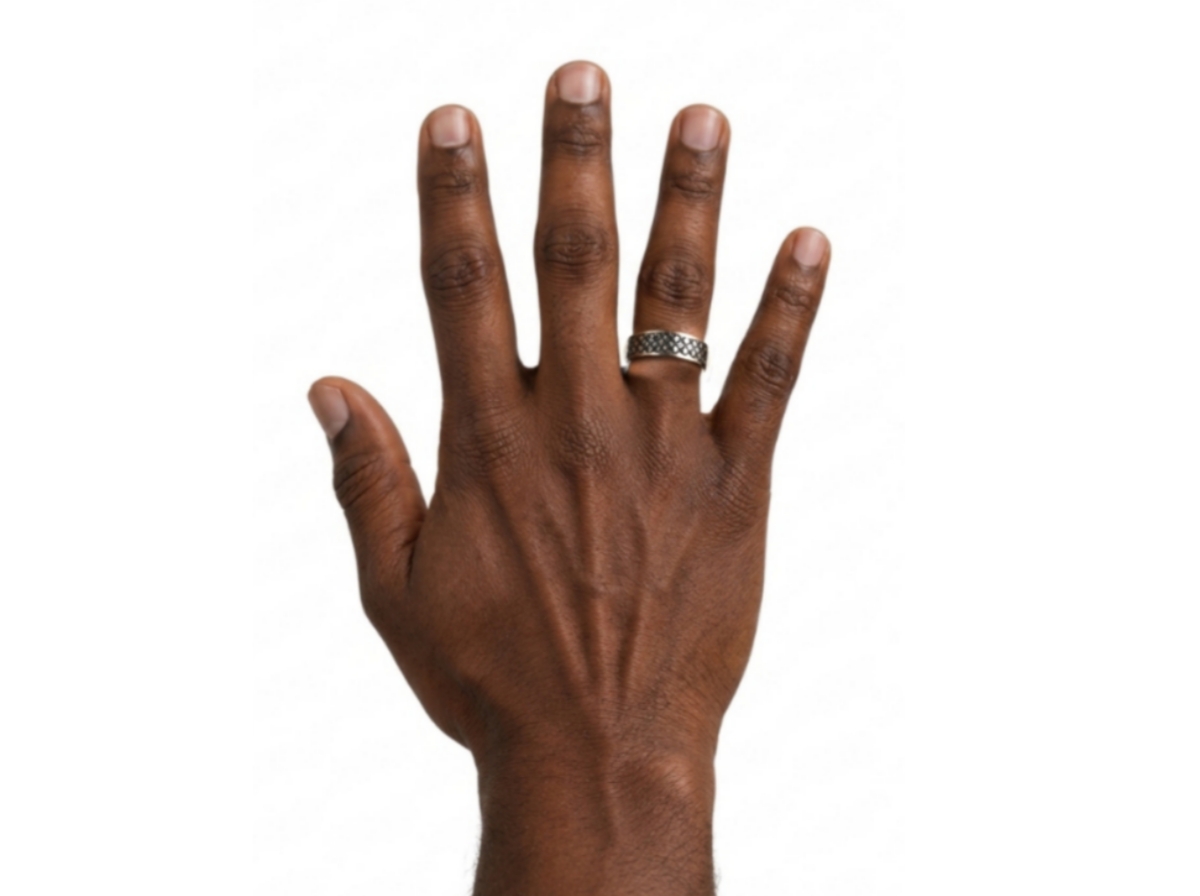
The ring finger is no longer reserved exclusively for wedding jewelry. Men increasingly wear textured bands, minimalist rings, stones, and sculptural designs on this finger. Still, it carries strong cultural associations, particularly in Western settings. Your choice of design should therefore make your intention reasonably clear.
A simple band can work particularly well here when its finish distinguishes it from a conventional wedding ring. Brushed metal, unusual proportions, engraving, or a darker finish can create that distinction. If you’re already wearing a wedding band, this finger can also become the natural foundation for a restrained two-ring combination.
The Middle and Index Fingers: Statement Space
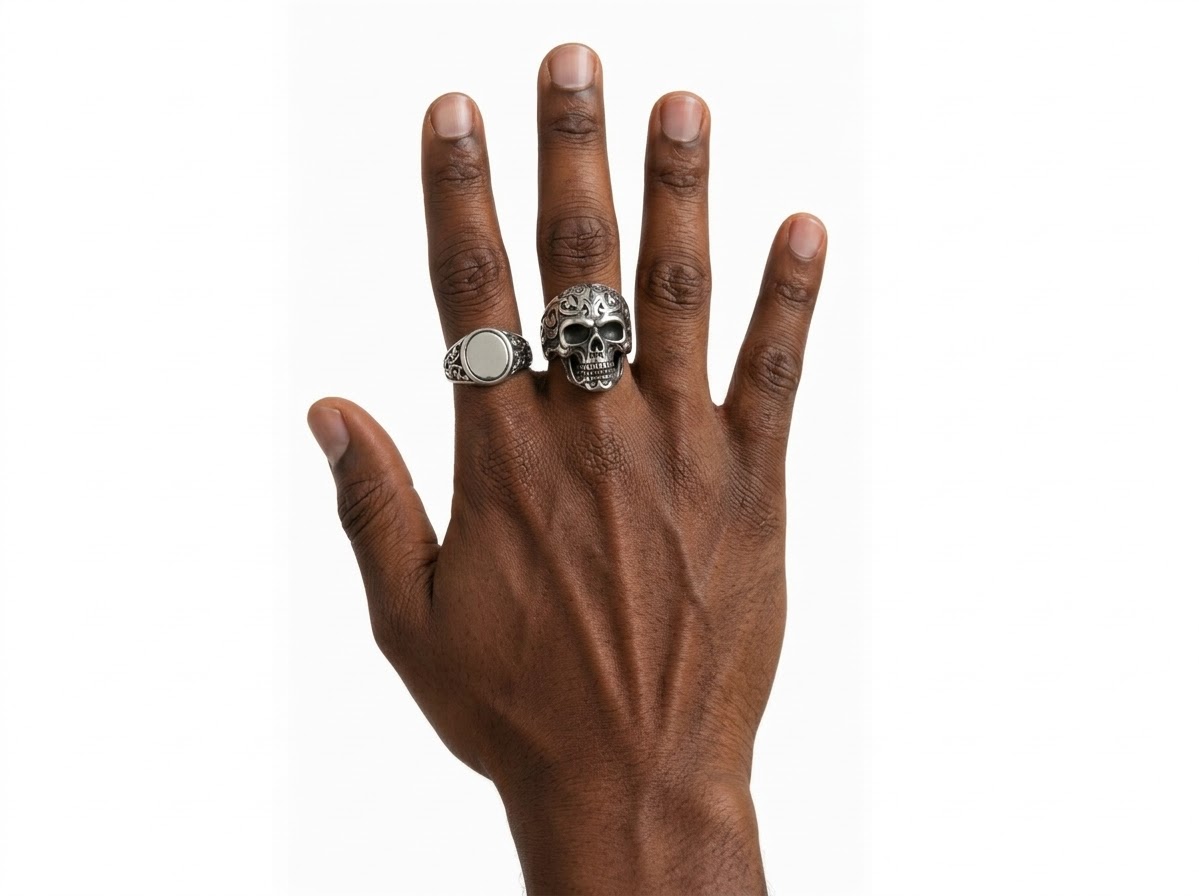
The middle finger offers the most visual real estate on the hand. As a result, it can accommodate wider bands, heavier metals, larger stones, and more sculptural shapes without immediately looking disproportionate. It’s an excellent position when you want one ring to become the focal point of your accessories.
The index finger has a slightly different character. Because it naturally comes into view during gestures, it attracts attention and gives a ring a more assertive presence. Signets, geometric bands, and substantial minimalist designs work particularly well here.
Bigger doesn’t automatically mean better. If a ring dominates the finger, let the rest of the hand stay quieter. One strong piece usually creates more impact than several competing designs.
The Thumb: Bold and Rare
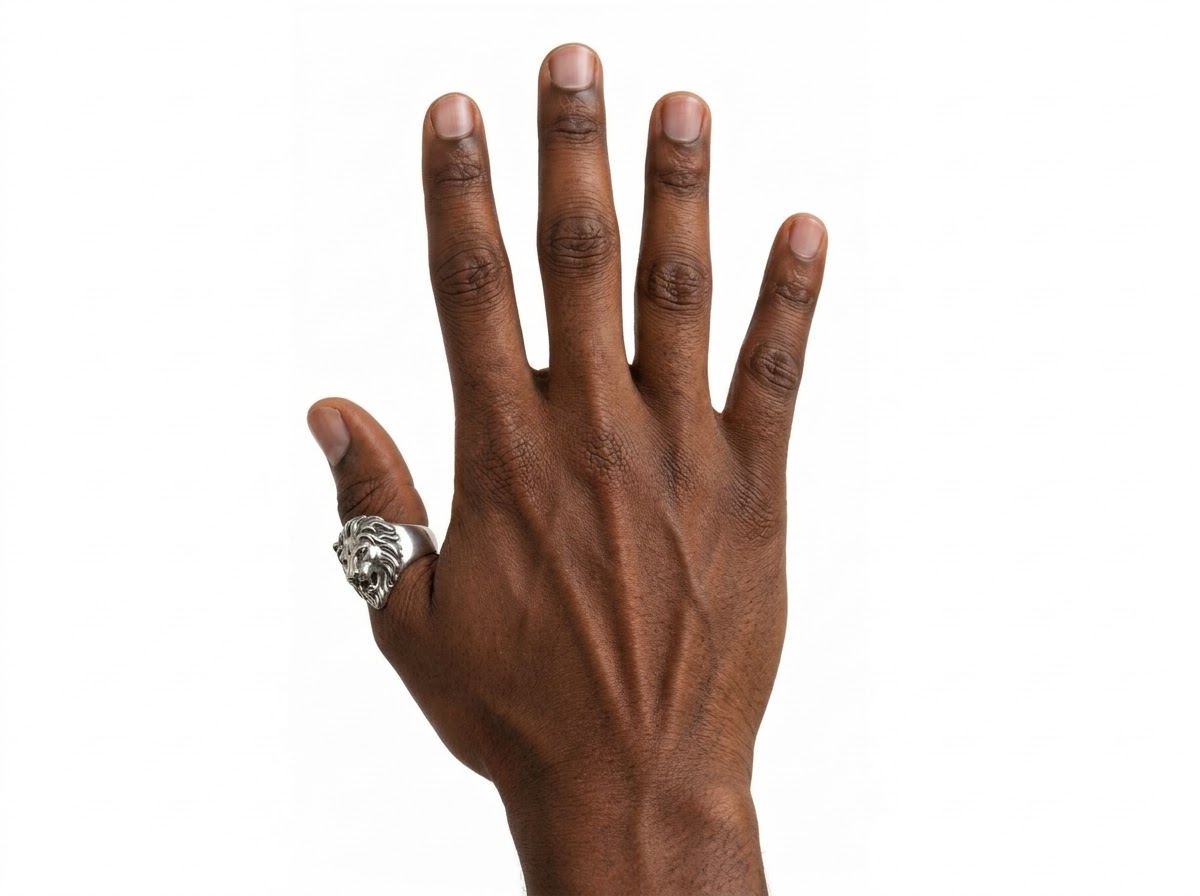
Thumb rings remain among the most distinctive choices available to men. Their position immediately sets them apart from conventional ring styling, giving even a simple metal band a stronger presence. They work especially well with relaxed tailoring, workwear, denim, and contemporary casual clothing.
Because the thumb is physically broader, it can accommodate thicker bands. Still, comfort should determine the final choice. A ring that restricts movement or catches against neighboring fingers will quickly become irritating, regardless of its appearance. Ultimately, the thumb works best as a deliberate statement, with the other fingers left relatively uncluttered.
Choosing the Right Ring Size
A well-fitting ring should become an almost effortless part of your routine. It should sit securely without squeezing your finger and allow a little movement without spinning uncontrollably. Getting that balance right is more important than choosing a particular finger or metal.
Your finger size can also change throughout the day. Heat, exercise, and fluid retention may cause your fingers to swell slightly, while cold temperatures can make them contract. Avoid judging your ideal size based on a single fitting under unusual conditions.
Whenever possible, have a jeweler measure your finger professionally. If you’re buying online, use the brand’s specific sizing guide rather than assuming every manufacturer follows identical measurements. Half sizes can also make a meaningful difference, especially with wider bands.
Band width matters, too. Wider rings generally fit more snugly because they cover more of the finger. Consequently, you may need a slightly different size for a chunky ring than for a thin band.
Choosing the Right Metal for Your Skin and Wardrobe
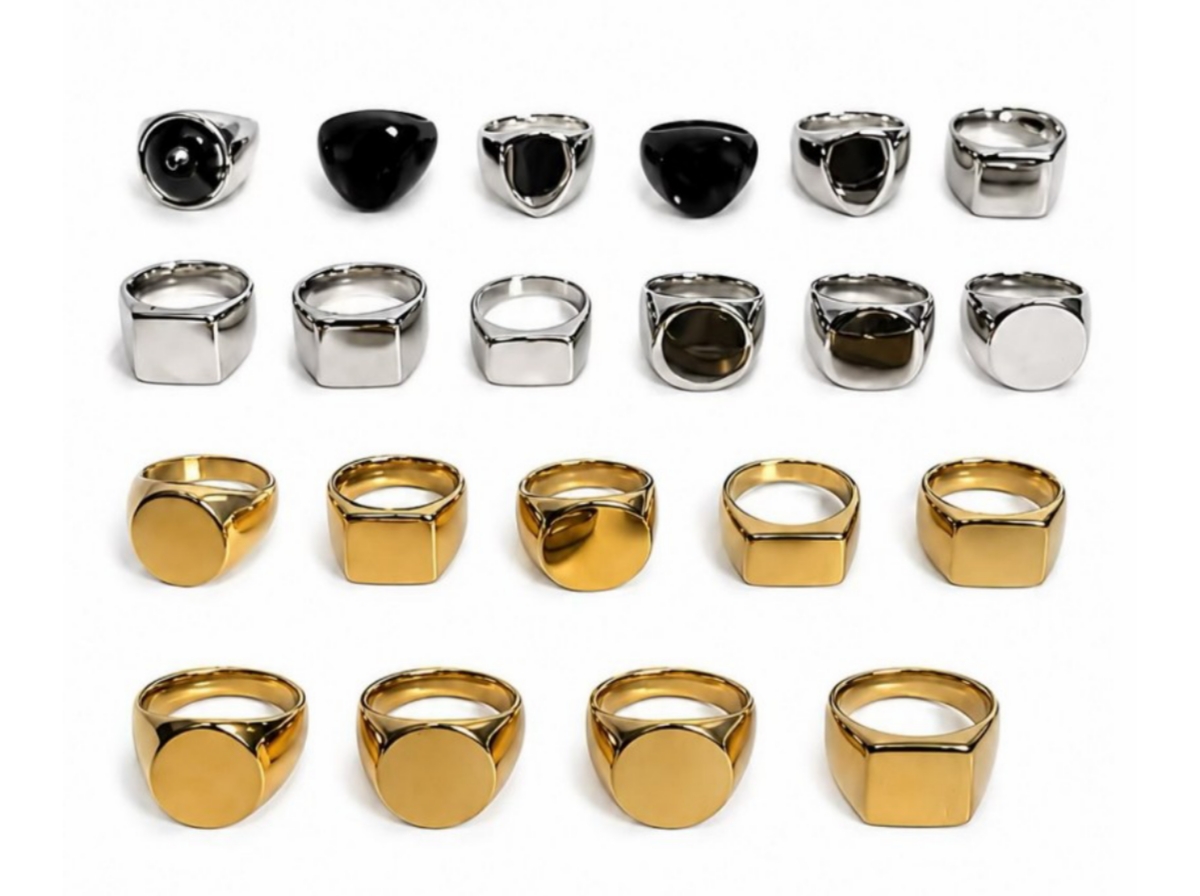
Metal choice can influence a ring’s presence as much as placement does. Warmer skin undertones often complement yellow gold, brass, and rose gold, while cooler undertones can pair naturally with silver, platinum, and white gold. These are guidelines rather than hard rules, however. The best metal is ultimately the one that works with your skin, wardrobe, and personal style.
Your wardrobe provides another useful reference point. If your watch, belt buckle, eyewear, and bracelet consistently feature silver-toned hardware, a silver ring can reinforce that visual language. Likewise, gold rings can create a cohesive look when that tone is repeated elsewhere in an outfit.
That doesn’t mean every metal needs to match perfectly. Mixed metals can look sophisticated when the combination is deliberate. The key is repetition: introduce the second metal more than once so it reads as a considered choice rather than an accident.
Finish matters just as much as color. Highly polished metal catches more light and tends to look dressier, while brushed, hammered, oxidized, or matte finishes create a quieter effect. Choose a finish according to the mood you want to convey and the clothes you plan to wear with it.
Matching Ring Size to Your Hand
Hand proportions should influence your ring choices, too. Larger hands can generally accommodate wider bands and larger faces, while smaller hands often benefit from slimmer profiles. Nevertheless, contrast can be effective when applied deliberately.
If your fingers are long and slender, extremely thin rings may disappear visually. A medium-width band can provide stronger definition without becoming bulky. Conversely, a heavy ring on a smaller hand can dominate the entire accessory arrangement.
Finger length also affects how stacked rings appear. Multiple wide bands can take up considerable visual space on shorter fingers. In that situation, varying the thickness of the rings can create breathing room and prevent the stack from looking like one solid block of metal.
How Many Rings Should a Man Wear?
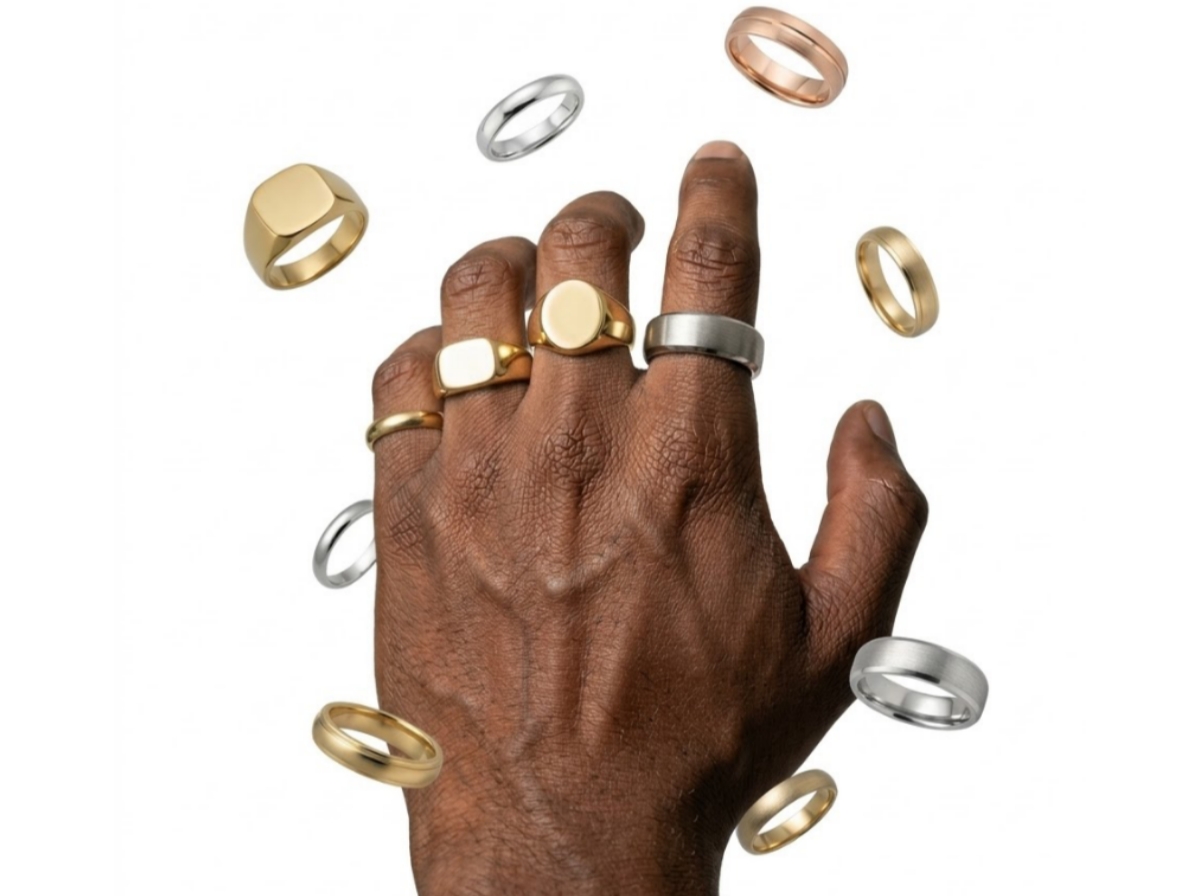
There is no fixed number of rings a man should wear. Personal style depends on proportion, personality, and context. However, restraint often produces the most sophisticated result. One ring can look quietly refined, while two can establish balance. Three or four can work, too, provided the metals, shapes, finishes, and proportions are intentionally connected.
The real question isn’t simply how many rings you can wear. It’s how many your hands, clothing, and overall aesthetic can accommodate comfortably. Four slim bands may look more understated than two oversized statement rings. Likewise, a carefully distributed combination can appear considered, while several unrelated pieces can quickly make an outfit look cluttered.
One Ring: The Refined Starting Point
For men new to wearing jewelry, one ring is often the easiest place to begin. A signet ring, wedding band, or understated metal band can add personality without changing the character of an outfit. Moreover, wearing a single piece allows you to understand how different metals, widths, and finishes work with your hands before building a larger collection.
Choose one position that feels natural, then consider whether adding another ring genuinely improves the overall composition.
Two Rings: The Sweet Spot
Two rings often provide the best balance between simplicity and personality. Rather than placing both pieces randomly, think about how they distribute visual weight across your hands. Wearing one ring on each hand can create symmetry, while stacking two on the same hand produces a more deliberate, fashion-forward effect.
For everyday dressing, this combination works particularly well because it adds character without demanding attention. A simple silver band paired with a textured signet, for example, can complement denim, tailoring, knitwear, or a casual shirt. The key is to keep at least one element visually quiet so the combination doesn’t compete with your clothing.
Three Rings: More Personality, More Responsibility
Three rings give you greater freedom, but they also require more attention to proportion. At this point, each piece becomes part of a larger visual composition rather than an isolated accessory. Matching every ring isn’t necessary, but the pieces should share at least one connecting feature, such as metal tone, texture, shape, or overall scale.
Distribution becomes especially important when wearing three rings. Try placing two on one hand and one on the other instead of concentrating everything in one area. However, if your clothing already features bold patterns, hardware, or accessories, fewer rings may produce a cleaner result.
Four Rings: When More Actually Works
Four rings can look excellent, particularly when the jewelry follows a clear visual language. The trick is to avoid four competing statement pieces. Instead, combine different levels of visual intensity: perhaps one substantial signet, two slimmer bands, and a textured accent ring.
At this level, proportion matters more than matching. Leave enough negative space for each ring to remain visually distinct. If every finger carries a large, ornate piece, the result can quickly shift from intentional styling to visual noise.
What About Five or More Rings?
Wearing five or more rings is possible, but it becomes a deliberate fashion statement rather than an effortless everyday choice. This approach can work particularly well with minimalist clothing because the jewelry becomes the central styling feature.
For most men, however, more rings don’t automatically create more style. Ask yourself whether every piece contributes something different. If removing one ring makes the overall combination cleaner, leave it off.
Matching Rings to Your Personal Style

Choosing the right rings requires an understanding of how different materials and designs interact with your wardrobe. Rings can act as visual anchors, so they should complement your everyday clothing rather than compete with it. By aligning your choices with your overall aesthetic, you can create a cohesive, deliberate appearance.
To build a balanced collection, first identify the style archetypes that best reflect your wardrobe. Each aesthetic calls for different textures, metals, and design proportions to achieve visual harmony. Matching your jewelry to your lifestyle also helps ensure that your pieces remain comfortable, practical, and authentic. Here are four useful style profiles to guide your choices.
The Minimalist Professional
If your wardrobe consists of tailored suits, crisp button-downs, and clean silhouettes, your jewelry should reflect that same restraint. For this classic look, stick to sleek, low-profile bands that sit comfortably during office work and won’t get in the way when you’re reaching into pockets or handling documents. Subtle textures, such as brushed, matte, or satin finishes, offer a modern touch without reflecting too much light. Classic precious metals also work particularly well in professional environments.
- The Classic Band: A 4mm to 6mm polished platinum or white gold band offers timeless sophistication.
- The Matte Signet: A slim, flush-set signet ring in brushed yellow gold adds subtle heritage appeal.
When styling these pieces, less is usually more.
Keep your arrangement to one ring per hand for a sharp, uncluttered appearance. Matching the ring’s metal to your wristwatch casing or belt buckle can also create a streamlined look, although it isn’t essential. The goal is to establish a consistent visual thread rather than achieve perfect uniformity.
The Rugged Americana
Men who favor raw denim, leather boots, and utilitarian workwear need jewelry that can withstand daily wear. Industrial metals and weathered textures work especially well in this category because they can develop character as they accumulate scratches and signs of wear. Instead of delicate finishes, look for hammered surfaces, oxidized silver, and deep engravings. These design elements complement the rugged texture of heavy fabrics such as canvas and twill.
- The Hammered Band: A thick tantalum or distressed sterling silver band pairs naturally with heritage workwear and boots.
- The Motif Signet: An oxidized silver ring featuring geometric engravings or outdoor motifs can anchor casual outfits.
Because this style is inherently casual, you can experiment with heavier rings and multiple pieces. For instance, pairing a wide thumb band with an index-finger signet can balance the visual weight of a leather jacket. However, high-shine finishes may be less harmonious with weathered fabrics, making darker, muted tones a natural choice.
The Streetwear Enthusiast
Streetwear thrives on bold statements, graphic elements, and contemporary influences. If your closet is filled with oversized hoodies, graphic tees, and statement sneakers, your rings can command more attention. This aesthetic gives you greater freedom to break traditional styling conventions by mixing metals, stacking bands, and wearing oversized stones. Look for chunkier silhouettes, distinctive design details, and high-contrast materials such as black ceramic or carbon fiber.
- The Stacking Set: A combination of slim, blackened steel bands worn together on a single finger creates a layered, contemporary look.
- The Bold Statement Signet: A heavy, oversized silver ring featuring a flat black onyx stone or abstract design can become the focal point of an outfit.
To pull off this look successfully, distribute visual weight across both hands. You can wear two or three rings on one hand while leaving a single bold piece on the other to create asymmetrical balance. Don’t be afraid to combine silver and gold, either. Intentional contrast can reinforce the eclectic high-low aesthetic that defines modern streetwear.
The Creative Bohemian
For the artist, musician, or free spirit, jewelry can become a form of personal storytelling. If you wear relaxed linen shirts, vintage layers, and patterned fabrics, your rings can echo that artistic sensibility. Look for asymmetrical shapes, raw gemstone accents, and intricate filigree work that suggest a handmade origin. Turquoise, tiger’s eye, and raw quartz can introduce natural color and texture.
- The Raw Mineral Ring: A sterling silver setting featuring an uncut turquoise or labradorite stone brings natural texture and color to the look.
- The Sculptural Band: A vine-textured or feather-motif wrap ring can echo organic shapes found in nature.
The bohemian aesthetic allows for a more-is-more approach, making it well suited to multi-finger styling. You can wear rings on your index, middle, and pinky fingers simultaneously, provided the pieces work together visually. To keep the arrangement cohesive, consider choosing designs with a similar antique or oxidized patina. Ultimately, this approach transforms your hands into a canvas for expressing your travels, interests, and creative taste.
Common Mistakes Men Make When Wearing Rings
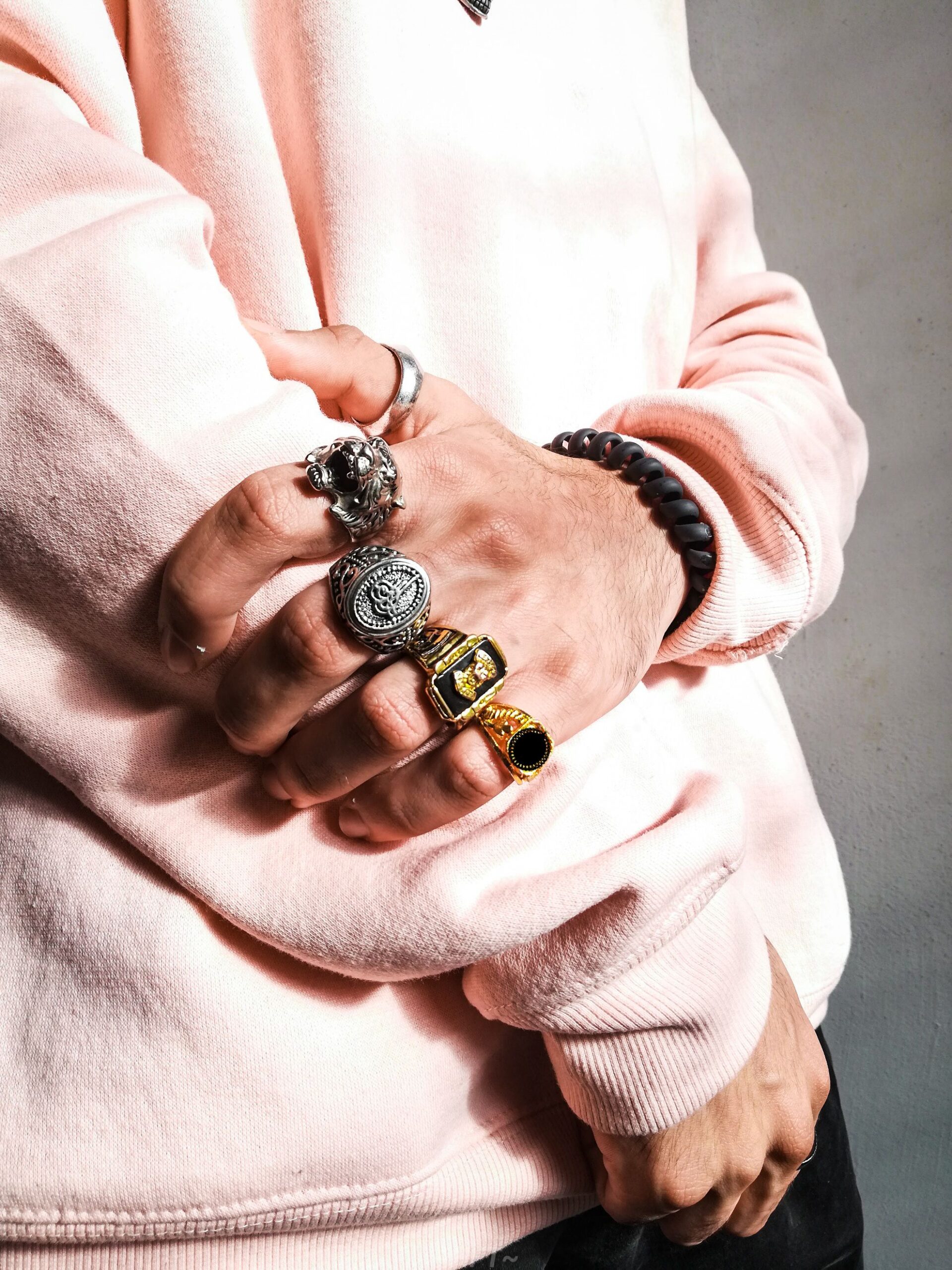
Wearing multiple rings can elevate your style, but a few subtle missteps can undermine the entire look. Many men dive into accessories without considering proportions, metal choices, or context, resulting in a cluttered or unpolished outfit. Understanding these common pitfalls will help you wear your jewelry with greater confidence and ease.
Improving your style requires a careful balance between personal expression and classic dressing principles. Here are five common ring-wearing mistakes and how to avoid them.
#1. Ignoring Hand and Finger Proportions
Choosing a ring that doesn’t suit your hand structure can throw off your overall visual balance. For instance, large, chunky rings can overwhelm smaller hands, while very thin bands may disappear on larger fingers. The goal is to choose pieces that complement your natural proportions rather than fight against them.
How to Fix It
Use your hand dimensions as a starting point when choosing ring size and width. If you have large hands, you can generally wear wider bands and more prominent signet rings. Conversely, men with smaller hands may find that slim, understated bands create a cleaner look. That said, deliberate contrast can also work when the proportions are carefully considered.
#2. Clashing Metals Carelessly Across Accessories
Mixing metals without an intentional plan can make an outfit look disorganized. For example, wearing a gold ring alongside a silver watch and a copper belt buckle may introduce too many competing tones. The problem isn’t necessarily the combination itself; it’s the lack of visual connection between the pieces.
How to Fix It
Aim for some consistency across your accessories. If your wedding band or favorite ring is white gold, a silver-toned watch and belt buckle can create a cohesive foundation. However, you can deliberately mix metals when the combination is well considered. Repeating each metal elsewhere in the outfit—or choosing a piece that already combines multiple tones—makes the contrast look intentional rather than accidental.
#3. Overloading a Single Hand with Too Many Rings
Wearing too many rings on one hand can create excessive visual weight. When several thick bands are clustered on adjacent fingers, the hand can look crowded and lose its natural sense of proportion. The result may look forced rather than effortless.
How to Fix It
Distribute your jewelry across both hands when possible to create better balance. If you wear two rings on one hand, consider wearing just one on the other. You can also leave some space between rings or vary their widths to prevent the overall arrangement from looking too dense. These aren’t strict rules, but they’re useful starting points when building a stack.
#4. Disregarding the Dress Code and Context
Wearing flashy or highly casual rings in a formal environment can send the wrong message. For example, a skull ring or bulky silicone band may look out of place during a conservative corporate meeting. Matching your jewelry to the occasion is an important part of dressing well.
How to Fix It
Adapt your jewelry to the formality of your environment. In corporate settings, classic pieces such as a simple wedding band or subtle matte-finish signet are usually safer choices. Save experimental, avant-garde, or highly textured rings for casual outings, creative environments, and social events where they can make a stronger impression.
#5. Prioritizing Aesthetics Over Everyday Comfort
Many men choose rings based solely on appearance without considering everyday comfort and wearability. Heavy rings with sharp edges can pinch the skin, interfere with routine movements, or scratch surfaces while you work. If a ring causes discomfort, you’re unlikely to keep wearing it.
How to Fix It
Always consider a ring’s fit, weight, and edge profile before purchasing it. If possible, try it on and wear it for a while before making a decision. Look for interior comfort-fit bands, which typically have slightly rounded inner edges that slide more smoothly over the knuckle. A comfortable ring is one you’ll actually want to wear every day.
Featured image: moha sour/Pexels
—Read also