



Hair oils have become a familiar part of scalp-care routines, and rosemary has attracted particular attention among people looking to address thinning hair. Long used as a culinary and medicinal herb, rosemary has gained popularity in hair care through essential oils, scalp treatments, and even homemade tea rinses. But does rosemary help with hair growth, or has its reputation moved faster than the science? The evidence is promising but limited, with research focusing mainly on rosemary oil and gradual, pattern-related hair loss.
Rosemary contains plant compounds with antioxidant and anti-inflammatory properties that may contribute to scalp health. It can be incorporated into a hair-care routine in several ways, including diluted rosemary essential oil, rosemary-infused oils, and water-based rinses made from the herb. However, these preparations are not interchangeable, and the available clinical evidence does not support making the same claims about all of them.
What Makes Rosemary Appealing for Hair Growth?
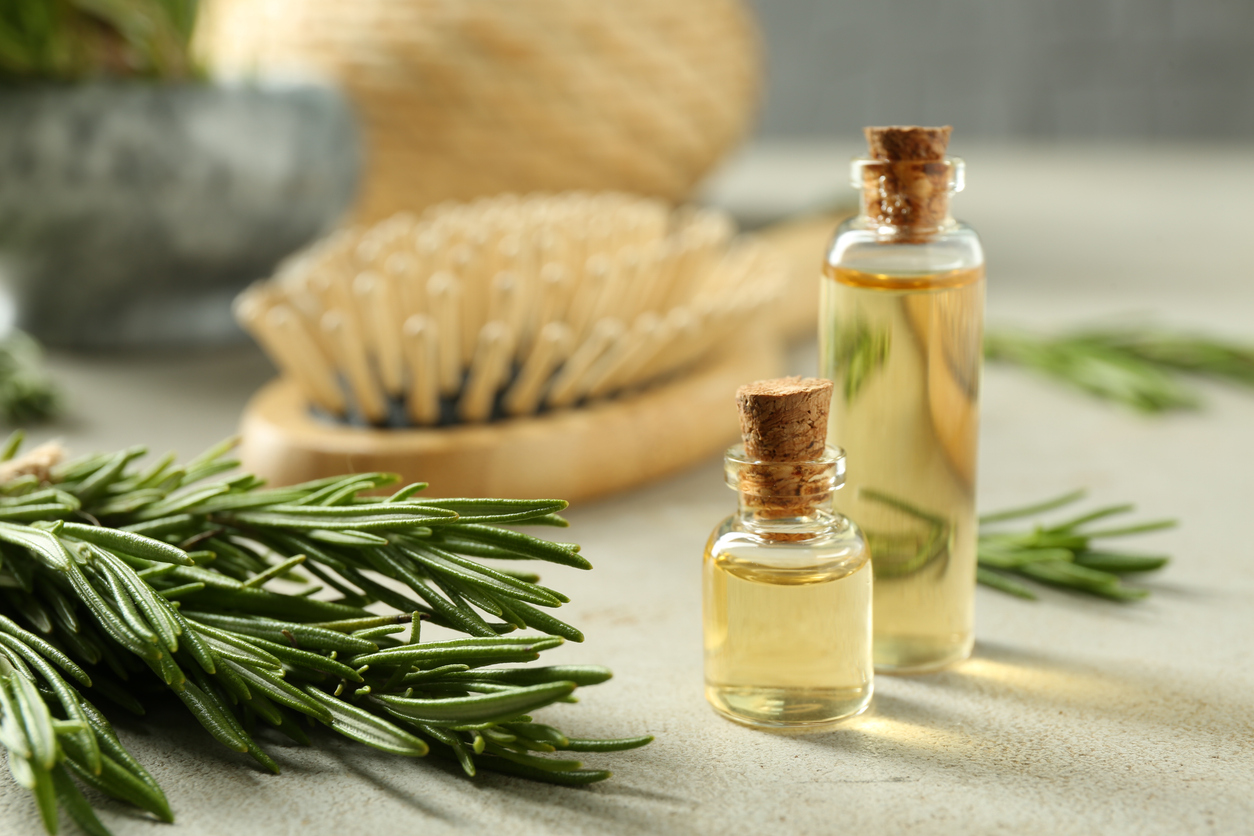
Rosemary contains compounds that researchers have investigated for their antioxidant and anti-inflammatory activity. Its potential influence on blood flow around the scalp has also been proposed as one possible explanation for its effects on hair follicles, although the precise mechanisms remain unclear.
Much of the interest in rosemary comes from the idea that a familiar herb may offer a botanical addition to an everyday hair-care routine. However, promising properties do not automatically translate into proven hair growth. It is important to distinguish preliminary research from established treatment, particularly when addressing persistent thinning or hair loss.
Does Rosemary Work as Well as Minoxidil for Hair Growth?
The comparison with minoxidil is one reason rosemary oil has attracted so much attention. In a small randomized trial, participants using rosemary oil and those using 2% minoxidil both showed an increase in hair count after six months, with no statistically significant difference between the two groups.
That finding does not prove that rosemary is as effective as minoxidil. The study involved only 100 participants, and the evidence remains too limited to establish rosemary oil as an equivalent alternative to an established treatment. The findings are better described as encouraging than conclusive.
It is also important to note that the study examined rosemary oil, not rosemary tea or a homemade herbal rinse. Rosemary-water rinses may be a popular addition to hair-care routines, but comparable clinical evidence showing that they produce the same effects on hair growth is lacking.
Shop editor’s edit
How Can You Use Rosemary in a Hair Routine?
Rosemary can be incorporated into hair care in several forms. Rosemary essential oil should be diluted before application to the scalp because concentrated essential oils may cause irritation. Rosemary-infused carrier oils offer another option, while cooled rosemary tea is sometimes used as a scalp or hair rinse.
These preparations should not be treated as clinically equivalent. A tea rinse is a water-based preparation, whereas essential oil contains a much more concentrated form of the plant’s aromatic compounds. Their composition and potential effects can therefore differ. If you use rosemary on your scalp, start cautiously and discontinue use if you experience burning, redness, itching, or other signs of irritation.
Patience is also important. Hair growth takes time, so dramatic changes should not be expected within a few weeks. A rosemary rinse or oil may be incorporated into a broader scalp-care routine, but it should not replace appropriate medical treatment when significant or persistent hair loss is present.
Shop editor’s selection
Can Rosemary Treat Every Type of Hair Loss?
Rosemary is not a universal solution for hair loss. Thinning and shedding can result from hereditary hair loss, certain illnesses, medications, nutritional deficiencies, scalp conditions, and hairstyles that repeatedly place tension on the hair. A botanical hair-care routine cannot address every underlying cause.
If shedding is sudden, severe, or patchy, or occurs alongside itching, pain, scaling, or other changes to the scalp, identifying the cause should take priority. A dermatologist can assess the pattern of hair loss, investigate possible contributing factors, and recommend treatment based on the underlying cause.
So, Does Rosemary Help With Hair Growth?

The fairest answer is that it may help, but the evidence is still developing. Rosemary oil has produced encouraging findings in a small clinical trial, making it an interesting ingredient to explore in scalp care. However, current research does not support presenting rosemary as a guaranteed hair-growth solution or a proven replacement for established treatments.
For people experiencing gradual thinning, rosemary may be considered a complementary addition to a hair-care routine, provided it is used appropriately and does not delay necessary treatment. Whether you choose a diluted oil, an infused preparation, or a traditional tea rinse, it is important to keep expectations realistic. Good scalp care can contribute to a healthy hair-care routine, but identifying the cause of persistent hair loss remains the more important starting point.
Featured image: LaylaBird/iStock
Do Hair Growth Supplements Work? Here’s What the Evidence Actually Says