


Ray-Ban sunglasses are known for their distinctive designs, durable construction, and timeless appeal. Still, even well-made eyewear shows signs of aging after years of regular use. Scratched lenses, loose hinges, faded finishes, and worn nose pads can make a favorite pair less comfortable and practical to wear. The good news is that you don’t always need to replace the entire pair.
With the right approach to Ray-Ban frame repair, you can restore many older sunglasses for continued use. Choosing the right replacement lenses for Ray-Bans, tightening loose components, and addressing minor frame damage can improve both appearance and functionality. In some cases, older frames can also be fitted with prescription lenses.
This guide explains how to assess worn Ray-Ban sunglasses, identify common repair options, choose suitable replacement lenses, and care for restored frames. Whether you own a vintage pair or simply want to refresh your everyday sunglasses, understanding the process will help you make an informed decision.
Why Consider Restoring Old Ray-Ban Sunglasses?

Replacing sunglasses may seem like the easiest option once they begin to wear out, but restoration is often a practical alternative when the frame is still structurally sound.
Many people prefer older Ray-Ban frames for their familiar fit, classic design, or sentimental value. Models such as the Wayfarer, Aviator, and Clubmaster have distinctive silhouettes that owners may not want to give up.
Restoration offers several advantages:
- Keep a familiar frame: Hold on to a design that already fits comfortably and complements your style.
- Improve visual clarity: Replacing scratched or deteriorated lenses makes sunglasses more practical and enjoyable to wear.
- Reduce waste: Reusing a sound frame extends the life of a product you already own.
- Explore prescription options: Some compatible frames can accommodate corrective lenses.
- Address minor damage: Loose screws, worn nose pads, and certain hinge problems can often be resolved without replacing the entire frame.
That said, restoration isn’t always the right choice. Frames with severe cracks, significant warping, or weakened structural components may be unsafe or too costly to repair.
Common Signs Your Ray-Ban Sunglasses Need Repair
Before deciding how to restore old Ray-Ban frames, examine both the frame and the lenses. Different problems call for different solutions, and identifying the source of the damage can help you avoid unnecessary work.
#1. Scratched or Damaged Lenses
Scratches, cloudy patches, peeling coatings, and other surface damage can interfere with visual comfort and clarity. Deep scratches are particularly problematic because no cleaning product can restore the original lens surface.
If the damage is limited to the lenses and the frame remains in good condition, replacing them is often worth considering.
#2. Loose or Damaged Hinges
Hinges connect the front of the frame to the arms, also known as temples. Repeated opening and closing can loosen screws or wear down the hinge mechanism.
Common warning signs include:
- Arms that swing too freely.
- Sunglasses that sit unevenly on your face.
- Screws that repeatedly come loose.
- Hinges that feel stiff, gritty, or wobbly.
Minor problems can often be resolved by tightening or replacing the screws. However, damaged hinge attachments usually require professional attention.
#3. Worn Nose Pads and Temple Tips
Nose pads and temple tips play an important role in how sunglasses fit and sit on your face. Over time, these components can discolor, harden, loosen, or get damaged. Replacing them with compatible parts can improve comfort and fit without requiring an entirely new frame.
#4. Faded or Discolored Frames
Regular exposure to sunlight, sweat, cosmetics, and the elements can affect a frame’s finish. Some materials become dull, brittle, or discolored with age. Gentle cleaning can remove surface dirt and accumulated oils, but permanent fading or material deterioration may require a specialist’s assessment.
How to Restore Ray-Ban Frames: A Step-by-Step Approach
A successful restoration begins with identifying which components need attention. The following steps provide a practical way to assess the condition of your sunglasses and determine the work involved.
Step 1: Identify the Frame Model
Start by checking the markings printed on the inside of the temple arms. These usually include the model number, color code, and size information.
For example, a model number might read RB2140 (Original Wayfarer) or RB2132 (New Wayfarer). The size markings provide important measurements to help you source compatible replacement lenses.
Record the following details:
- Frame model number.
- Frame color code.
- Lens width and bridge measurement.
- Temple length.
- Any visible damage or missing components.
These details are particularly useful when sourcing replacement parts or discussing repair options with an optician.
Markings on older frames may have faded, so taking measurements and clear photographs can help with identification. On vintage pairs, also check whether the lenses are glass. Many older Ray-Bans, including those made under Bausch & Lomb before 1999, came with glass lenses. This distinction can affect how replacement lenses are selected and fitted.
Step 2: Clean the Frames Carefully
Before arranging any repairs, remove surface dirt, dust, and residue. This makes it easier to examine the sunglasses and identify damage that might otherwise go unnoticed.
Follow this basic cleaning routine:
- Rinse the sunglasses under lukewarm water.
- Apply a small drop of lotion-free dish soap.
- Gently clean the lenses and frame with your fingertips.
- Rinse thoroughly.
- Dry with a clean, soft microfiber cloth.
Avoid household glass cleaners, paper towels, abrasive materials, and harsh chemicals, as these can damage lens coatings and frame finishes. Don’t use heat to reshape frames or remove tightly fitted lenses yourself. Excessive heat can damage frame materials and coatings, potentially making existing problems worse.
Step 3: Inspect the Frame Structure
Once the sunglasses are clean, examine the frame under good lighting.
Look for:
- Hairline cracks around the lens rims.
- Loose or missing screws.
- Bent or uneven arms.
- Damaged hinge attachments.
- Weak spots around the bridge.
- Signs of material deterioration.
A frame that looks perfectly fine at first glance may still have underlying structural weaknesses. If you notice cracks or significant warping, have an experienced eyewear repair professional assess the sunglasses before proceeding.
Step 4: Repair or Replace Damaged Parts
Not every restoration requires extensive work. In some cases, replacing a few small components is enough to make an older pair wearable again.
Depending on the model and availability of compatible parts, repairs may include:
- Replacing missing or damaged screws.
- Adjusting loose hinges.
- Installing new nose pads.
- Replacing worn temple tips.
- Repairing certain hinge or frame connections.
When repairing Ray-Ban glasses, compatibility matters. Parts designed for one model may not fit another, even when the frames look similar.
For valuable vintage frames, original replacement components can be difficult to find. A specialist can determine whether a suitable replacement or alternative repair is possible without compromising the frame.
Replacing Old Ray-Ban Lenses: What You Need to Know
Lens replacement is often the most noticeable part of a sunglasses restoration. If the frame is still in good condition, new lenses can refresh its appearance while restoring important features affected by wear, including visual clarity and glare reduction.
When Should You Replace Ray-Ban Lenses?
Consider replacing the lenses if you notice:
- Deep scratches that interfere with clear vision.
- Peeling or deteriorating lens coatings.
- Persistent cloudiness that cleaning cannot remove.
- Cracks or chips in the lens.
- A need for prescription correction.
- A preference for a different tint or lens type.
Scratched sunglass lenses generally cannot be restored to their original condition through polishing. Abrasive treatments can distort the lens surface, affect its optical properties, and strip away protective coatings.
In these situations, Ray-Ban lens repair usually means replacing the damaged lenses rather than attempting to remove the scratches.
Choosing Compatible Replacement Lenses
Selecting the correct size and shape is one of the most important aspects of lens replacement.
Frames from the same brand can have very different lens dimensions. For example, the Original Wayfarer (RB2140) and New Wayfarer (RB2132) have similar designs, but their lenses are not interchangeable.
Before purchasing replacements, check:
- The exact model number.
- Lens shape and dimensions.
- Frame size.
- How the lenses are mounted (full-rim, semi-rimless, or rimless).
- Compatibility with the frame material.
Some independent replacement lens suppliers offer model-specific compatibility guides. Even so, always confirm the exact model and size rather than relying on appearance alone.
You’ll also need to decide whether you prefer genuine Ray-Ban replacement lenses or compatible third-party alternatives. These can differ in branding, coatings, available tints, and price. If your sunglasses are still under warranty, check the terms first, as third-party lenses or repairs may affect your coverage.
Can You Put New Lenses in Old Ray-Ban Frames?
Yes. Many older Ray-Ban frames can accommodate replacement lenses, provided the frame is in good condition and compatible lenses are available. The process generally involves removing the existing lenses, inspecting the frame and lens grooves, and installing correctly matched replacements.
However, not every frame is a suitable candidate. Cracked rims, distorted lens openings, weakened materials, or discontinued components can complicate the process. For valuable or delicate vintage sunglasses, professional installation is the safer option. An incorrect fit can damage the frame or leave the lenses improperly secured.
Converting Ray-Ban Frames for Prescription Lenses
Older sunglasses don’t necessarily have to remain non-prescription. Some Ray-Ban frames can be adapted to accommodate corrective lenses, depending on their design, size, and condition.
This can be a convenient option if you want to retain a familiar frame while meeting your vision correction needs.
Understanding Prescription Lens Options
Common options include:
- Single-vision lenses: Correct vision at one distance, such as far or near.
- Progressive lenses: Provide multiple vision zones without a visible dividing line.
- Prescription tinted lenses: Combine vision correction with sun protection.
- Polarized prescription lenses: Reduce glare reflected from surfaces such as roads and water.
The most suitable option depends on your prescription, visual requirements, frame dimensions, and intended use.
Are All Ray-Ban Frames Suitable for Prescription Lenses?
No. Compatibility depends on several factors, including lens shape, frame curvature (wrap), available space, and prescription strength. Highly curved or unusually shaped frames may not be suitable for certain prescriptions. An optician can evaluate your frame and recommend appropriate lenses.
Ray-Ban also offers prescription lenses on selected models through its official website. Availability varies by model, and you’ll need a current prescription and your pupillary distance (PD) measurement to place an order.
DIY Repairs vs. Professional Ray-Ban Frame Repair
Some basic maintenance tasks are manageable at home, but more complex repairs require specialist tools and experience.
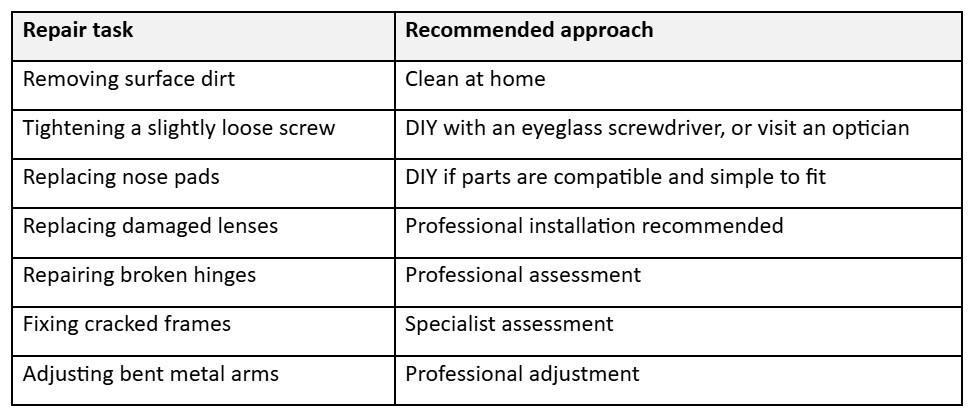
If you’re researching how to fix Ray-Ban sunglasses, avoid superglue, household adhesives, and makeshift heating methods.
These quick fixes can damage the frame, complicate future repairs, and create weak, unreliable bonds. A professional can determine whether a damaged component can be safely repaired or needs to be replaced. With expensive or vintage eyewear, the potential for accidental damage makes professional assessment particularly worthwhile.
How to Care for Restored Ray-Ban Sunglasses
Once your sunglasses have been restored, proper maintenance will help preserve the results and keep them in good condition.
Follow these practical habits:
- Store sunglasses in a protective hard case when you’re not wearing them.
- Clean lenses with a microfiber cloth and a lens cleaner formulated for coated lenses.
- Never place sunglasses lens-side down on hard surfaces.
- Keep them away from excessive heat, such as a hot car dashboard.
- Use both hands when putting them on and taking them off.
- Check screws and hinges periodically.
- Avoid harsh cleaning chemicals.
Regular maintenance is particularly important for older acetate and metal frames. It allows you to catch minor problems early, before they develop into more serious damage.
Frequently Asked Questions
How Much Does Ray-Ban Frame Repair Cost?
The cost depends on the type of damage, the frame model, the replacement components required, and whether professional labor is involved. Minor adjustments are generally inexpensive, while lens replacement and structural repairs can cost considerably more. Request an assessment and quote before approving extensive work.
Can Scratched Ray-Ban Lenses Be Repaired?
Light smudges and residue are sometimes mistaken for scratches and can usually be cleaned away. Deep scratches and damaged coatings, however, generally cannot be removed safely. When damage affects visibility or lens performance, replacing the lenses is the more reliable option.
How Do I Know If My Old Ray-Ban Frames Are Worth Restoring?
Examine the frame for cracks, structural weaknesses, damaged hinges, and material deterioration. If the frame remains stable and compatible replacement parts are available, restoration may be worthwhile. Compare the estimated repair cost with the price of purchasing a new pair before making your decision.
Conclusion
Restoring old Ray-Ban sunglasses is a practical way to preserve a familiar design while improving comfort, appearance, and usability. Replacing scratched lenses, repairing loose hinges, and installing new nose pads can all extend the life of a suitable frame.
The most important step is assessing the frame’s condition before investing in new lenses or replacement components. Correct model identification, lens compatibility, and careful installation all contribute to a successful restoration.
Whether you’re bringing a vintage Ray-Ban pair back to life or refreshing your everyday sunglasses, choosing the right repairs and following good care habits will help you get more out of the eyewear you already own.
Featured image: Emre Vonal/Pexels
—Read also


