


Footwear News has named the Adidas Adizero Adios Pro Evo 3 its 2026 Shoe of the Year ahead of the 40th annual FN Achievement Awards (FNAA). Weighing an astonishing 97 grams, this featherweight marathon racer shattered athletic barriers before conquering the style world. Thanks to this win, the German sportswear giant celebrates back-to-back victories at the “Shoe Oscars.”
Last year, Pharrell Williams and Adidas claimed the coveted trophy with their sculptural Virginia Adistar Jellyfish collaboration. Still, the 2026 selection signals a sharp cultural pivot toward pure, uncompromising athletic engineering over nostalgic lifestyle silhouettes. Moreover, this carbon-rimmed marvel proved that radical speed remains fashion’s ultimate status symbol.
A Historic Milestone at the 40th Annual FNAAs

Every December, the FN Achievement Awards recognize the designs, executives, and cultural forces driving global footwear forward. Historically, the Shoe of the Year category favors viral streetwear collaborations or accessible lifestyle hits that dominate sidewalks. Yet the 2026 judges could not ignore a sneaker that literally rewrote human endurance limits on the world stage.
The Adidas Adizero Adios Pro Evo 3 achieved a rare triple crown across sports, design, and luxury commerce, igniting a “super shoe” boom. Before capturing the FNAA trophy, the silhouette earned honors from both Time Magazine’s Best Inventions and Fast Company’s Innovation by Design Awards. As a result, footwear insiders universally view its upcoming coronation at the December 2 New York gala as an inevitable triumph.
Breaking the Two-Hour Marathon Barrier in London

On April 26, 2026, distance running entered an entirely new dimension on the historic streets of London. Kenyan phenom Sabastian Sawe wore the Adidas Adizero Adios Pro Evo 3 to win the London Marathon in 1:59:30. He became the first athlete ever to break the two-hour barrier in an officially sanctioned race.
Remarkably, Sawe was not alone in his sub-two-hour triumph. Ethiopian rival Yomif Kejelcha finished just eleven seconds behind him in 1:59:41, wearing the exact same model. Notably, previous attempts relied on rotating pacers, laser beams, and exhibition settings outside World Athletics rules. Both athletes conquered a full competitive field on a grueling city course.
The historic event did not stop with the men’s elite division. Ethiopian star Tigst Assefa simultaneously wore the Adidas Adizero Adios Pro Evo 3 to smash her own women-only world record, stopping the clock at 2:15:41. Three monumental world records fell before lunch, and Adidas wasted no time in launching a bold global billboard campaign, “Humanity just got faster.”
Dominating the 2026 World Marathon Majors
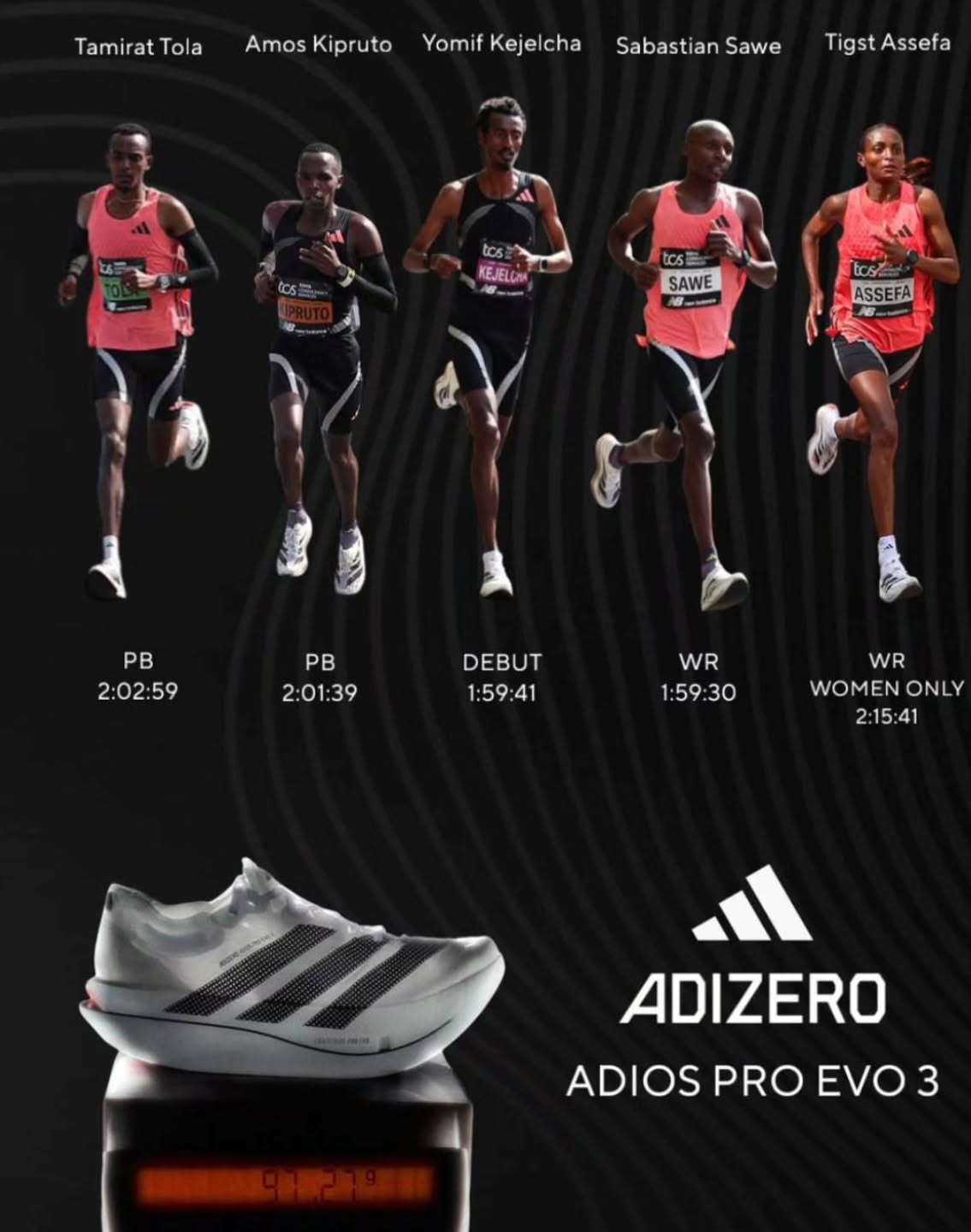
London was merely the opening act in a season of unprecedented competitive dominance. Throughout 2026, athletes wearing the Three Stripes dominated the World Marathon Majors circuit. Adidas runners captured nine of the 14 total race victories across Tokyo, Boston, London, Sydney, Berlin, Chicago, and New York.
Furthermore, the brand claimed half of all available podium spots across those seven prestigious races. That tally equals 21 out of 42 medals in elite distance running. In Berlin, Adidas athletes executed a historic clean sweep of both the men’s and women’s podiums. During that German showdown, Tigst Assefa set another course record in 2:11:04.
The Adizero Adios Pro Evo 3 powered eight of the ten Major victories following its spring debut. Rival brands found themselves scrambling to answer a sneaker weighing half as much as traditional super shoes. Even longtime competitor Nike publicly congratulated Adidas following Sawe’s London breakthrough.
The 97-Gram Engineering of the Adizero Adios Pro Evo 3
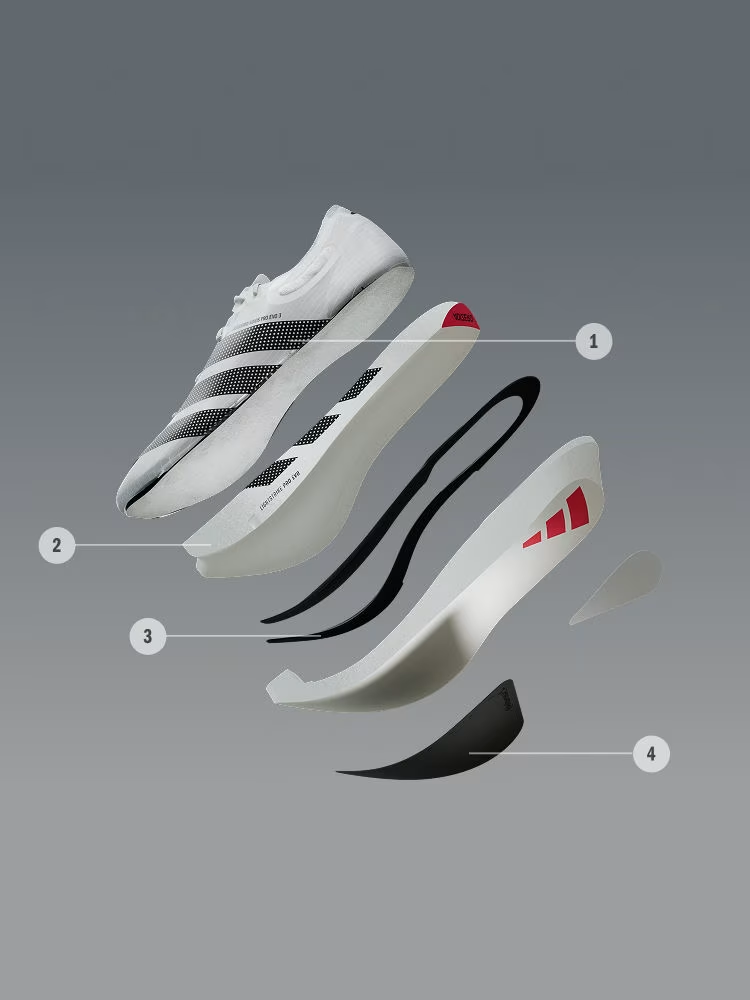
To understand why this racer earned FNAA Shoe of the Year honors, a look at its radical construction is necessary. For three years, Adidas engineers pursued a single, audacious target: building a marathon shoe under 100 grams. In a men’s UK size 8.5, the finished product tips the scales at an average of 97 grams.
Put simply, 97 grams is roughly 3.4 ounces, making the shoe lighter than a standard deck of playing cards. Compared to its predecessor, the 138-gram Evo 2, the new model sheds an astonishing 30 percent of its mass. Additionally, it weighs less than half of Nike’s popular Alphafly 3 marathon racer.
Achieving a race-legal weight under 100 grams required abandoning conventional footwear manufacturing rules from the ground up. First, designers looked toward competitive water sports, modeling the translucent upper mesh after high-tension kitesurfing sails. This featherweight textile locks the foot down at sub-three-minute-per-kilometer speeds without trapping heat or adding bulk.
Underfoot, Adidas reformulated its flagship cushioning into a next-generation Lightstrike Pro Evo foam compound. According to brand testing, this updated foam weighs nearly 50 percent less than earlier iterations while boosting responsiveness. Because of that, runners still enjoy a plush 39-millimeter heel stack and 36-millimeter forefoot stack without carrying extra grams.
Replacing Carbon Plates With Exposed ENERGYRIM Architecture
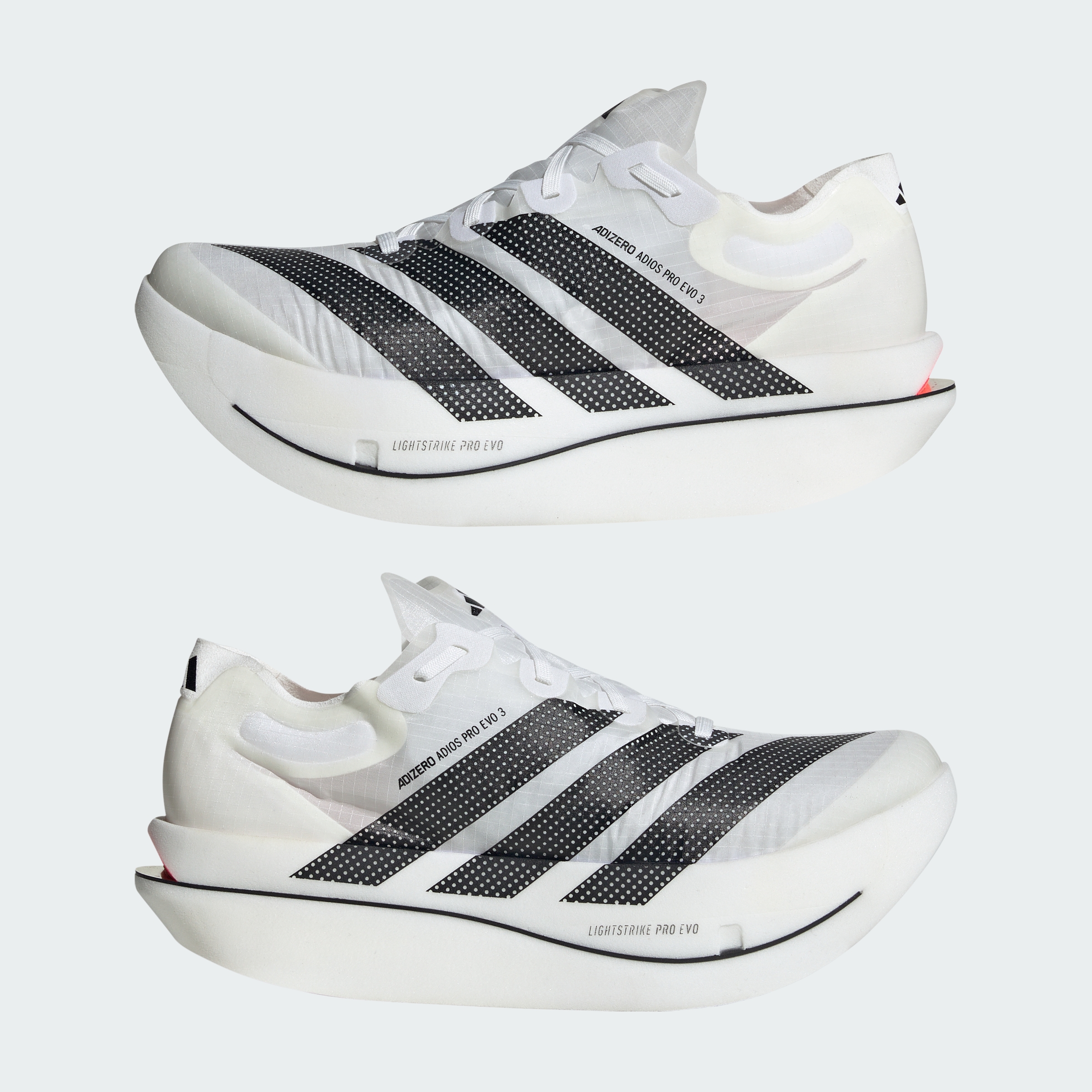
Perhaps the boldest engineering choice lies visible along the shoe’s sculptural sidewall. Rather than inserting a heavy full-length carbon plate or internal rods, Adidas introduced an external U-shaped frame called ENERGYRIM. This thin, carbon-fiber-infused rim wraps the perimeter of the midsole to stabilize the ultra-soft foam.
Internal lab data reveals that ENERGYRIM delivers 11 percent more forefoot energy return alongside a 1.6 percent economy boost. Meanwhile, strategically placed Continental rubber covers only the high-wear forefoot zones to preserve traction on wet city streets. Every millimeter serves a strict kinetic purpose, leaving zero room for decorative excess.
What Adidas Executives Say About Pushing Limits
Leadership inside Herzogenaurach knew early on that this project defied standard commercial timelines. Patrick Nava, General Manager of Adidas Running, spoke candidly about the team’s mindset during development. “Creating the Adizero Adios Pro Evo 3 pushed us to think differently from the very start,” Nava explained.
“We weren’t just trying to improve on what we’d done before,” Nava continued. “We wanted to see how far we could go.” Later, during a public forum with running gear enthusiasts, Nava compared the shoe to an experimental Formula One prototype. He noted that the sneaker is almost entirely handmade, which explains its steep $500 retail price tag.
How a $500 Racing Concept Became Luxury Streetwear’s Grail
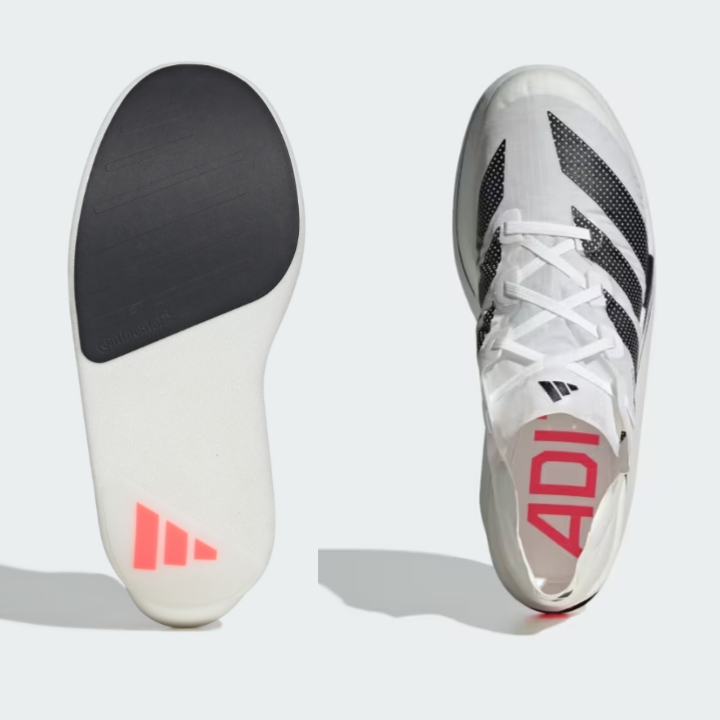
Normally, a hyper-specialized marathon flat built for elite biomechanics would remain invisible to mainstream fashion consumers. Yet scarcity and aesthetic minimalism transformed the Adidas Adizero Adios Pro Evo 3 into an instant cultural artifact. Its stripped-back Cloud White and Core Black colorway looks more like an architectural prototype than a gym sneaker.
When Adidas dropped the initial batch on April 25, 2026, pairs vanished online within seconds. Immediately afterward, secondary market asking prices on resale platforms surged up to $5,500 per pair, with confirmed sales reaching $1,855. Collectors treated the 97-gram racer with the same reverence reserved for Swiss tourbillon watches or limited-edition runway pieces.
Even when Adidas released a wider online-only fall allocation on October 29 ahead of the New York City Marathon, demand overwhelmed supply. VIP members rushed to claim single-pair limits within minutes of the digital drop. Celebrity marathoners and fashion editors alike began pairing technical running gear with tailored outerwear throughout the autumn season.
Unlike mass-market sneakers, the Evo 3 carries an aura of dangerous exclusivity because it prioritizes pure speed over longevity. In independent lab tear-downs, footwear analysts noted that the minimalist outsole sacrifices multi-hundred-mile durability for peak race-day propulsion. Ironically, that fragile, single-purpose nature only deepened its allure among luxury consumers obsessed with peak performance.
Commercial Halo Effect Across the Adizero Franchise

Beyond prestige, the FNAA Shoe of the Year winner generated massive commercial momentum for Adidas’s broader running business. Smartly, the brand channeled consumer excitement toward more accessible silhouettes sharing the Evo 3’s design DNA. Runners unable to secure, or afford, the $500 flagship flocked to the Adizero Adios Pro 5 and the $150 Adizero Evo SL.
This trickle-down strategy helped lift Adidas’s global earnings guidance during the third quarter of 2026. Investors and retail buyers alike recognized that winning on Sunday morning directly drives footwear sales on Monday afternoon. By anchoring its product pyramid with an undisputed technological marvel, Adidas turned track-and-field credibility into balance-sheet strength.
What the FNAA Crown Signals for the Future of Footwear
Crowning the Adidas Adizero Adios Pro Evo 3 as Shoe of the Year marks a turning point for sneaker culture. For over a decade, chunky retro runners and nostalgic basketball silhouettes dictated industry awards and street style trends. Today, however, consumers crave authentic innovation backed by verifiable data rather than superficial hype.
The 40th annual FN Achievement Awards celebrated a shoe that refused to compromise between beauty and physics. Whether crossing the finish line in under two hours or sitting inside a collector’s display case, this 97-gram triumph sets a daunting benchmark. Rival brands now face a simple reality: in 2026, true luxury is measured in grams and seconds.
Shop editor’s picks
Featured image: Adidas
—Read also


