


Choosing piercing jewelry is about more than looks. The metal sits in direct contact with healing or healed skin for days, weeks, or even years, so it can influence comfort, irritation risk, and how well the piece holds up over time. Cheap or poorly made alloys may cause redness, itching, and other reactions, while a well-chosen metal that meets appropriate quality standards gives a piercing a better chance of healing smoothly.
Among the many options on the market, three materials come up again and again: titanium, surgical steel, and solid gold. Each has its own strengths, trade-offs, and ideal uses. This guide breaks down what makes each material popular, compares them side by side, and explores what to consider before making a purchase. No single metal is right for everyone, so if you have a known metal sensitivity, it is worth consulting a professional piercer or healthcare provider before choosing your jewelry.
Here Are the Top 3 Metals for Piercing Jewelry
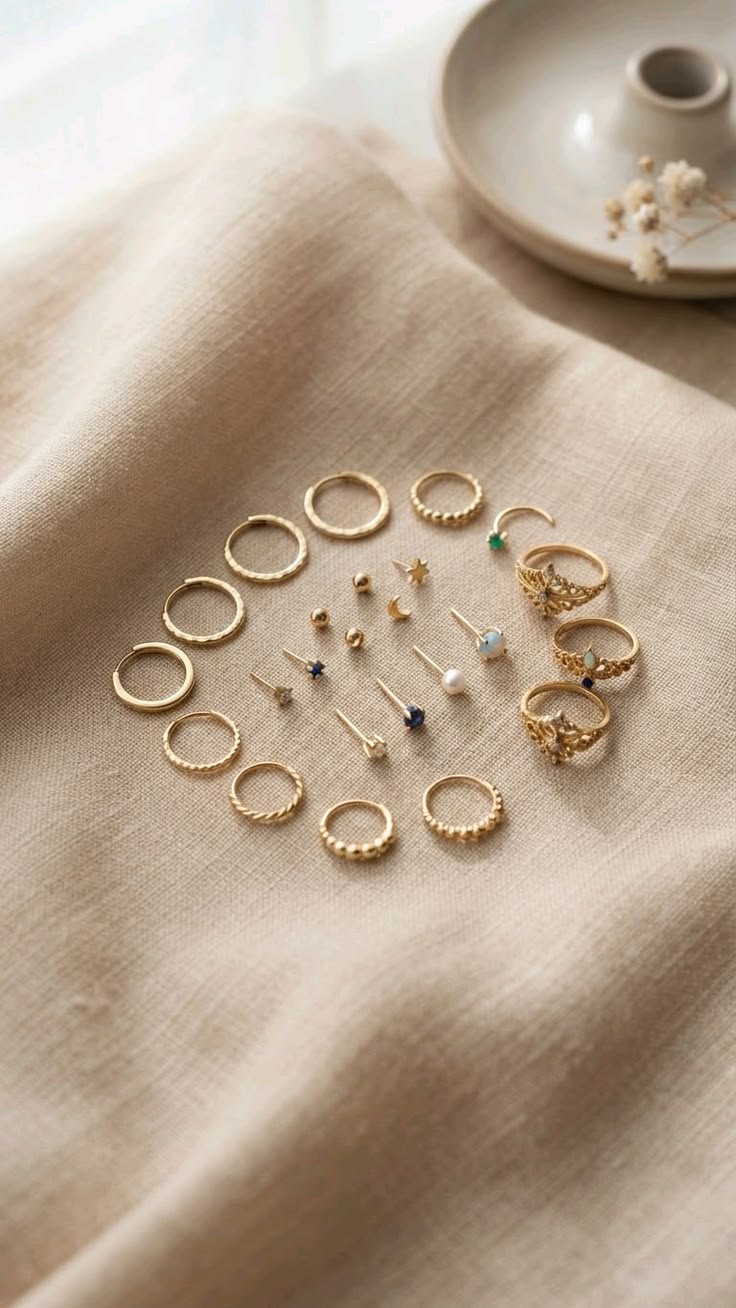
#1. Titanium
Titanium is often recommended for people with sensitive or reactive skin, and for good reason. It is remarkably lightweight, which is particularly useful for larger gauges, heavier designs, and piercings worn around the clock, such as earlobes, cartilage, and nostrils. Its lighter weight puts less strain on the piercing and can make it more comfortable for extended wear.
It also offers excellent corrosion resistance. Body moisture, sweat, and everyday exposure to water are unlikely to compromise its surface or structural integrity. For body piercings, however, the grade matters. Look for implant-grade titanium that complies with ASTM F-136 or ASTM F-67, and ask the seller for documentation rather than relying on the word “titanium” alone. These grades are widely used for implant applications, and titanium does not contain nickel as an alloying ingredient, making it a popular choice for people with nickel sensitivities.
Another advantage is that titanium can be anodized to produce colors such as blue, purple, and gold. This process changes the appearance of the metal’s surface without requiring conventional plating, which can wear away over time. The result is a colorful finish that retains the underlying properties of the titanium.
#2. Surgical Steel
Surgical steel is one of the most widely used materials for piercing jewelry, earning its popularity through a practical combination of durability, corrosion resistance, accessible pricing, and versatility. It holds up well to everyday wear, polishes to a bright finish, and is available in an extensive range of styles, from simple studs and hoops to detailed charms and gemstone settings. Brands such as Kesheen demonstrate how far steel jewelry has come, offering polished and PVD-finished pieces that deliver a refined appearance without a premium price tag.
Not all stainless steel is the same, though. You will often see two grades mentioned: 304 and 316L. Both offer corrosion resistance, but 316L is generally preferred for jewelry that remains in contact with the skin. Even so, the label “316L” alone does not automatically make a piece suitable for a fresh piercing. Not all 316L steel is manufactured to implant standards, and products marketed as surgical steel may not meet the requirements for initial piercing jewelry. For a fresh piercing, look for steel that meets recognized implant-grade standards such as ASTM F138 or ISO 5832-1, and choose sellers who can provide documentation.
One common concern is nickel. Stainless steel contains nickel as part of its alloy composition, but the amount released from the surface is what matters most for skin exposure. This is known as nickel release. When release levels remain within accepted limits, many people tolerate the material well. However, even high-quality stainless steel may not be suitable for someone with a significant nickel allergy or sensitivity. If that applies to you, implant-grade titanium is often a more appropriate alternative.
PVD (Physical Vapor Deposition) is another finish used on some stainless steel jewelry to create different colors and improve surface durability. However, PVD is a coating process, not a metal grade, and the suitability of a finished piece depends on the quality of the coating and the underlying material. Colored or coated jewelry is generally better reserved for healed piercings. Fresh piercings require jewelry made from appropriate materials that meet recognized standards, rather than relying on a surface coating for suitability.
#3. Solid Gold
Solid gold is the premium option. It has a warm, rich appearance and offers good resistance to corrosion, while a well-made piece can be durable enough for years of regular wear. For many people, its appeal lies in the combination of quality craftsmanship, enduring value, and a classic finish.
When shopping, the details matter. Karat indicates how much pure gold a piece contains. Fourteen-karat and 18-karat gold are common choices, with 18k containing a higher proportion of gold and 14k generally offering greater hardness for everyday wear. For body piercings, look for solid gold that is at least 14k and is nickel- and cadmium-free. These details are important when considering skin compatibility.
The alloy mix matters just as much as the karat number. The other metals blended with gold affect its color, strength, and suitability for people with metal sensitivities. Some alloys, particularly certain white gold blends, may contain nickel. For piercing jewelry, choose solid gold from a reputable maker who can provide clear information about its composition. Avoid gold-plated or gold-filled pieces for fresh piercings, since their outer layers can wear down or separate and expose the underlying material. It is also important to check that the jewelry has a smooth, well-polished surface and a construction suitable for body piercing.
Titanium vs. Surgical Steel vs. Solid Gold: Key Differences
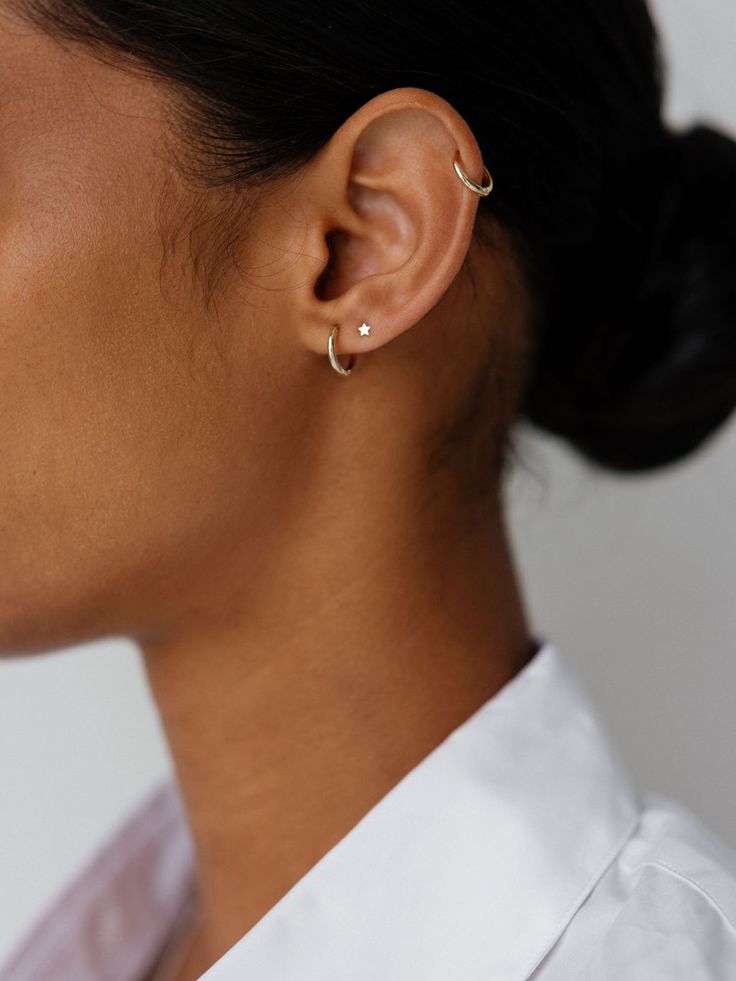
All three materials can work well for piercing jewelry, but they suit different priorities. The best choice depends on factors such as skin sensitivity, the age of the piercing, your budget, and how you intend to wear the piece.
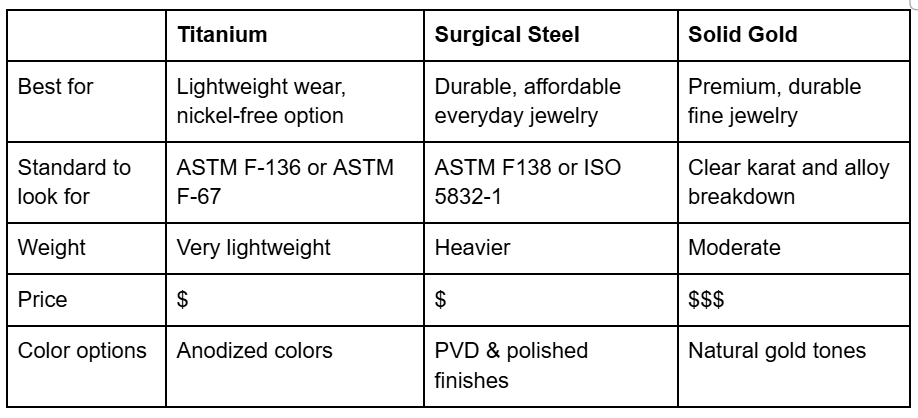
In short, titanium stands out for its lightweight construction and nickel-free composition, surgical steel for its value and variety, and solid gold for its premium appearance and lasting quality. None is the single best answer for everyone. The right choice depends on your priorities, the condition of your piercing, and how your skin responds to the material.
What Should You Consider When Choosing?
Start with the type of piercing. A fresh piercing and a fully healed one have different requirements, and jewelry that is perfectly suitable for an established piercing may not be appropriate during healing. Heavier or larger-gauge pieces also place greater demands on comfort, making lighter materials such as titanium particularly appealing. Cartilage and nostril piercings often benefit from lightweight jewelry, while healed earlobe piercings can accommodate a wider range of styles and materials.
Next, think about your skin. If you know it reacts easily to jewelry, implant-grade titanium is a common starting point, although individual sensitivities vary and a professional piercer can help you assess your options. If you have no known metal sensitivity, implant-grade steel that meets ASTM F138 or ISO 5832-1 can be a durable, budget-conscious choice. Solid gold is another option, provided its alloy composition and finish are suitable for body piercing.
Comfort and style come next. Consider how the piece wears throughout the day, whether its weight puts pressure on the piercing, and whether you prefer a bright polished finish, an anodized color, or the classic warmth of gold. The jewelry’s shape and construction matter, too. Smooth surfaces, appropriate sizing, and well-finished edges all contribute to a comfortable fit.
Finally, set a realistic budget. Steel and titanium make it easier to build a collection of pieces for different outfits and occasions, while solid gold may be better suited to a smaller selection of carefully chosen designs you intend to wear regularly. Whatever your budget, prioritize verified material quality over appearance or price alone.
Conclusion
Titanium, surgical steel, and solid gold each earn their place in piercing jewelry for different reasons. Implant-grade titanium offers lightweight, nickel-free wear and is a popular choice for people with nickel sensitivities. Implant-grade surgical steel delivers durability and versatility at a more accessible price, while solid gold brings a refined appearance and the appeal of premium craftsmanship.
Whichever material you choose, check its specifications, buy from sellers who can document its composition, and match the jewelry to your piercing, skin, style, and budget. The right piece should do more than look good; it should also be suitable for the piercing and comfortable enough to wear with confidence.
Featured image: Chad Montplaisir/Pexels
—Read also


