

Why Knee-Friendly Training Is Important
Many people avoid lower-body training after experiencing knee discomfort, but skipping leg day altogether can often create a bigger problem. Weak muscles surrounding the knee provide less support, forcing the joint to absorb more stress during everyday movement.
Unless your pain is caused by an untreated injury or underlying medical condition, carefully selected exercises may help strengthen the muscles that stabilize the joint. However, if you’ve suffered a significant injury or experience sharp pain, swelling, or instability, it’s important to get clearance from a physician or physical therapist before returning to the gym.
Remember, mild muscle fatigue is normal after exercise. Sharp or worsening joint pain is not.
Start with a Knee-Friendly Warm-Up
Jumping straight into heavy lifts is one of the biggest mistakes people make. A proper warm-up prepares your muscles, increases blood flow, and improves movement quality before more demanding exercises.
A simple warm-up routine includes:
#1. Lateral Band Steps
Place a resistance band around your thighs or ankles and step sideways with control. This exercise activates the gluteus medius, an important hip muscle that helps reduce unnecessary pressure on the knees during squats, walking, and running.
#2. Standing Fire Hydrants
Keeping your upper body steady, lift one leg out to the side against a resistance band. This movement strengthens the hips while improving single-leg stability.
#3. Loaded Step-Ups
Using a low platform or bench, step up slowly while driving through your heel rather than your toes. Focusing on the heel shifts more of the workload toward the hips and glutes instead of placing excess stress on the knee joint.
#4. Goblet Reverse Lunges
Unlike forward lunges, stepping backward often feels more comfortable because it naturally limits excessive forward movement of the knee. Hold a dumbbell close to your chest and keep your front foot firmly planted throughout the movement.
#5. Heel-Elevated Goblet Squats
Slightly elevating your heels allows many lifters to squat more comfortably while maintaining better posture and reducing unnecessary joint strain.
Best Knee-Friendly Strength Exercises
Once you’re warmed up, you can move into your primary strength workout.
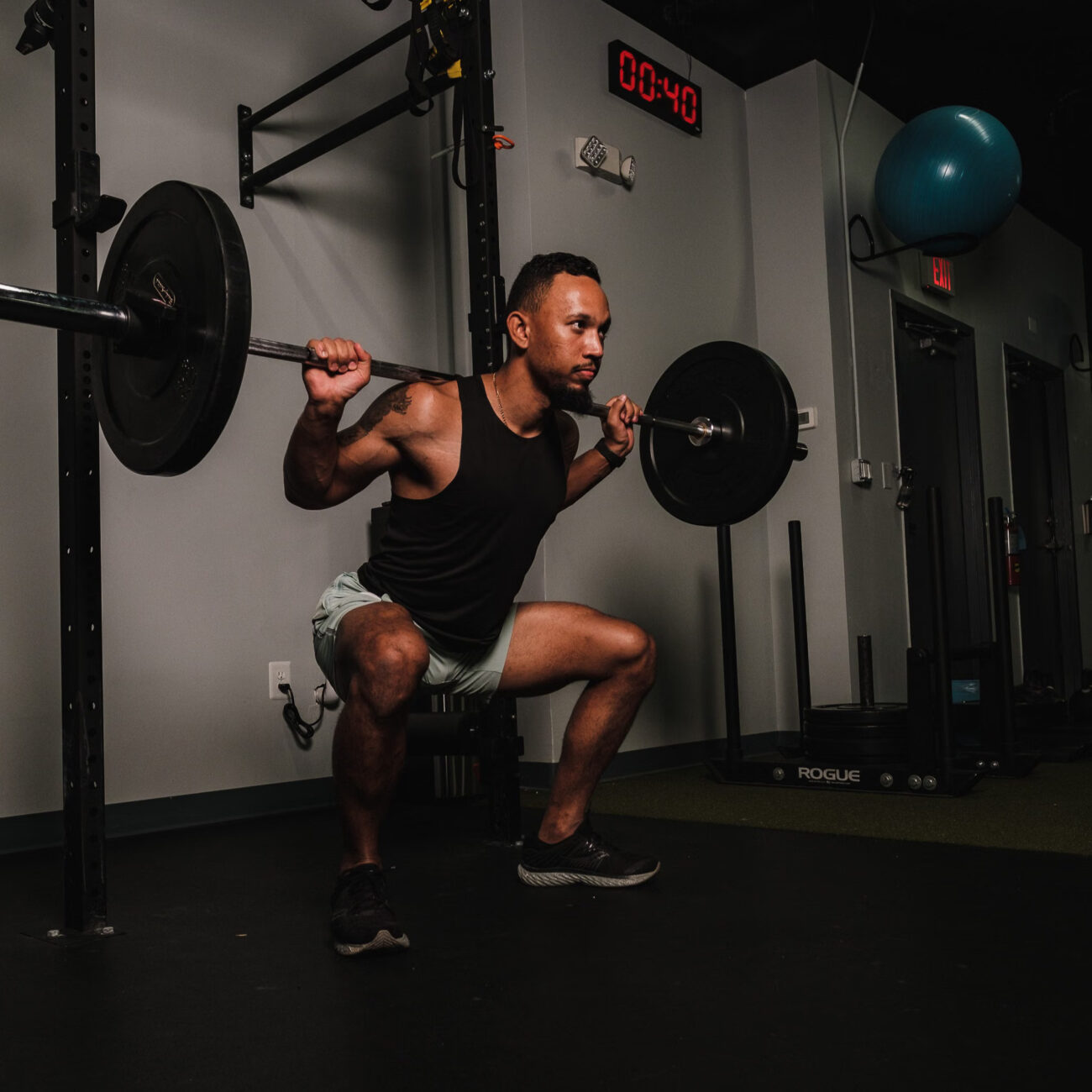
#1. Box Squats
The traditional back squat is a fantastic exercise, but it isn’t always comfortable for everyone.
Using a box or bench helps control your squat depth while encouraging you to sit back into your hips. Instead of letting your knees travel excessively forward, focus on keeping your weight through your heels and lowering yourself with control.
Pause lightly on the box before driving upward. The goal isn’t to collapse onto the bench but to use it as a guide for consistent technique.
#2. Reverse Lunges with a Vertical Shin
Lunges are excellent for building single-leg strength, but your setup matters.
Rather than stepping forward, step backward while keeping your front shin relatively vertical throughout the movement. This shifts more of the workload toward your glutes and hamstrings instead of your knees. A slight forward lean from the hips also helps maintain balance while reducing joint stress.
#3. Romanian Deadlifts Build Strong Support Muscles
Not every lower-body exercise requires significant knee movement. Romanian deadlifts primarily target the hamstrings, glutes, and hips; the muscles responsible for supporting healthy movement patterns.
Stand with dumbbells at your sides, soften your knees slightly, and hinge backward through your hips while keeping your back flat. Lower the weights until you feel a stretch in your hamstrings before driving your hips forward to return to a standing position.
Because this movement emphasizes the posterior chain, it’s one of the most valuable additions to leg workouts designed to support healthier knees.
#4. Reverse Sled Drags
If your gym has a sled, don’t overlook this underrated exercise.
Walking backward while dragging a sled strengthens the quadriceps and surrounding stabilizing muscles with relatively low impact. Since there’s no jumping or hard landing involved, many people find sled work more comfortable than traditional cardio or high-impact exercises.
Keep your arms extended, maintain an upright posture, and drive through your heels with every backward step.
Tips for Pain-Free Progress
The best results come from combining smart exercise choices with good training habits.
- Warm up for at least 5–10 minutes before lifting.
- Increase the weight gradually instead of making large jumps.
- Prioritize controlled movement over speed.
- Stop immediately if pain becomes sharp or severe.
- Strengthen your hips and glutes as much as your quadriceps.
- Give your body enough time to recover between training sessions.
Small improvements made consistently often deliver better long-term results than trying to lift heavy too quickly.
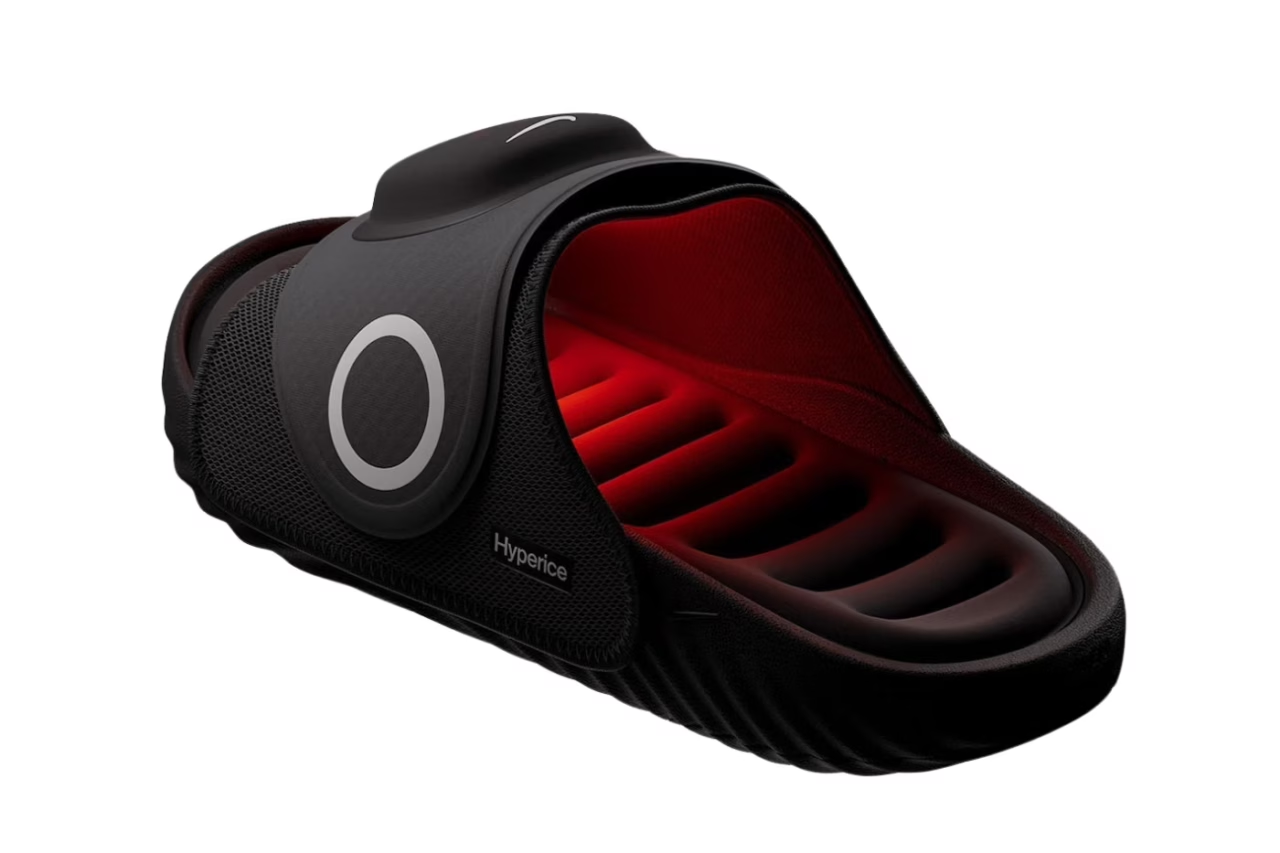
Shop the gear you’ll need
Listen to Your Body
Healthy training isn’t about pushing through every ache. It’s about understanding the difference between muscle fatigue and joint pain.
If an exercise consistently aggravates your knees, modify it rather than forcing the movement. Swapping forward lunges for reverse lunges, performing box squats instead of deep free squats, or adding Romanian deadlifts can help you continue making progress while minimizing unnecessary discomfort.
Leg workouts may have a reputation for being the toughest training day, but they shouldn’t leave your knees feeling worse. By focusing on proper mechanics, strengthening the muscles that support your knees, and progressing gradually, you can build a stronger lower body while helping keep your joints healthier for years to come.
Featured image: Airam Dato-on/Pexels
—Read Also