
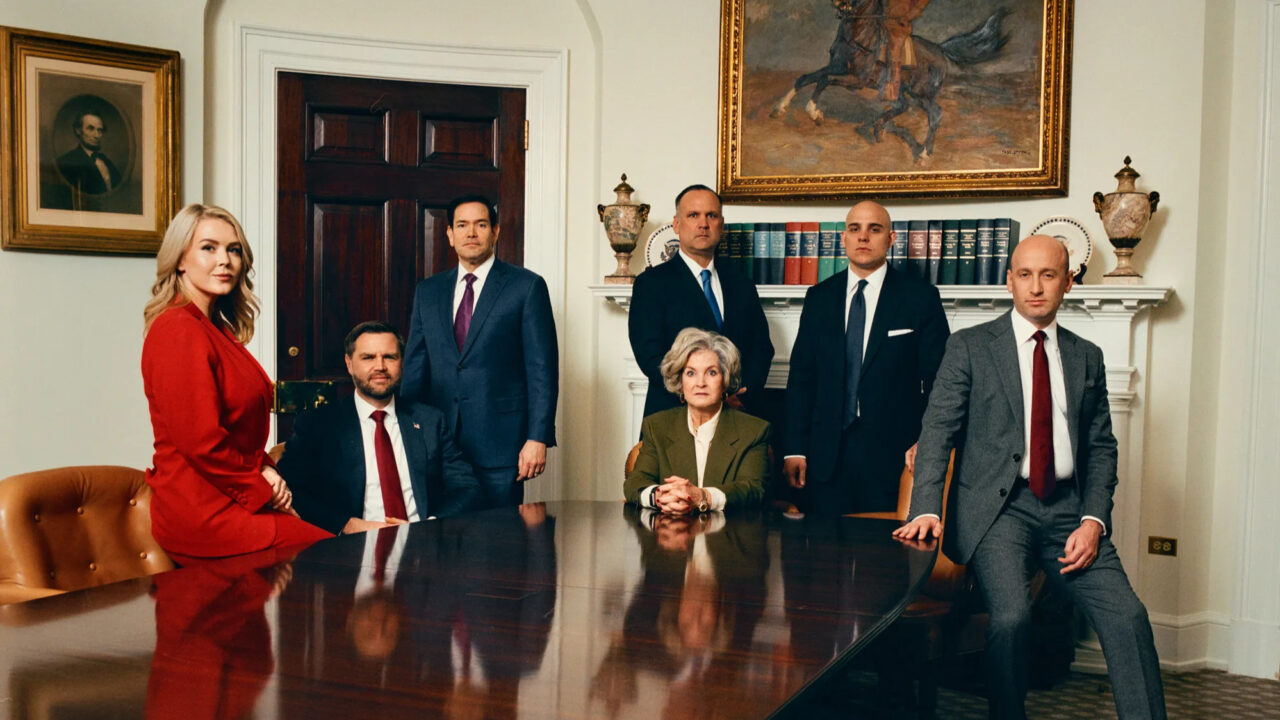

In a series of unusually candid interviews with Vanity Fair, Susie Wiles, President Donald Trump’s chief of staff, offered sharp criticism of Attorney General Pam Bondi and Vice President JD Vance, while also acknowledging that parts of the administration’s legal agenda have been driven by political “score settling.” Published this week, the remarks triggered an immediate response from the White House, with press secretary Karoline Leavitt accusing Vanity Fair of misrepresenting Wiles’ words and portraying the administration as disorderly.
Taken together, the interviews, conducted over the first year of Trump’s second term, place Susie Wiles at the center of an extraordinary public reckoning within the White House. Senior officials rarely speak on the record with such bluntness. Yet Wiles offered detailed assessments of the president’s temperament, internal policy disputes, and the political motivations she says have shaped major decisions. Those comments have now become a flashpoint for the administration and its allies.
Wiles Acknowledges Retribution Element Behind Prosecutions
Throughout the first year of Donald Trump’s second administration, Vanity Fair writer Chris Whipple has interviewed Susie Wiles, White House chief of staff, amid each moment of crisis.
His insider’s account of Trump 2.0 joins the photography of Christopher Anderson for a… pic.twitter.com/61Dwohc9g4
— VANITY FAIR (@VanityFair) December 16, 2025
In the Vanity Fair interviews, Wiles said she attempted to limit President Trump’s focus on punishing political adversaries, describing what she called a “loose agreement” to end “score settling” after the first 90 days of the term. That effort, she acknowledged, ultimately failed.
While emphasizing that Trump is not constantly motivated by vengeance, Susie Wiles conceded that retaliation does surface when opportunities arise. “When there’s an opportunity, he will go for it,” she said, confirming that personal grievances have, at times, overlapped with the administration’s pursuit of criminal cases against political opponents.
The comments appear to reinforce longstanding criticism that certain prosecutions under Trump’s second term risk blurring the line between the impartial administration of justice and political retribution.
Sharp Criticism of Pam Bondi Over Epstein Files
One of the most striking moments in the interviews involves Attorney General Pam Bondi, whom Wiles said “completely whiffed” the early handling of the Epstein files. According to Wiles, Bondi failed to grasp the issue’s significance to Trump’s right-wing base and further complicated matters by suggesting the existence of a client list that does not, in fact, exist.
As a result, Wiles argued, Bondi’s missteps fueled conspiracy theories and undermined public trust at a particularly sensitive moment for the administration. Although Wiles described Bondi as a close friend, her remarks amount to a rare public rebuke of a sitting attorney general by a White House chief of staff.
JD Vance Labeled a ‘Conspiracy Theorist’
BREAKING: In an insane moment, JD Vance slams “people who will say one thing to the president’s face and then will do the exact opposite,” reacting to Susie Wiles’ Vanity Fair interview.
This, from the guy who once called Trump “America’s Hitler.”pic.twitter.com/EpNxtBwk8T
— Really American 🇺🇸 (@ReallyAmerican1) December 16, 2025
Wiles was equally direct in her assessment of Vice President JD Vance. In the interviews, she described Vance as having been “a conspiracy theorist for a decade,” suggesting that his evolution from Trump critic to ally was driven more by political ambition than ideological alignment.
In contrast, Wiles pointed to Secretary of State Marco Rubio, whom she portrayed as coming to support Trump without abandoning core principles. Her comments have intensified speculation about internal rivalries and long-term succession politics within the administration.
Trump’s Temperament and Governing Style
Perhaps the most widely quoted passage from the interviews centers on Wiles’ description of President Trump as having “an alcoholic’s personality.” Drawing on her experience growing up with a high-functioning alcoholic parent, she clarified that the analogy was behavioral rather than literal, noting that Trump does not drink.
According to Susie Wiles, Trump’s governing style is defined by outsized confidence and a belief that few limits constrain his authority. She said she does not view her role as restraining the president, but rather as facilitating his agenda—even when she personally disagrees. On issues ranging from tariffs to immigration enforcement, she acknowledged being overruled, adding that once decisions are made, she aligns herself with the president’s direction.
White House Pushback and Karoline Leavitt’s Response
🚨 LEAVITT on Vanity Fair article: “The most egregious part of this article was the bias of omission that was clearly present.” pic.twitter.com/jYTOJ1Y9WD
— Daily Caller (@DailyCaller) December 16, 2025
The publication of the Vanity Fair interviews prompted swift pushback from the administration. White House press secretary Karoline Leavitt dismissed the article as “disingenuous,” accusing the magazine of stripping Wiles’ remarks of essential context to portray the Trump White House as chaotic.
Wiles later echoed that criticism, calling the piece a “hit job” and arguing that it exaggerated internal disagreements. However, Vanity Fair writer Chris Whipple has maintained that all comments were made on the record and recorded in full.
A Defining Moment for Susie Wiles’ Tenure
The fallout from the interviews has placed Susie Wiles in a rare position for a sitting chief of staff. She is simultaneously reaffirming her loyalty to President Trump while facing scrutiny for exposing internal tensions within his administration.
Whether the episode ultimately strengthens her standing with the president or deepens internal fractures remains uncertain. What is clear, however, is that the interviews have offered one of the most detailed public portraits to date of how power, grievance, and loyalty intersect inside Trump’s second-term White House—with Wiles, Vanity Fair, and Karoline Leavitt now central figures in a political story still unfolding.
Featured image: Christopher Anderson for Vanity Fair
—Read Also