



As anyone who’s watched Rob Sitch’s 1997 classic The Castle will appreciate, a family’s home may indeed be their castle—but it doesn’t need to look like one. Step into the world of interiors and you’ll find a spectrum of styles, each offering its own way of turning four walls into a sanctuary. Within that spectrum lie countless sub-styles and variations, yet what truly sets a space apart is often the smallest, most personal touch.
Like snowflakes, no two homes are ever quite the same. They may share familiar foundations—bricks, beams, and a roof overhead—but the magic lies in how they’re put together. Still, decorating from the ground up can feel daunting. With so many choices at your fingertips, the sheer abundance of options can leave even the most enthusiastic decorator wondering where to begin.
That’s where a little guidance comes in handy. What follows is a quick tour through some of the most popular interior styles. It is designed to help you cut through the noise and discover which aesthetic feels most like home. Think of it as a starting point for feathering your own nest—with just enough inspiration to spark ideas, without overwhelming your sense of style.
Here are three major interior design styles you should know…
#1. Old-School: Charming, Timeless Elegance

For many, the adage that springs to mind wherever design is concerned is “if it ain’t broke, don’t fix it.”
There’s much to admire in the traditional school of interior décor. Rather than chasing fleeting trends that can quickly date, traditional style draws on homegrown design sensibilities that have evolved over generations. Its historical grounding makes it the perfect canvas for weaving in treasured family heirlooms or antiques that carry their own stories. This ensures the past remains part of daily family life.
Within traditional interiors, you’ll find a host of sub-genres, often tied to specific historical periods or architectural movements. Yet they share certain common characteristics: layers of soft furnishings, Persian-style rugs underfoot, warm timber tones, dark-stained furniture, and lighting fixtures with a touch of grandeur—think chandeliers or classic pendants. Wallpaper, too, often plays a starring role, bringing cohesion and a sense of polish to the space.
Australia also boasts its own traditions that diverge from European influence. Coastal style, for example, grew out of the practicalities of sun-drenched living. Early settlers leaned heavily on wood, readily available and easy to work with, while homes were designed with large windows and open floor plans to invite in light and sea breezes.
The coastal palette tends to reflect the natural colours found in such an environment: sandy beiges, sea blues, and cloudy whites, resulting in an overall effect that feels natural and relaxing to be in. Often, a light-handed nautical touch or the inclusion of coastal wall art or a driftwood table–maybe even a surfboard, if it suits your personality–can lend a certain layer of authenticity to the coastal aesthetic, even in a suburban setting.
#2. Modernism: Bold, Clean, and Future-Focused
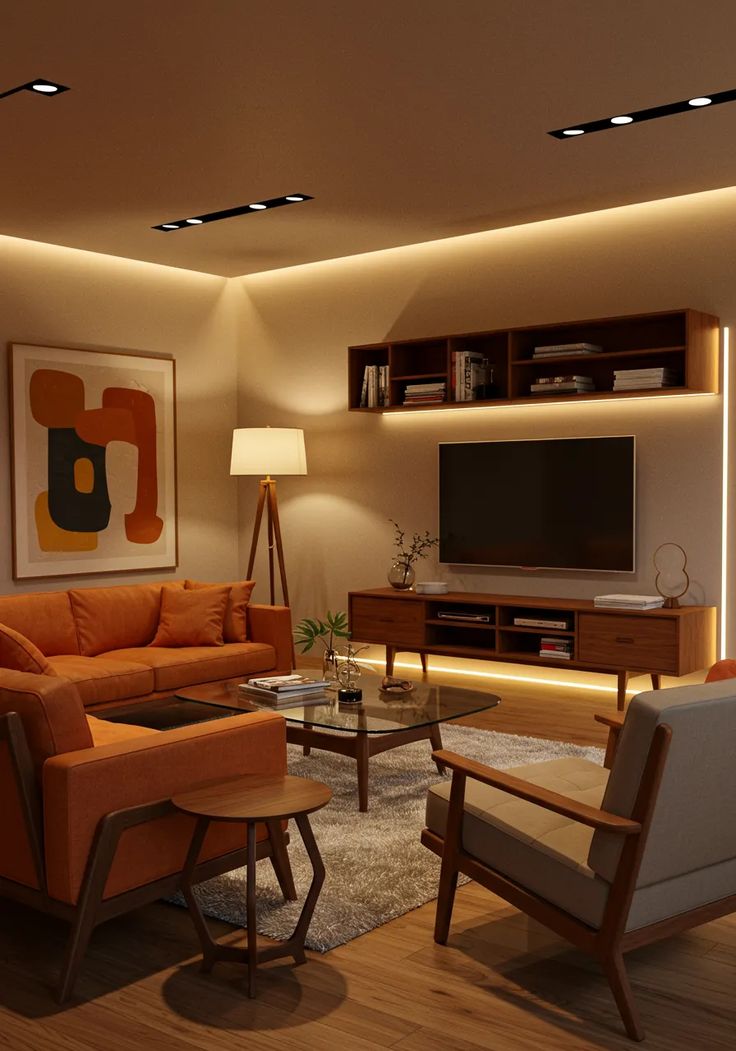
After the demise of European empires following the First World War, and the beginning of the American century, design—like politics and culture—began to look away from the past, shifting its gaze firmly towards the future.
New materials were becoming widely accessible, and public taste was turning away from ostentation. Instead, there was an appetite for a cleaner, more functional aesthetic, one that celebrated simplicity and utility. Out of this environment, modernism was born.
Modernism was new–modernism was bold. Modernism was also competitive: there were many moderns, each with their own spins and takes on how the future of human design would and should look. Bauhaus, Brutalism, and Art Deco can all be seen as offshoots of the modernist impulse, each interpreting the same principle in different ways: form over function.
Reacting against what was seen as the stuffiness and claustrophobia of the past, modernism embraced openness, simplicity, and light. A modernist interior reflects this dedication to purpose by considering carefully the role of every object within it. As William Morris famously said, “Have nothing in your house that you do not know to be useful, or believe to be beautiful.” For modernists, beauty itself was often pared back, expressed through neutral palettes, clean lines, and an avoidance of unnecessary detail.
#3. Contemporary Design Along The Cutting Edges

Contemporary culture is, by nature, a mosaic. It would be impossible—nor would it be desirable—to distil the diverse cultural backgrounds, experiences and desires of such a diverse population as Australia’s.
Contemporary design, then, is less a fixed style than a set of guiding principles that together shape a distinctly Australian vernacular. At its core, it loosely echoes the hallmarks of modernism—open interiors, sharp lines, and a restrained palette—but without the universalist ambitions of mid-century modernism. Where modernism often looked to a globalised future, contemporary design roots itself in the here and now.
In Australia, that means sustainability and liveability sit at the heart of the movement. Natural, eco-friendly materials, comfortable and functional furniture, and an emphasis on greenery bring interiors to life. For some, it also means celebrating Indigenous art and culture through thoughtful décor choices. For others, it might be an ode to the landscape, expressed through native flora brought indoors, or even a quiet tribute to migrant heritage through heirlooms and family photographs.
Ultimately, Australian contemporary design is about creating a space that reflects your lived experience while still nodding to modernist chic. It is deeply personal yet unmistakably of its place.
Final Thoughts
This article has only skimmed the surface of the design spectrum. The truth is, there are as many ways to style a home as there are people living in it. Each interior is a reflection of its owner—unique, evolving, and endlessly expressive.
What matters most is intention. Take time to consider what you want your space to say, and explore sources of inspiration: from online galleries to the homes of friends, or even the patterns and textures in your own wardrobe.
Colour, texture, and cultural narrative all play a vital role in shaping interiors that feel authentic. Choose thoughtfully, experiment bravely, and you’ll discover a style that feels not only beautiful, but unmistakably yours.
Featured Image: sheilasay/iStock
For the latest in fashion, lifestyle, and culture, follow us on Instagram @StyleRave_
—Read also