

Artificial intelligence is rapidly transforming every industry as it integrates with modern society, and the fashion industry is no different. As per a recent fashion industry report, the sector has witnessed significant growth due to globalization, the rapidly expanding online sector, and the adoption of advanced technologies like AI.
AI solutions are being widely used to improve the customer experience by understanding their behavior, purchasing patterns, and preferences. This information is helping fashion brands tailor marketing strategies and product offerings to align with the customer experience.
The growth of AI in fashion, currently worth $2.8 billion in 2025, is estimated to be worth $170.62 billion by 2037. One form of AI that is having the biggest impact is generative AI, with more and more brands investing in the technology.
What is Generative AI?
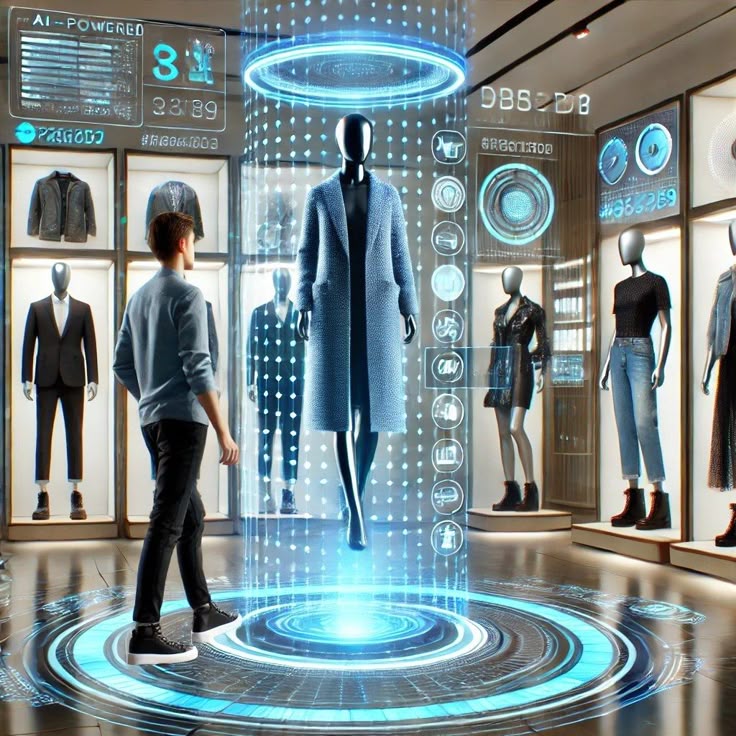
Generative AI is fast becoming the most popular and widely used form of AI. Applications like ChatGPT have made generative AI accessible to businesses and individuals and are now used for multiple functions. A guide to artificial intelligence describes generative AI as a model that can perform tasks like classification, sentence completion, generating images or voices, and creating synthetic (artificially generated) data. This has allowed users to easily create new content much faster and without the need to hire professionals for labor-intensive tasks. In the fashion industry, brands use generative AI to enhance marketing campaigns, design new clothes, and improve customer service.
Enhancing Marketing Campaigns
The fashion industry’s marketing campaigns have always targeted specific markets. Many of fashion’s most famous adverts promote a lifestyle that consumers can achieve by wearing their clothes. AI is being used by the fashion industry to make their marketing campaigns even more targeted. In our examination of the benefits of AI in fashion marketing, we detailed how AI Algorithms identify the best platforms and timing for online ads, ensuring maximum exposure.
Generative AI has allowed fashion brands to enhance their advertising even more by integrating AI imagery. The Italian luxury fashion house Etro created a campaign that featured AI-generated imagery to bring the collection’s theme of an imaginary place to life through ethereal landscapes and fantastical patterns. Digital artist Silvia Badalotti used “verbal inputs to guide AI in creating a series of synthetic images, ranging from pastel-hued architectures to lush natural scenes and astral maps.”
Design
Fashion is a fast-paced industry, with countless new collections released each year. Generative AI has the potential to revolutionize the design process—not only by accelerating it, but also by making it more accessible. A pioneering example is Maison Meta, a generative AI studio that hosted the first-ever AI Fashion Week in New York. The event featured a competition where emerging designers used AI to develop fashion lines, with winning collections selected for physical production and online sale through retailer Revolve.
While this increased accessibility is a welcome shift in an industry notoriously difficult to break into, concerns remain about the potential loss of creative artistry. If garments and campaigns can be generated from simple verbal prompts, there’s a risk that human design skills could be overshadowed. In such a scenario, rather than opening up the industry, AI could unintentionally make the industry even more exclusive—benefiting only those with the resources and tools to harness its power effectively.
Customer Service

Chatbots have become such an integrated part of how companies communicate with customers that it is now expected of most brands. These generative AI applications are being used in the fashion industry to create a more personalized customer service. Luxury brand Zenga, which is frequently worn on the red carpet, has a new AI-powered service called Zegna X. The brand has said that customers who shop with Zegna X spend 75% more than those who walk into the store.
Generative AI empowers customers to ask detailed, personalized questions and receive instant answers and recommendations from online stores—offering a level of interactivity that far surpasses the limitations of traditional brick-and-mortar retail.
The fashion industry is on the brink of a major transformation, with generative AI reshaping how fashion is marketed, designed, and sold. From digital storefronts to creative direction, the integration of AI is redefining every stage of the fashion experience.
Featured Image: Liza Summer/Pexels
For the latest in fashion, lifestyle and culture, follow us on Instagram @StyleRave_
—Read also