

Dick Cheney, long regarded as the most powerful vice president in U.S. history, has died at the age of 84. His family confirmed on Monday that he passed away from complications related to pneumonia and long-term heart disease. With his death, a defining chapter in American politics comes to a close—one that forever changed how power could be exercised from behind the scenes.
For decades, Cheney stood as the quiet architect of some of the most consequential decisions in modern U.S. history. His political instincts were razor-sharp, his reach extended across administrations, and his legacy remains as formidable as it is divisive. Whether viewed as a master strategist or a controversial power broker, Cheney shaped Washington’s corridors of influence like few others before him. Even in silence, his presence was unmistakable. It was felt in every decision, every debate, and every shadow where policy met power.
Early Life and Education: From Wyoming to Washington

Born on January 30, 1941, in Lincoln, Nebraska, Richard Bruce Cheney grew up amid the modest plains of Casper, Wyoming. His father worked for the U.S. Department of Agriculture, while his mother had once shone as a local softball star. These middle-class roots, combined with the rugged Wyoming landscape, instilled in Cheney a practical, no-nonsense worldview long before politics entered his life.
Although he earned a scholarship to Yale University, Cheney left before completing his studies. For a time, he worked as a lineman, braving electric poles and harsh winter winds—a humble reminder that even the man who would later help steer the world’s largest economy once tackled everyday labor. Eventually, he returned to academia, earning both a bachelor’s and a master’s degree in political science from the University of Wyoming. It was there that his fascination with government, power, and organizational structure began to take shape.
In 1964, Cheney married Lynne Vincent, his high-school sweetheart and intellectual equal. Together, they forged a partnership grounded in discipline, ambition, and shared purpose—qualities that would sustain him through the complex corridors of Washington’s power.
The Power Behind the Presidency
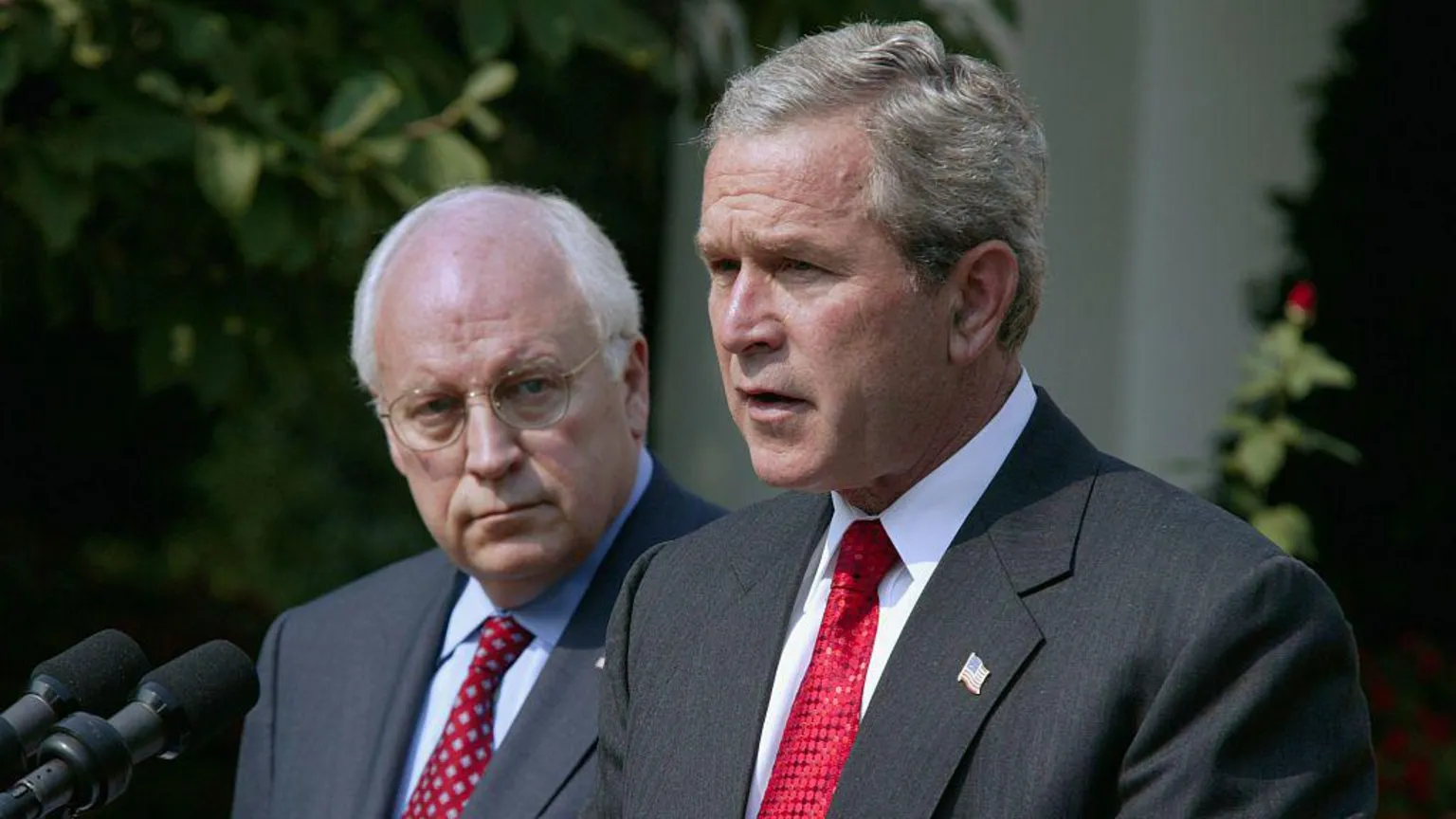
To understand Cheney’s influence is to understand how Washington truly operates—through strategy, loyalty, and a type of power that often works behind the scenes. As vice president under George W. Bush, Cheney was far from the ceremonial figure many of his predecessors had been. Instead, he became the engine driving the administration’s most consequential policies, shaping the nation’s course during moments of war, crisis, and transformation.
From the War on Terror to the expansion of executive authority, Cheney’s fingerprints were evident on nearly every major decision of the Bush years. He viewed the presidency as an institution to be strengthened, not constrained, and worked relentlessly to consolidate its power. That approach made him a master tactician—and, to his critics, a symbol of unchecked influence.
Yet even those who opposed him seldom questioned his intellect. Cheney combined the precision of an engineer with the foresight of a historian, always aware of the long-term consequences of each action. He didn’t seek the spotlight; he sought results. And that single-minded focus made him both uniquely effective and, at times, unnervingly formidable.
A Washington Power Broker Like No Other
Long before his tenure as vice president, Cheney had already crafted a résumé that read like a blueprint for American political influence. As the youngest White House Chief of Staff in history under Gerald Ford, he quickly learned how power truly moved through Washington’s corridors. Later, as a ten-term congressman from Wyoming and Secretary of Defense under George H.W. Bush, he honed the art of policy-making, negotiation, and strategic persuasion.
By the time George W. Bush tapped him as a running mate in 2000, Cheney was not seeking the spotlight. In fact, he initially led the search committee for potential vice presidents—only to become the unexpected choice himself. From that moment, he helped redefine the office, quietly shaping foreign policy, national security, and even energy reform with an influence that often rivaled the president’s.
In every sense, Cheney was the consummate insider: a man whose voice carried weight without volume, whose presence was measured not in speeches or headlines, but in results and outcomes that left a lasting mark on American governance.
Dick Cheney’s Cause of Death: A Long Battle With Heart Disease
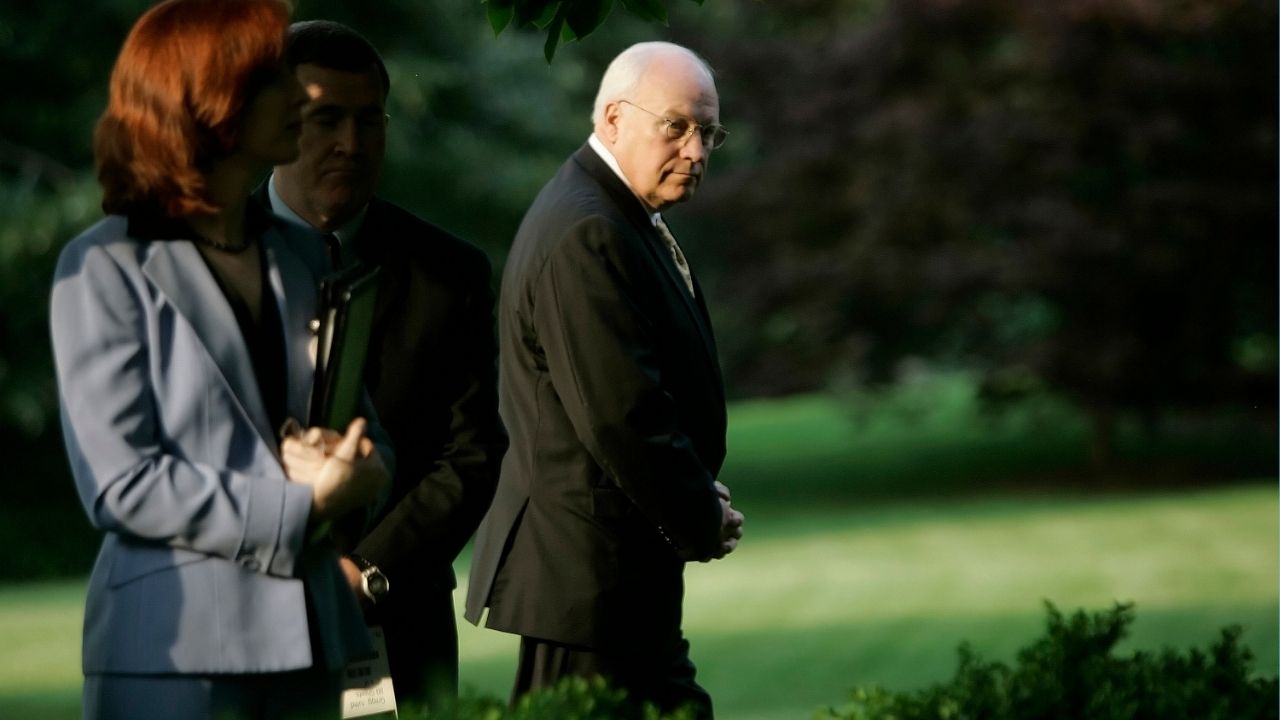
Cheney’s health struggles were a defining part of his story for much of his adult life. He survived five heart attacks between 1978 and 2010 and relied on a heart-regulating device for years before undergoing a successful transplant in 2012. Even then, he rarely slowed down. Those close to him often described him as “stubbornly resilient,” a man driven by an unshakable sense of purpose.
In his final years, Cheney continued to surprise the public. Just months before his death, he made headlines by breaking party lines, publicly expressing support for former Vice President Kamala Harris in the 2024 election.
For some, it was a startling move; for others, it was the final testament of a man who had always placed conviction above convenience. His statement, “We have a duty to put country above partisanship,” captured the same steel resolve that had defined his political career—principled, unyielding, and ever focused on the nation over self.
Dick Cheney’s Complicated Legacy
Cheney’s passing has reignited debates about his influence on both American politics and global affairs. Specifically, his staunch advocacy for the Iraq invasion, his role in expanding intelligence powers, and his unapologetic belief in America’s global dominance remain deeply controversial. Yet, even his fiercest critics recognized that Cheney approached politics with unmatched precision.
To some, he was a patriot who placed national security above all else during uncertain times. To others, he represented the perils of concentrated power. Beyond these labels, Cheney’s story reveals a deeper truth: the duality of leadership in a democracy built on compromise, conviction, and control.
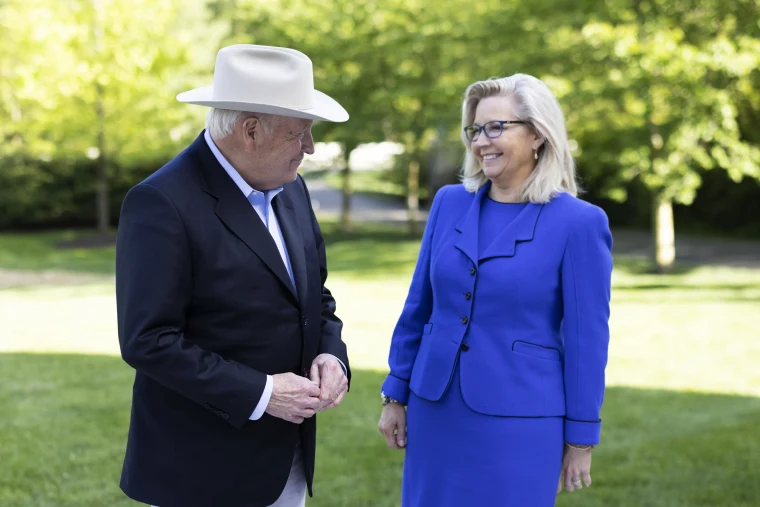
In recent years, his relationship with his daughter, Liz Cheney, became a defining aspect of his public image. Their shared stance against President Donald Trump and their defense of constitutional integrity offered a glimpse into the enduring principles that guided him, even as America’s political landscape grew increasingly polarized.
Dick Cheney’s death is more than the passing of a former vice president. It marks the fading of a generation of Washington heavyweights who understood power as both an art and a burden. Calculating, relentless, and often misunderstood, Cheney leaves behind a legacy that will continue to provoke debate, reflection, and study for years to come.
Featured image: Getty Images
Giorgio Armani, The Man Who Revolutionized Fashion, Dies at 91