

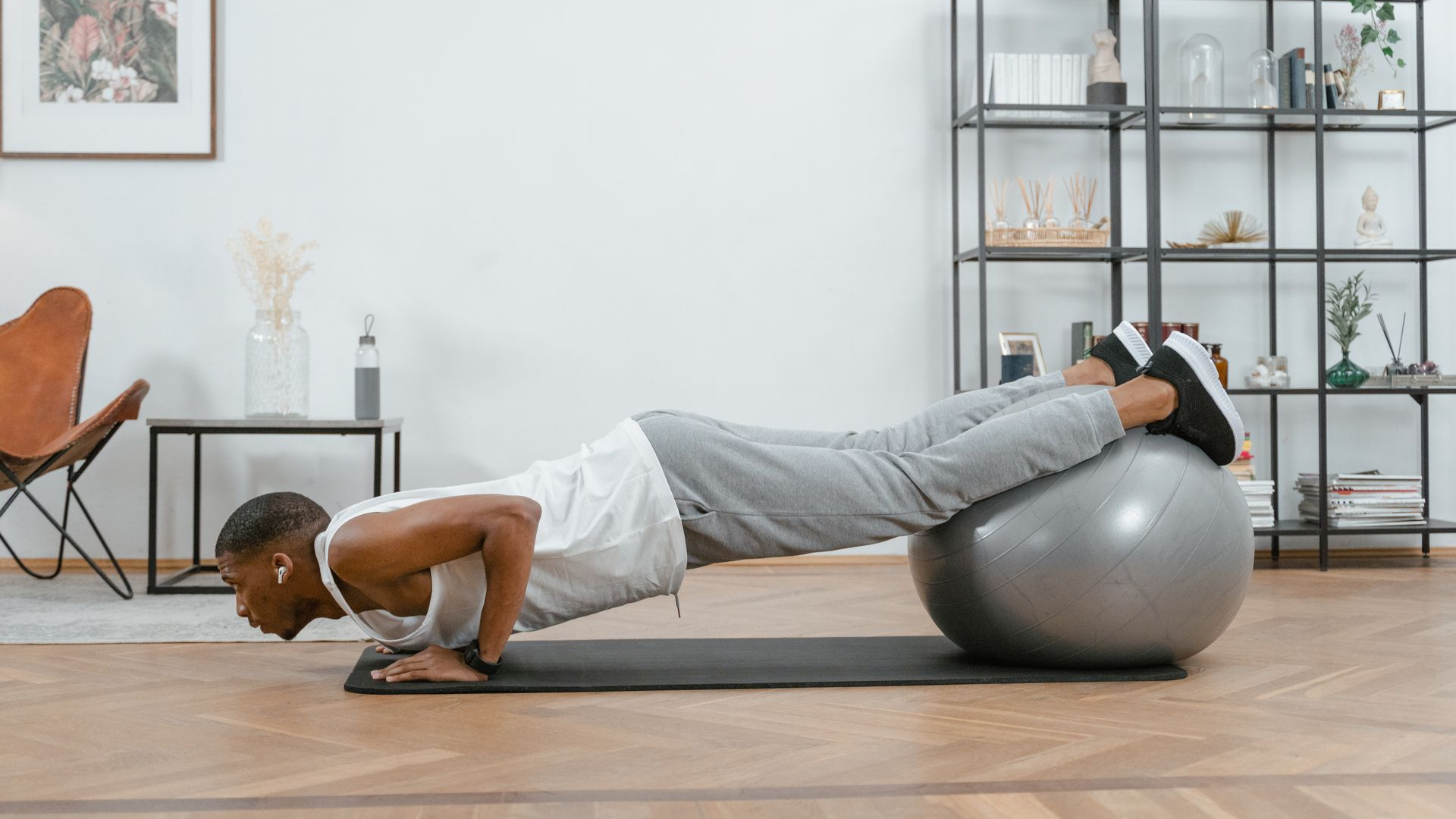

Strength is often measured by how much weight someone can lift, but that tells only part of the story. Controlling your body through a deep lunge, holding a demanding plank variation, or pushing yourself off the floor with precision requires strength, coordination, and muscular control that conventional weightlifting does not always test. The best bodyweight exercises develop these qualities while allowing you to train almost anywhere, without building your routine around a gym membership or a collection of equipment.
The appeal goes beyond convenience. Training with your own body weight means working with the resistance available to you, making technique, leverage, and movement selection especially important. A standard pushup might be manageable for one person and a serious challenge for another, while an archer pushup can humble even someone who regularly lifts heavy weights. With the right progressions, bodyweight training can support meaningful gains in strength and muscle, improve balance, and reveal weaknesses that are easy to overlook in a conventional workout.
The difference between an effective session and a routine built around easy repetitions comes down to how you train. Choosing movements that challenge multiple muscle groups, controlling each repetition, and progressing to harder variations can transform a simple floor workout into a demanding strength program.
Here are six highly recommended bodyweight exercises to help you build strength, improve control, and develop explosive power…
#1. Pushups Build Foundational Upper-Body Strength
Few movements offer as much versatility as the pushup. It trains the chest, triceps, and shoulders while requiring the core to keep the body stable. More importantly, it offers a clear path for progression: Once standard repetitions become comfortable, you can adjust your hand position, slow the descent, or move toward more challenging variations that place greater demands on one arm.
Begin in a high plank with your hands just wider than shoulder-width apart. Brace your abdomen and glutes, keeping your body aligned from head to heels. Bend your elbows to lower your chest toward the floor, then push back up without letting your hips drop or your lower back arch.
Training target: Three sets of 8–15 repetitions.
If you cannot maintain good form throughout a set, start with incline pushups using a sturdy, elevated surface. For a greater challenge, progress to close-grip pushups, which place more emphasis on the triceps, or archer pushups, which shift more of the workload toward one arm.
#2. Lunges Develop Stronger Legs and Better Balance
Bilateral exercises such as squats allow both legs to work together, but they can sometimes make differences in strength between the two sides less obvious. Lunges address this by challenging each leg independently. The movement develops the quadriceps and glutes while requiring the hips, knees, and ankles to work together to maintain control.
Stand tall, step forward, and lower your body until both knees bend comfortably. Keep your front foot planted, your torso upright, and your front knee tracking in the same direction as your toes. Push through your front foot to return to the starting position, then repeat on the other side.
Training target: Three sets of 8–12 repetitions per leg.
Once you have mastered the standard lunge, try reverse lunges or Bulgarian split squats. These variations increase the challenge while keeping the focus on single-leg strength, balance, and stability.
#3. Inverted Rows Strengthen the Back
A strength routine built almost entirely around pushups and squats leaves an important movement pattern undertrained: pulling. Inverted rows help address that gap by working the upper back, biceps, and muscles responsible for controlling the shoulder blades. They also provide a useful counterbalance to pressing exercises.
Position yourself beneath a securely anchored horizontal bar and grip it slightly wider than shoulder-width. Keep your body straight, tighten your core, and pull your chest toward the bar by driving your elbows backward. Pause briefly at the top before lowering yourself slowly.
Training target: Three sets of 6–10 repetitions.
The closer your torso is to horizontal, the more challenging the movement generally becomes. If you do not have a suitable bar or purpose-built setup, choose another safe pulling exercise rather than improvising with furniture that could tip or collapse.
#4. Jump Squats Develop Explosive Lower-Body Power
Muscular strength and explosive power are related, but they are not identical. Jump squats train your ability to produce force quickly, making them a useful addition to routines that also include slower, controlled strength movements. They recruit the quadriceps and glutes while challenging coordination, balance, and landing mechanics.
Stand with your feet about shoulder-width apart. Push your hips back and bend your knees into a comfortable squat, then drive through your feet to jump upward. Land softly with your knees slightly bent, regain control, and reset before the next repetition.
Training target: Two or three sets of 5–8 repetitions.
Focus on powerful jumps rather than speed. If your landings become heavy or your technique deteriorates, stop the set. Regular bodyweight squats are a better starting point if you are not yet comfortable with jumping or impact.
#5. Hollow Holds Build a More Stable Core
Core strength is not simply about how many sit-ups you can perform. Your abdominal muscles also need to resist unwanted movement and keep your torso stable while your arms and legs work. The hollow hold trains this ability by requiring you to maintain tension throughout your midsection.
Lie on your back and press your lower back into the floor. Lift your shoulders and feet slightly, extending your arms overhead if your mobility allows. Hold the position while keeping your lower back in contact with the floor.
Training target: Three sets of 15–30 seconds.
If your lower back starts lifting away from the floor, bend your knees or bring your arms closer to your sides. A shorter hold performed correctly is more effective than a longer one that sacrifices control.
#6. Burpees Combine Strength and Conditioning
Burpees are demanding because they combine several movements into one continuous sequence. Squatting, moving into a plank, pushing off the floor, and returning to standing challenge multiple muscle groups while quickly increasing cardiovascular demand. They are particularly useful when you want to combine conditioning with a full-body workout.
Begin standing with your feet shoulder-width apart. Squat down and place your hands on the floor, then step or jump your feet back into a plank. Perform a pushup if appropriate, bring your feet forward, and stand up. Add a vertical jump only if you can land under control.
Training target: Two or three sets of 5–8 repetitions.
Burpees are not a movement to rush through at the expense of technique. Beginners can step their feet backward and forward rather than jumping, reducing the impact while learning the sequence.
How to Make Bodyweight Training Progressively Harder
One of the biggest mistakes in bodyweight training is assuming that progress means doing more repetitions indefinitely. Repetition counts matter, but strength development also depends on how challenging a movement is, how well you execute it, and whether you increase the difficulty as you improve.
Use these principles to keep your training productive:
- Progress gradually: Add repetitions or sets when you can complete your current workload with consistent technique.
- Change the leverage: Move from standard pushups to archer pushups or from regular squats to split squats.
- Control the tempo: Lower yourself slowly to increase the time your muscles spend under tension.
- Use pauses: Brief holds at demanding points in a movement can expose weaknesses and improve control.
- Allow recovery: Train your major muscle groups two or three times per week, allowing enough rest between challenging sessions.
Build a Routine You Can Sustain
You do not need to perform every movement in one session to make progress. Start with pushups, lunges, inverted rows, and hollow holds to establish a balanced foundation. Add jump squats and burpees when you want to develop explosive power and conditioning. Two or three well-executed sessions each week can provide a useful starting point, particularly when you track your repetitions and make gradual adjustments.
Bodyweight exercises are effective because they make strength training accessible without making it effortless. Your own body provides the resistance, but your technique, consistency, and willingness to progress determine how much you gain. Treat each repetition as an opportunity to develop control, not simply another number to add to your workout log, and a basic routine can grow into a serious, sustainable strength practice.
Featured image: Mart Production/Pexels
—Read Also