



Melanoma is a serious form of skin cancer that affects men in significant numbers. There are many different cancers that affect men, and there are even types of breast cancer out there that will have an impact on life unless it’s caught in advance. Melanoma is just one cancer among many and as with anything, knowledge is power. Often associated with exposure to ultraviolet (UV) radiation from the sun or tanning beds, melanoma can develop in any part of the body that has pigment-producing cells called melanocytes.
While it is less common than other skin cancers, melanoma is more dangerous because it is more likely to spread to other parts of the body if not detected early. Understanding the risk factors, symptoms, prevention methods, and treatment options is crucial for reducing the incidence and improving the prognosis of melanoma in men.
The rising tide of melanoma in men

Melanoma, the type of skin cancer which is characterized by the abnormal growth of melanocytes (the cells that produce melanin), has seen a significant increase in the way it affects men over the past few decades. Several factors contribute to this disparity:
- Sun exposure: Men tend to spend more time outdoors engaging in activities like sports, construction work, and leisure, increasing their exposure to harmful ultraviolet (UV) rays from the sun.
- Delayed diagnosis: Men are often less likely to seek medical attention for skin changes, leading to delayed diagnosis and potentially more advanced stages of melanoma.
- Hairless skin: Men have more exposed skin compared to women, especially on the head, an area susceptible to sun damage.
- Lifestyle factors: Certain lifestyle factors, such as smoking and excessive alcohol consumption, can increase the risk of melanoma in men.
See the risk factors for melanoma
While anyone can develop melanoma, certain factors increase the risk:
- Fair skin: Individuals with fair skin, blue eyes, and red hair are more susceptible to melanoma due to lower melanin production.
- Excessive sun exposure: Repeated and prolonged sun exposure, especially during childhood and adolescence, is a major risk factor.
- History of sunburns: Severe sunburns, particularly blistering ones, increase the risk of melanoma.
- Moles: Having a large number of moles or atypical moles (dysplastic nevi) can elevate the risk.
- Family history: A family history of melanoma increases the likelihood of developing the disease.
- Weakened immune system: Conditions that suppress the immune system, such as HIV/AIDS or organ transplantation, can contribute to melanoma risk.
Recognizing the signs of melanoma
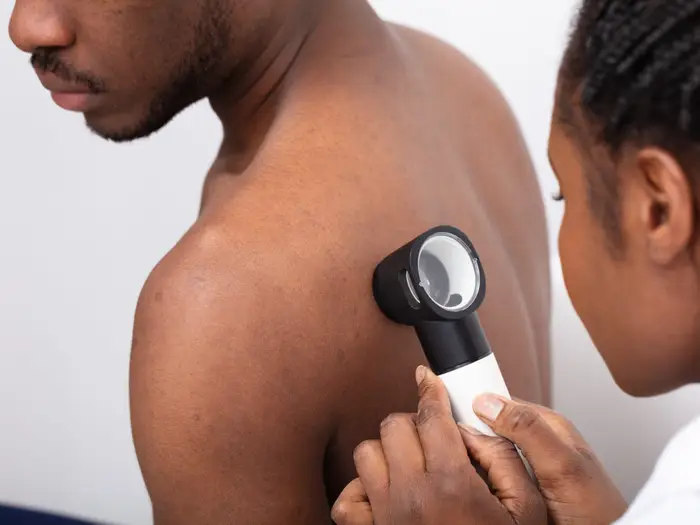
Early detection is crucial for successful melanoma treatment. If you spot a mole on your skin, look out for the following signs:
- Asymmetry: One half of the mole doesn’t match the other.
- Border irregularity: The edges are ragged, notched, or blurred.
- Color: The mole has varying shades of brown, black, red, white, or blue.
- Diameter: The mole is larger than the size of a pencil eraser (about 6 millimeters).
- Evolving: The mole changes in size, shape, color, or elevation.
If you notice any of these changes, consult a dermatologist promptly.
How to prevent this skin cancer
Protecting your skin from the sun is the most effective way to prevent melanoma. Follow these sun safety tips:
- Seek shade: Limit sun exposure, especially during peak hours (10 a.m. to 4 p.m.).
- Wear protective clothing: Cover your skin with long-sleeved shirts, pants, and wide-brimmed hats.
- Use sunscreen: Apply broad-spectrum sunscreen with an SPF of 30 or higher generously to all exposed skin.
- Conduct regular self-exams: Check your skin regularly for any changes in moles or new spots.
- Get professional skin exams: Schedule regular skin exams with a dermatologist.
Treatment options for melanoma

The treatment of melanoma depends on the stage and location of the cancer:
- Surgical removal: Early-stage melanoma can often be treated effectively with surgical excision.
- Immunotherapy: Treatments that help the immune system recognize and fight cancer cells, such as checkpoint inhibitors.
- Targeted therapy: Drugs that target specific genetic mutations within melanoma cells.
- Radiation therapy: Used to destroy cancer cells or shrink tumors, often in advanced cases.
- Chemotherapy: Although less common for melanoma, it may be used when other treatments are ineffective.
While melanoma affects men in grave numbers, early detection and prevention of this form of skin cancer can significantly improve outcomes. By understanding the risk factors, recognizing the signs, and adopting sun-protective measures, men can take proactive steps to safeguard their health.
Featured image: jacoblund/iStock
For the latest in fashion, lifestyle, and culture, follow us on Instagram @StyleRave_
—Read Also