


The 2026 road racing calendar shattered marathon records. Sabastian Sawe broke the official two-hour barrier in London, while Tigst Assefa set a women-only world record before winning Berlin. Those historic breakthroughs required more than peak human fitness. They demanded a radical new marathon running shoes built to cheat fatigue and convert every footstrike into pure forward speed.
Behind the scenes, footwear brands turned the seven Abbott World Marathon Majors into high-stakes testing laboratories. Engineers pushed shoe weights below 100 grams, tested zero-drop platforms, and spun seamless uppers using automated robotics. Elite champions trusted those experimental prototypes on the world’s fastest courses to rewrite running history.
Here are the 11 race-winning shoes that defined distance running in 2026…
#1. Adidas Adizero Adios Pro Evo 3
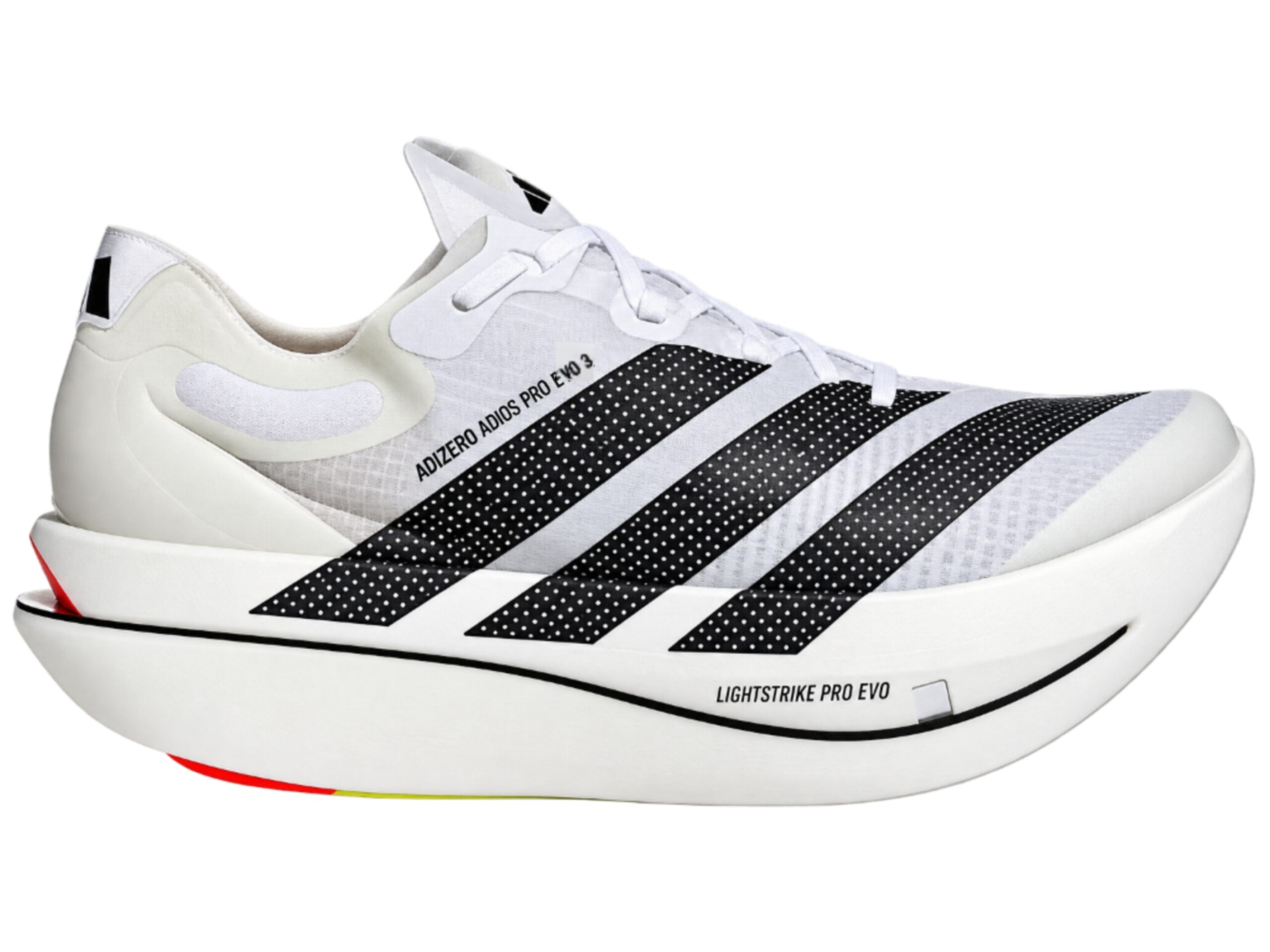
No running shoe in history has ever dominated a sporting calendar quite like the Adidas Adizero Adios Pro Evo 3 did in 2026. Unveiled days before the April London Marathon, this $500 featherweight weapon captured eight of the 10 World Marathon Major victories. Sabastian Sawe wore it to clock 1:59:30 in London, becoming the first human to break two hours in a record-eligible marathon. Eleven seconds later, Yomif Kejelcha followed in 1:59:41 wearing the exact same model.
Weighing an astonishing 97 grams in a UK mens size 8.5 (US 9), the shoe feels lighter than a deck of cards. Adidas engineers replaced traditional underfoot carbon rods with a perimeter EnergyRim frame, shaving 30 percent off its predecessor’s weight. Because of that, the slab-cut Lightstrike Pro Evo foam delivers 11 percent higher forefoot energy return and 1.6 percent better running economy.
“Theres elements that went into the Evo 3 that have definitely moved us into a new era,” Adidas chief creative officer Alasdhair Willis told Fast Company. “We call it a new era of fast.”
Athletes backed up those laboratory numbers on pavement across three continents. Tigst Assefa wore the Pro Evo 3 to set a women-only world record of 2:15:41 in London, then ran a personal-best 2:11:04 to win Berlin. “Great shoes for racing, very light,” Assefa noted after her London triumph. Peres Jepchirchir, Guye Adola, Amos Kipruto, Hawi Feysa, and Sheila Chepkirui also rode this exact silhouette to Major gold.
#2. Nike Apex
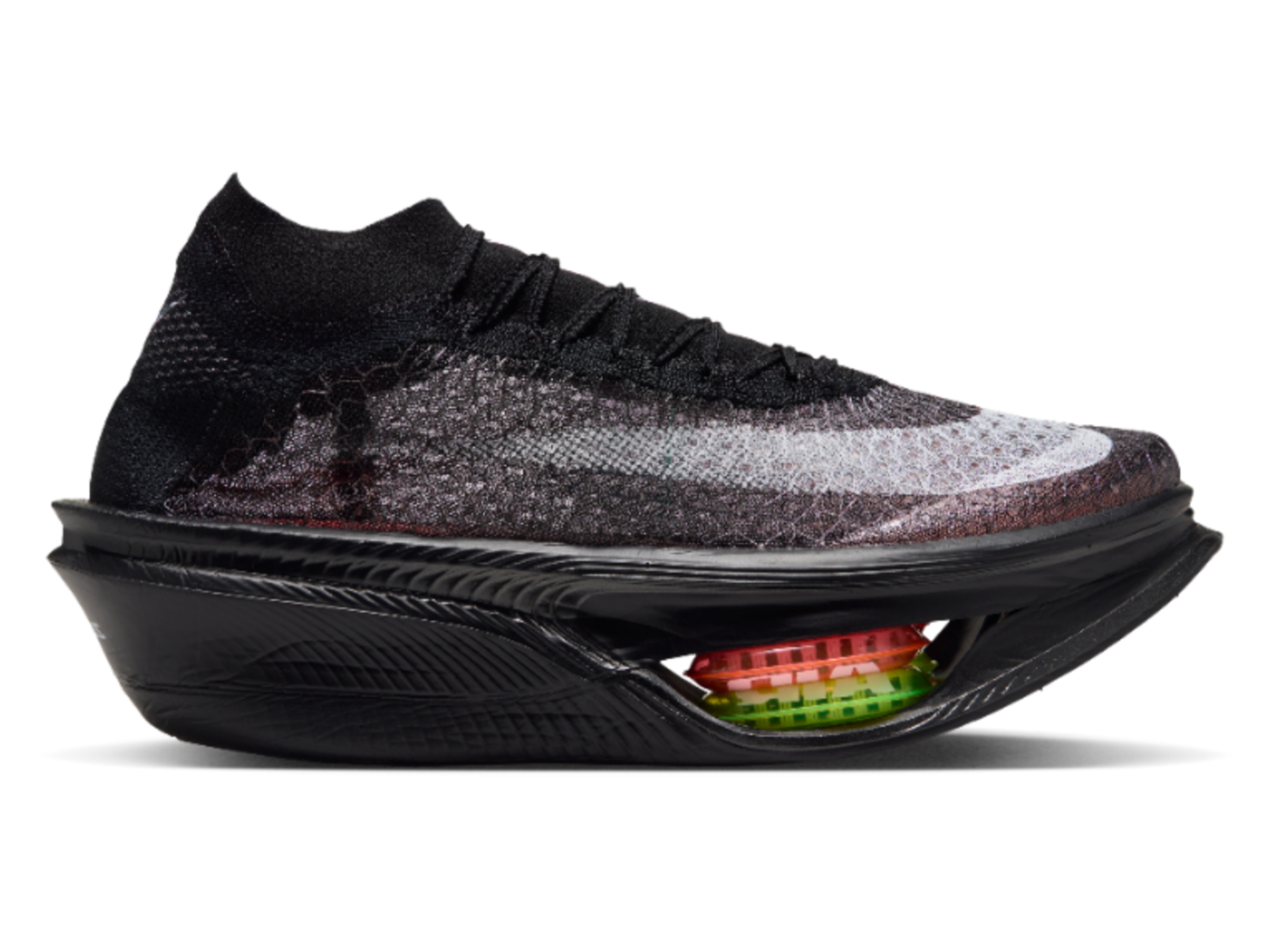
Nike waited until the final World Marathon Major of the year to drop its biggest biomechanical surprise. Sweden’s Andreas Almgren stormed to a 2:06:01 victory at the November New York City Marathon in his 26.2-mile debut wearing the Nike Apex. Scheduled for a January 2027 retail launch at $350, the Apex represents a radical architectural pivot for the Beaverton giant.
Instead of a traditional high-drop offset, the Apex utilizes a completely flat, zero-drop platform measuring 40 millimeters from heel to forefoot. Nike engineers removed the sockliner entirely so the athlete’s foot rests directly atop new ZoomX LT foam. Beneath the forefoot sit four Air Zoom units arranged in two double-stacked pairs, generating massive energy return.
Despite packing more pressurized Air than any distance racer in Nike history, the Apex weighs over 10 percent less than the Alphafly 3 in a men’s US size 10. A raised, inverse-wave carbon fiber Flyplate stabilizes the towering forefoot stack.
“If youre not prepared and strong enough, your stride is going to collapse mechanically,” Almgren told Swedish newspaper Expressen after mastering Central Park. Although he admitted feeling fatigued at 32 kilometers, the shoes late-race snap helped him drop Italys Yemaneberhan Crippa. By winning on debut, Almgren proved zero-drop propulsion belongs at the sharp end of road racing.
#3. ASICS Metaspeed Sky Prototype
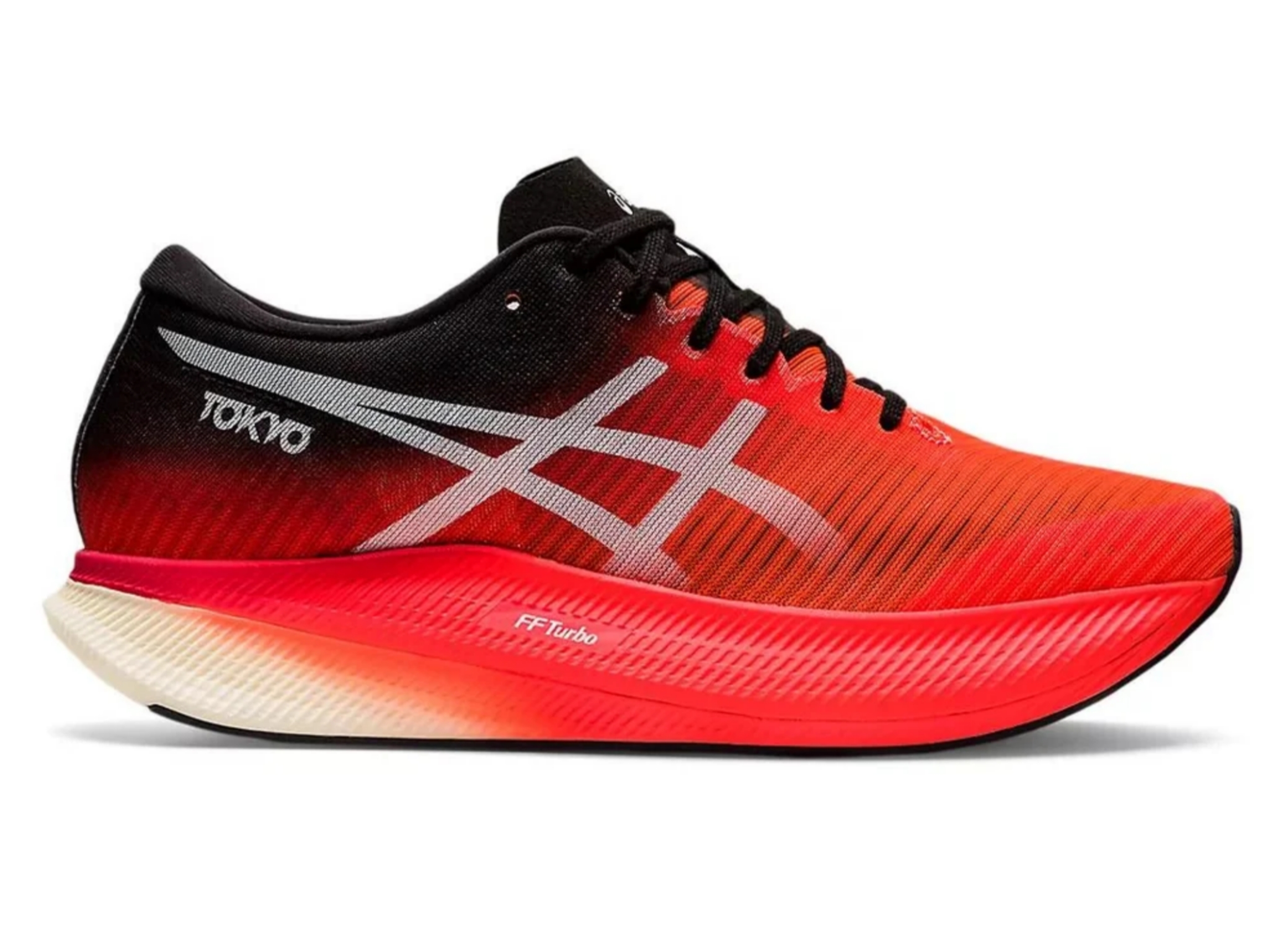
Boston’s brutal Newton Hills demand mechanical stability alongside raw propulsion, and ASICS delivered both on Patriots’ Day. Defending champion John Korir obliterated Geoffrey Mutai’s 15-year-old course record in April, clocking 2:01:52 in an unreleased ASICS Metaspeed Sky prototype. Seven of the top ten finishers in both the men’s and women’s fields wore ASICS footwear that afternoon, underscoring the Japanese brand’s Boston dominance.
Footwear analysts noted that Korir’s mysterious pre-production racer closely mirrored the MS5 Type-P registered on World Athletics’ approved shoe list. The silhouette builds upon the 170-gram Metaspeed Sky Tokyo, pairing a full-length carbon fiber plate with ASICS’s flagship FF Leap foam. Formulated from aliphatic thermoplastic polyurethane, FF Leap resists compression fatigue over steep downhill gradients while snapping back forcefully on flat stretches.
Korir has made a habit of winning American Majors in experimental ASICS prototypes, having previously captured the 2024 Chicago and 2025 Boston titles in pre-release models. Meanwhile, Alphonce Felix Simbu claimed second in Boston wearing the retail Metaspeed Sky Tokyo, proving that ASICS’s next-generation foam chemistry wins wars on undulating terrain.
#4. Under Armour Velociti Elite 3
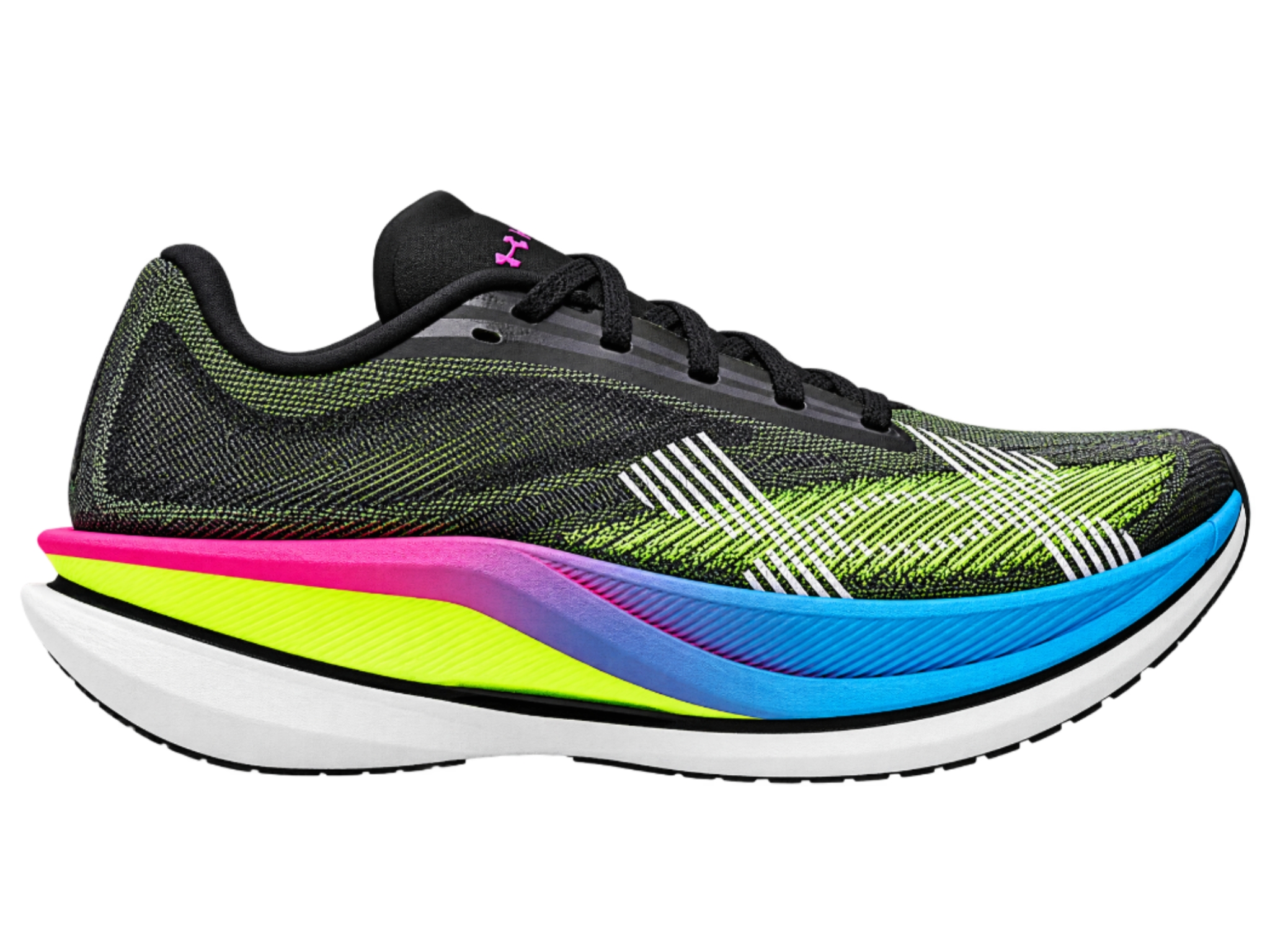
Under Armour rarely headlines marathon shoe debates, yet Sharon Lokedi forced the industry to pay attention on Boylston Street. Lokedi successfully defended her Boston Marathon crown in April, clocking 2:18:51 in an exclusive hot-pink colorway of the Under Armour Velociti Elite 3 that she co-designed. Finishing more than 30 seconds clear of her nearest pursuer, she proved that grounded super shoes still pack championship punch.
Retailing at $250, the Velociti Elite 3 eschews featherweight fragility in favor of aggressive forefoot mechanics and torsional control. Under Armour dropped the heel-to-toe offset from eight millimeters down to a steep two millimeters, pushing midfoot and forefoot strikers forward. Its dual-layer supercritical HOVR+ foam, crafted from a proprietary HTPU compound, wraps around a full-length carbon fiber propulsion plate.
Topped with a breathable Leno weave upper, this extra structural mass provides predictable lateral stability on slick pavement and sharp turns. Lokedi has shaped Under Armour’s racing line since 2019, and her feedback defined this silhouette. “Having confidence in what I’m wearing and racing in allows me to focus completely on competing and performing my best,” Lokedi stated after piloting a development edition to a personal-best 2:14:07 runner-up finish in Chicago.
Her back-to-back Boston triumphs prove that a well-balanced, commercially accessible supershoe can topple million-dollar prototypes. Runners seeking durability alongside elite speed found their blueprint on Lokedis feet.
#5. Nike Alphafly 4 Prototype
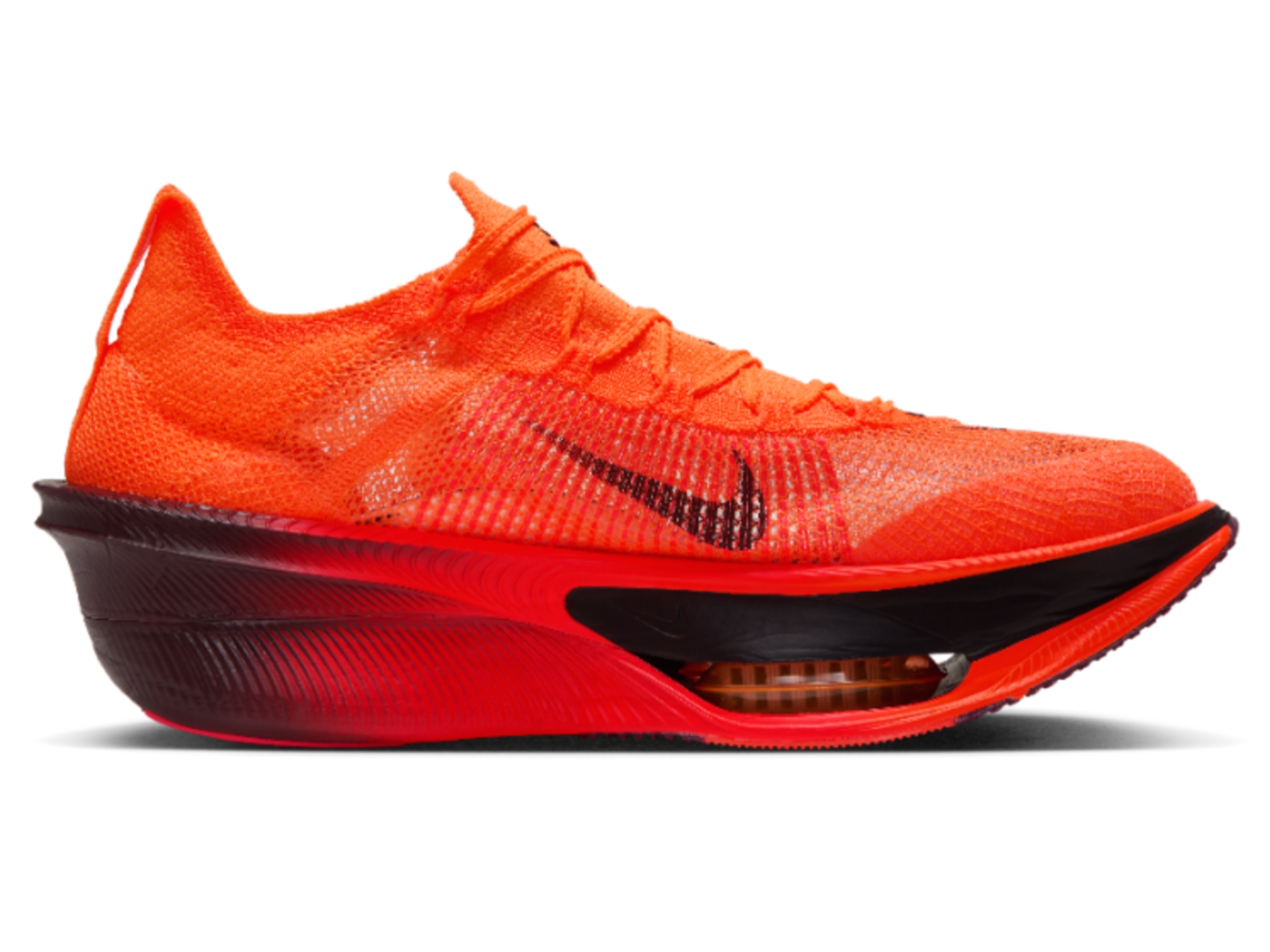
Sydney officially joined the World Marathon Majors rotation in 2025, and its 2026 edition delivered fireworks. Ethiopiaʼs Addisu Gobena shattered the mens course record by over a minute in August, running 2:04:42 in a blacked-out Nike Alphafly 4 prototype. Four top athletes also wore early versions of the shoe at the Boston Marathon, signaling Nike’s quiet confidence before its retail launch.
Designed over two years using insights from Nike’s Project Dreamweaver and extensive women’s trials, the Alphafly 4 reimagines Nike’s flagship racer as a unified system. Engineers paired standard ZoomX at the base with lighter, softer ZoomX LT foam on top, slashing overall weight by five percent compared to the Alphafly 3. Redesigned forefoot Air Zoom pods deliver 10 percent greater energy return while eliminating the notorious clomping noise of earlier models.
Nike retained a traditional eight-millimeter drop alongside a wider carbon fiber Flyplate and connected outsole platform. This geometry protects Achilles tendons while boosting late-race stability for heel-and-midfoot strikers. “When the race became difficult, I trusted the work I had done and trusted the shoe beneath me,” Gobena said following his Sydney breakthrough.
Although Nike later pivoted much of its autumn marketing toward the zero-drop Apex, the Alphafly 4 proved its championship pedigree. It bridges the gap between aggressive forefoot bounce and forgiving marathon cushioning.
#6. Nike Vaporfly 4
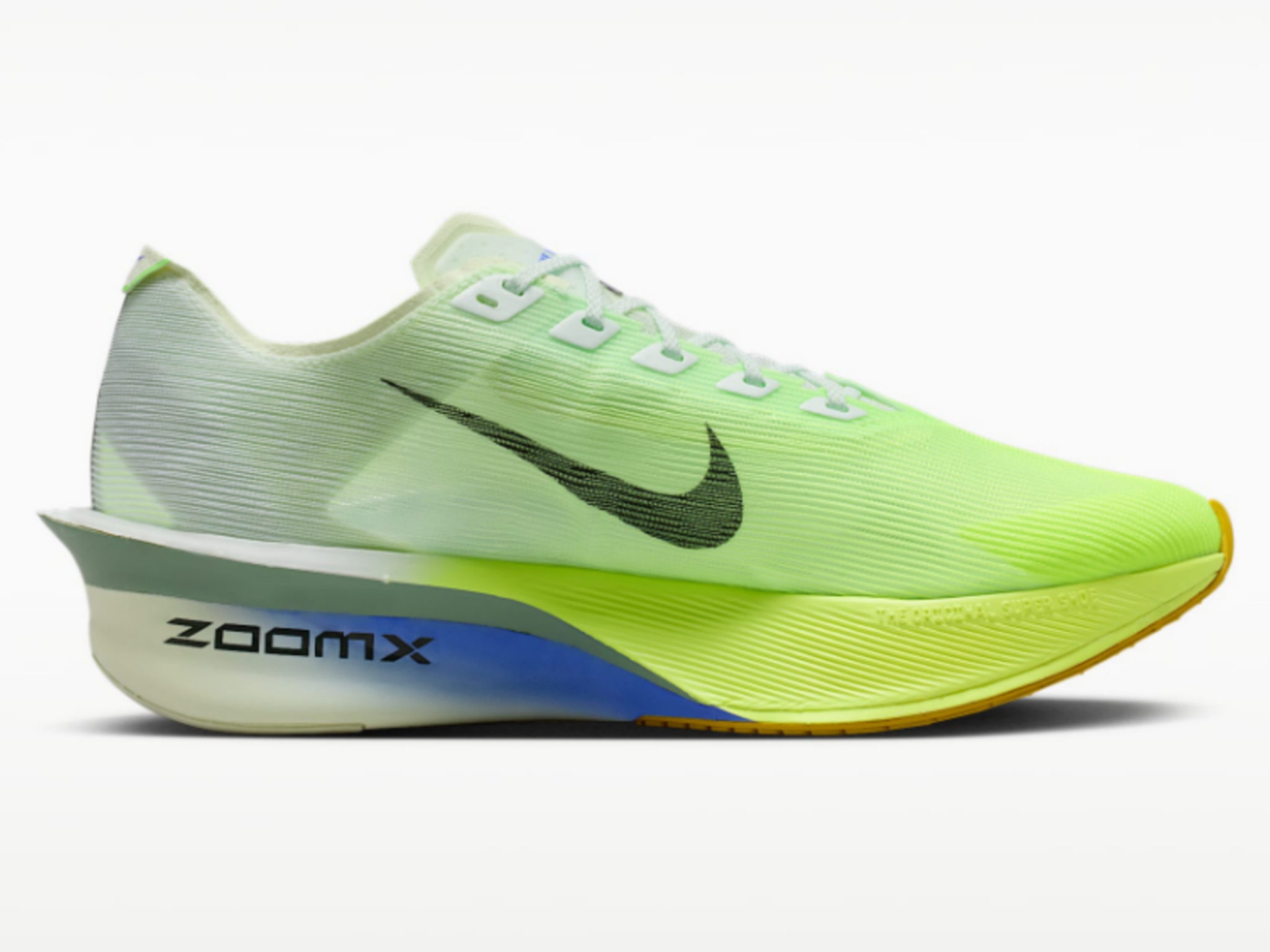
Whenever critics declare the Vaporfly franchise obsolete, an all-time great reminds the world why it started the revolution. At Marchʼs Tokyo Marathon, former world record holder Brigid Kosgei obliterated the womens course record in 2:14:29. She achieved that dominant solo victory lacing up the streamlined Nike Vaporfly 4, finishing over two minutes ahead of runner-up Bertukan Welde and missing her personal best by just 25 seconds.
While heavier Air Zoom models grab headlines for maximum stack height, the Vaporfly 4 thrives on nimble ground feel. Nike trimmed excess weight from the ZoomX midsole and sculpted the heel bevel for smoother midfoot transitions. To that effect, reviewers note that its sharp, propulsive ride excels from 10-kilometer road races up to flat, fast marathons where agility matters most.
Kosgei’s clocking stood as one of the fastest women’s marathons of the entire year, outpacing rivals wearing far pricier prototypes. Against a Tokyo podium stacked with Adidas Adizero Adios Pro Evo 1 V2 and Evo 2 models, Kosgei proved that classic super shoe geometry remains lethal. When paired with relentless front-running, nimble simplicity still wins Major gold.
#7. Adidas Adizero Adios Pro Evo 1 V2
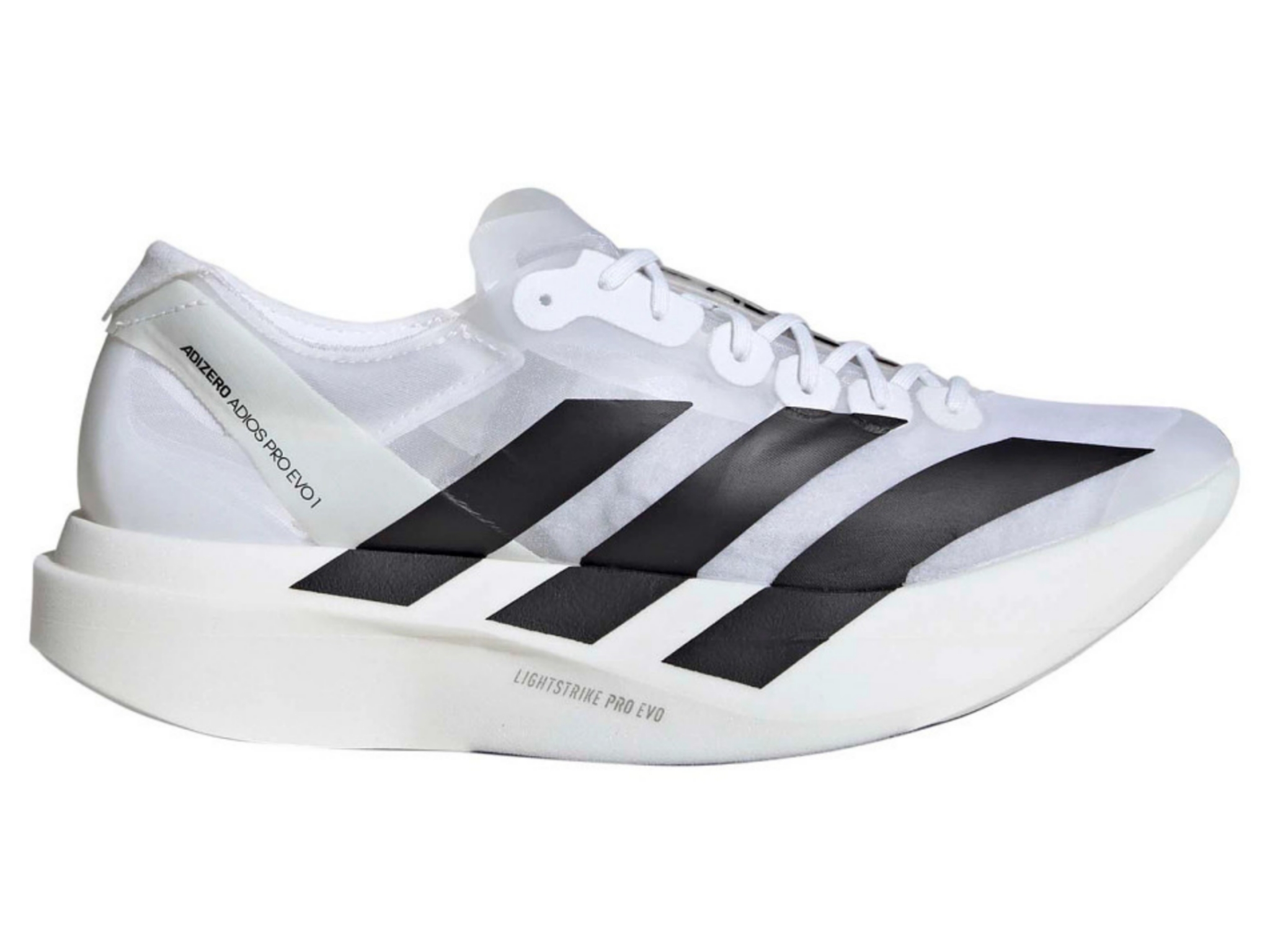
Adidas actually claimed the first World Marathon Major of 2026 before its 97-gram masterpiece ever touched asphalt. Ethiopia’s Tadese Takele successfully defended his men’s Tokyo Marathon title in March, sprinting to a 2:03:37 victory in the Adidas Adizero Adios Pro Evo 1 V2. Two weeks later, Fotyen Tesfay wore the exact same model at the Barcelona Marathon, recording the fastest women’s marathon time in the world at that point in 2026.
Bridging the engineering gap between the original 138-gram Evo 1 and the sub-100-gram Evo 3, the V2 refined forefoot rocker geometry and upper lockdown. Adidas engineers kept the slab-cut Lightstrike Pro foam but tuned its forefoot transition to snap faster during late-race surges. Takele needed every ounce of that responsiveness in Tokyo, edging out Geoffrey Toroitich in a photo finish where both men recorded identical 2:03:37 times.
Even as newer prototypes grabbed media attention throughout the spring and autumn, the Pro Evo 1 V2 remained a trusted weapon for tactical racers. It delivered reliable propulsion without forcing athletes to adapt to radical new midsole geometries. Sometimes, a perfected evolution beats an unproven revolution.
#8. On Cloudboom Strike 2 LS
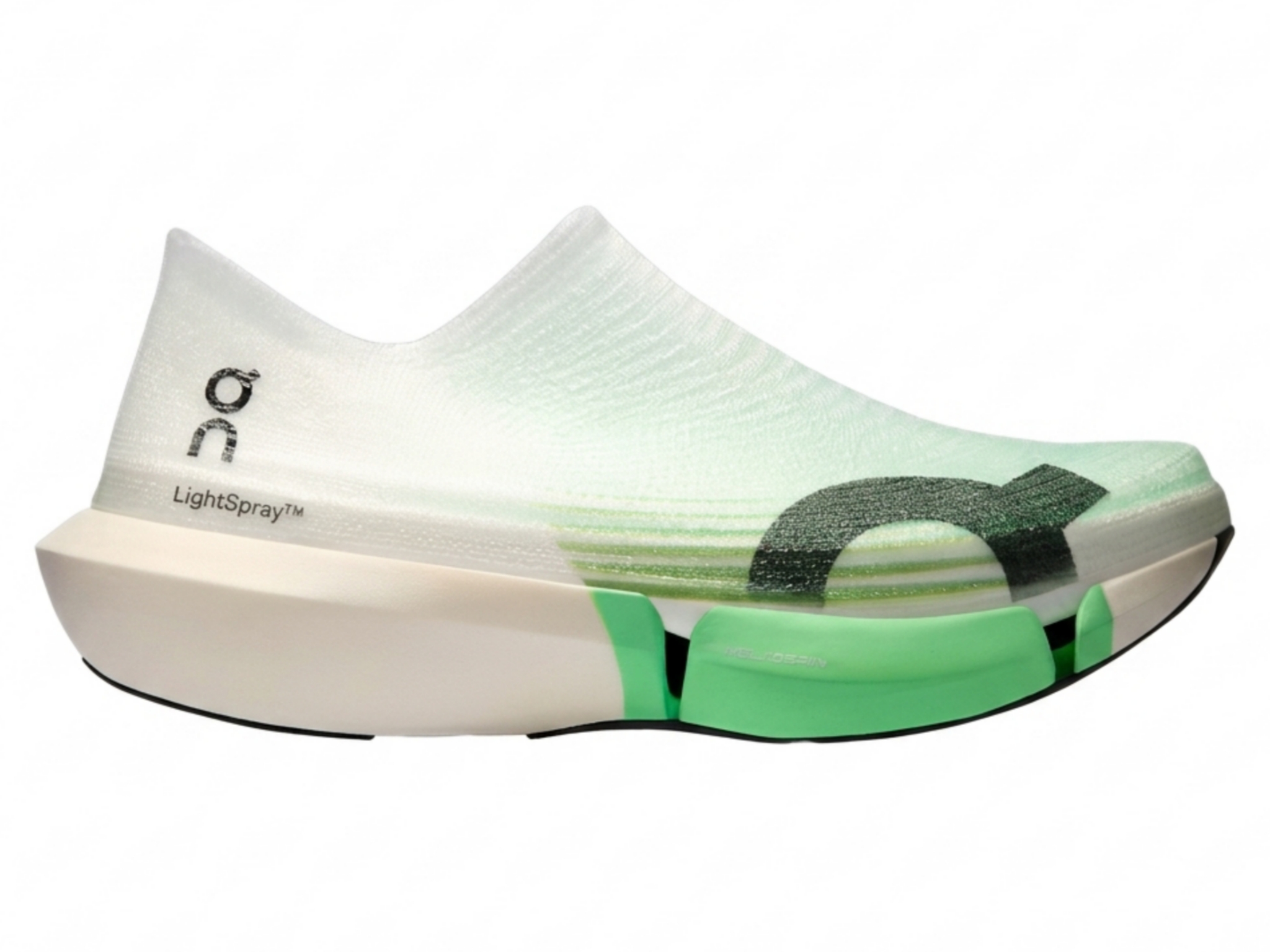
Swiss brand On did not stand atop a Major podium in 2026, yet its robotic manufacturing revolution earned three Major silver and bronze medals. Hellen Obiri ran a personal best 2:15:53 for second in London and took third in New York wearing the On Cloudboom Strike 2 LS. Italy’s Yemaneberhan Crippa also wore the model to capture silver in New York at 2:06:14.
The “LS” stands for LightSpray, a process where a robotic arm spins a single filament of thermoplastic elastomer into a seamless, laceless upper in roughly three minutes. Eliminating traditional stitching, glues, and laces reduces upper weight to a mere 30 grams while creating a sock-like lockdown. Beneath that futuristic shell sits Helion HF PEBA foam, a stiff carbon Speedboard, and decoupled CloudTec Sphere midsole channels.
Weighing roughly 191 grams with a five-millimeter drop, the Cloudboom Strike 2 LS offers a mellow, ultra-consistent bounce that thrives on bruised late-race legs. Obiri’s repeated podium finishes in London and New York confirmed that Swiss automation has officially arrived in elite distance running.
#9. ASICS Metaspeed Ray Prototype
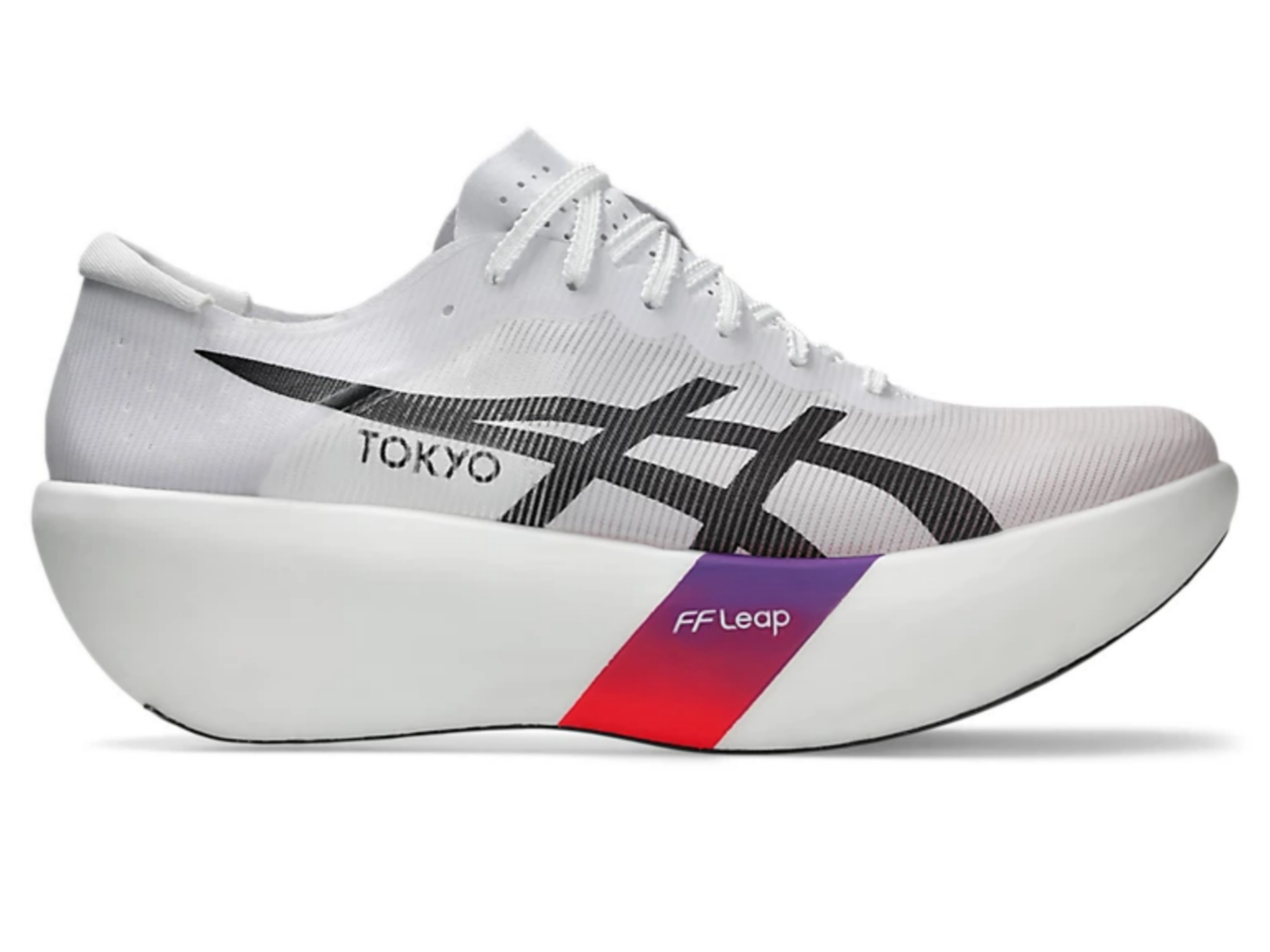
ASICS engineers pushed minimalist cushioning to its absolute physical limit with the unreleased ASICS Metaspeed Ray prototype. American distance star Zouhair Talbi piloted this experimental featherweight to fifth place at the April Boston Marathon in 2:03:45, shattering the American course record. Weighing roughly 129 grams in its production baseline, the Ray silhouette represents the lightest carbon-plated marathon racer in the Japanese brand’s arsenal.
Built around ASICS’s hyper-responsive FF Leap aliphatic TPU foam and a partial forefoot carbon plate, the Ray prioritizes explosive rebound over structural stability. Independent laboratory testing by RunRepeat measured an impressive 81.0 percent forefoot energy return, ranking it among the bounciest platforms ever tested. However, that ultra-soft midsole demands immaculate ankle strength and precise foot placement on cambered roads.
“This is the point when no mistakes can be made,” Talbi noted when recounting his survival through Boston’s punishing Heartbreak Hill. Out of seven top-ten ASICS finishers in Boston, Talbi stood alone in choosing the Ray prototype over the more grounded Metaspeed Sky and Edge models. His historic 2:03:45 clocking proved that high-wire footwear rewards elite biomechanics.
#10. Adidas Adizero Adios Pro Evo 2
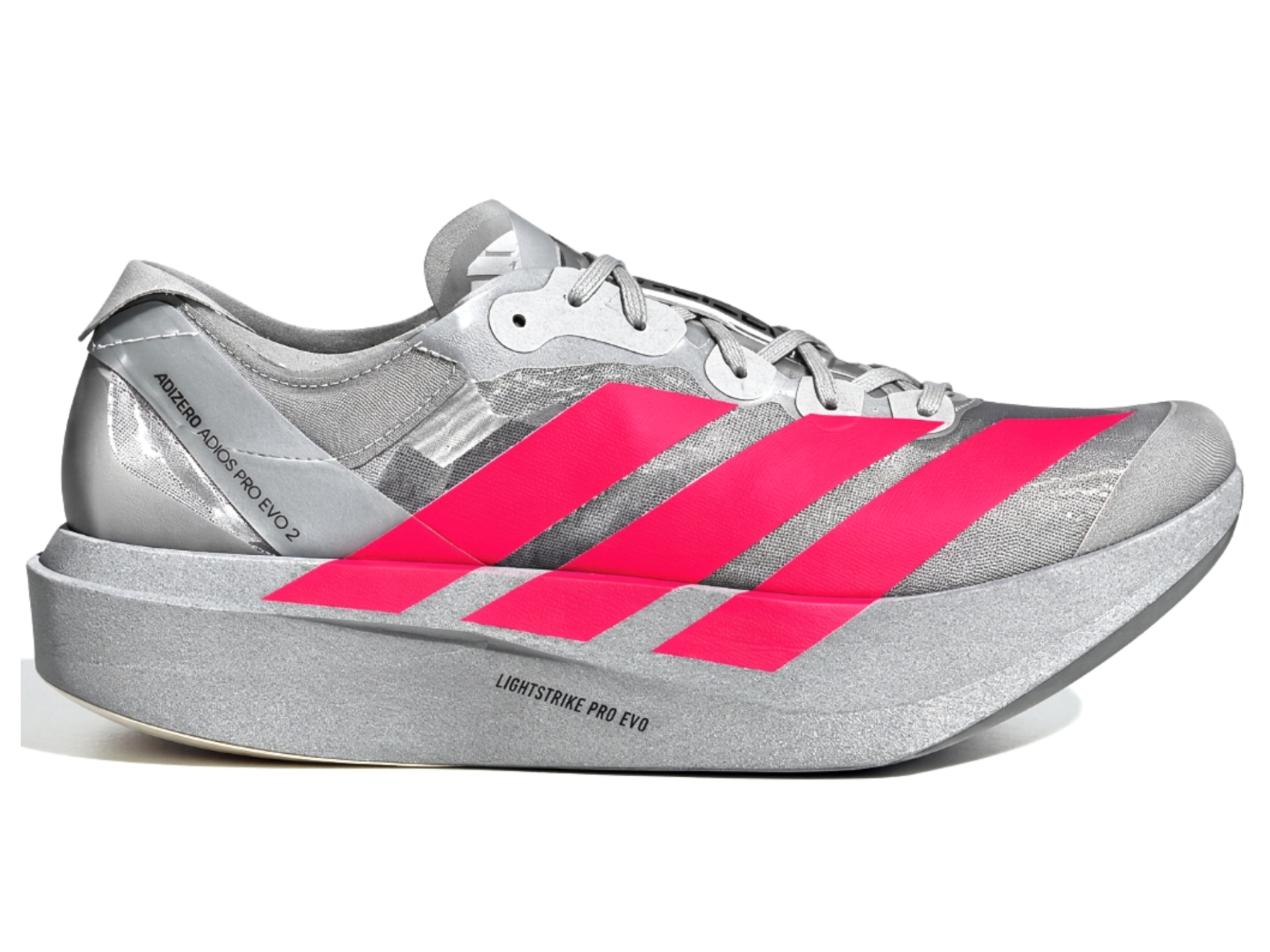
Before the 97-gram Pro Evo 3 eclipsed every rival in April, the Adidas Adizero Adios Pro Evo 2 kept Adidas firmly on World Marathon Major podiums. Benson Kipruto wore the $500 racer to claim third at the Boston Marathon in a scorching 2:02:50, while Alexander Mutiso Munyao and Bertukan Welde rode it to podium finishes in Tokyo. Tipping the scales at roughly 138 grams, it served as the critical developmental bridge to sub-100-gram engineering.
Rather than deploying a solid carbon plate, the Pro Evo 2 utilizes full-length carbon EnergyRods paired with a stabilizing heel unit. Its aggressive forefoot rocker geometry, combining a 39-millimeter heel with a 36-millimeter forefoot for a three-millimeter drop, forces rapid forward turnover. Adidas wrapped its dynamic Lightstrike Pro Evo midsole in a translucent, stripped-back mesh upper to eliminate every gram of dead weight.
While reviewers noted that its paper-thin, tacky outsole struggled on wet asphalt, dry race mornings allowed its propulsion to shine. Kipruto’s 2:02:50 podium run in Boston proved that the Pro Evo 2 remained lethal even against brand-new prototypes. It closed out its championship chapter as one of the most influential transitional racers in modern distance history.
#11. ASICS Metaspeed Sky Tokyo
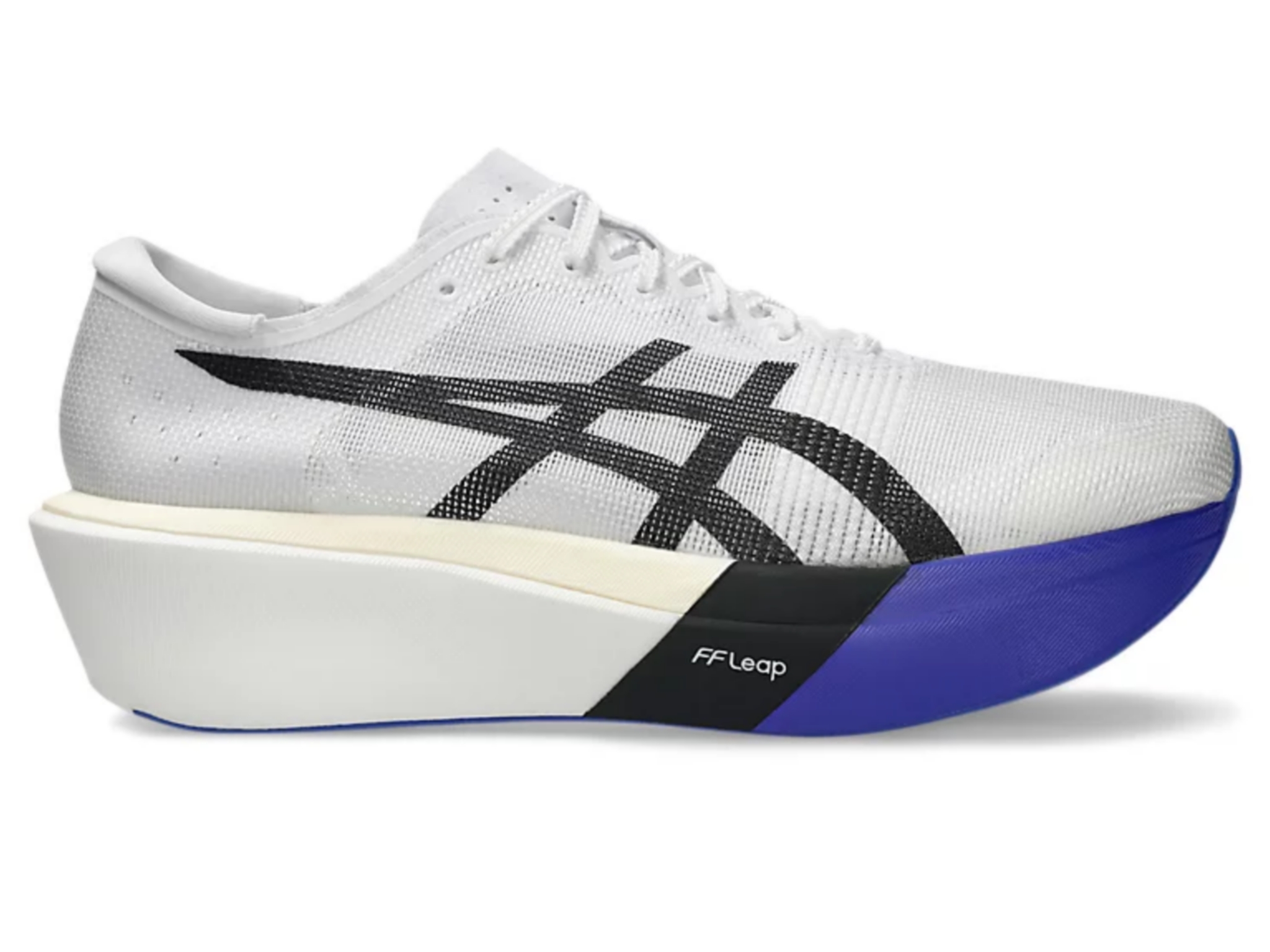
At July’s ASICS Gold Coast Marathon in Queensland, Australian distance running ended a two-decade drought. Melbourneʼs Haftu Strintzos surged across the line in 2:06:20, smashing the race record by 73 seconds. He also broke the Australian and Oceania records, becoming the first local man to win the event since 2006.
Strintzos achieved that national milestone in the ASICS Metaspeed Sky Tokyo, a commercial powerhouse built with FF Leap foam. Designed specifically for stride-lengthening runners, the shoe places a wide carbon plate directly beneath the forefoot. When Strintzos kicked hard over the final kilometers to clear Japans Hidekazu Hijikata, that plate returned crisp vertical bounce.
Unlike the mystery prototypes seen in Boston and Tokyo, the Metaspeed Sky Tokyo was readily available to everyday runners. Strintzos later backed up his Gold Coast triumph with a fifth-place finish in New York, hitting the Los Angeles 2028 Olympic standard. His season proved that off-the-shelf engineering can still rewrite national record books.
Shop editor’s picks
Featured image: Adidas Running
—Read also


