

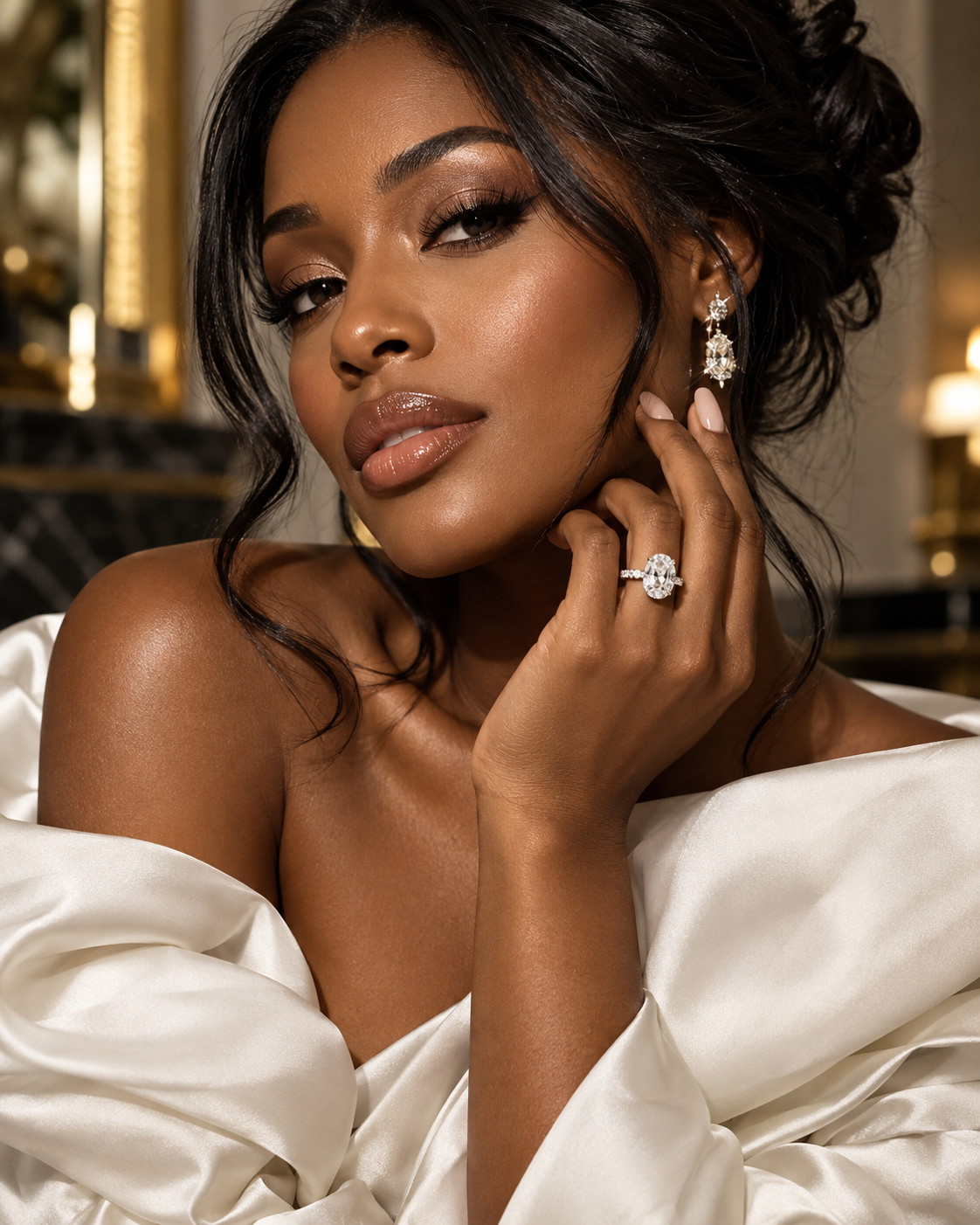

Your favorite hoops, a well-worn watch, and a diamond ring you’re still getting used to: sometimes the newest piece in your jewelry box takes a little figuring out. Does it work with silver? Is it too dressed up for jeans? And what happens to all the chunky rings you were wearing long before anyone proposed?
The good news is that an engagement ring does not need its own separate wardrobe. A fine solitaire can sit next to a substantial cuff. An emerald-cut diamond can sharpen up a simple shirt and trousers. A more detailed oval or marquise setting can provide all the jewelry an otherwise minimal outfit needs. The trick is to stop treating the ring as something reserved for special occasions and start styling it alongside the clothes and jewelry you already wear.
Check out 6 ways to style your engagement ring with your everyday jewelry…
#1. Let Your Engagement Ring Lead the Jewelry
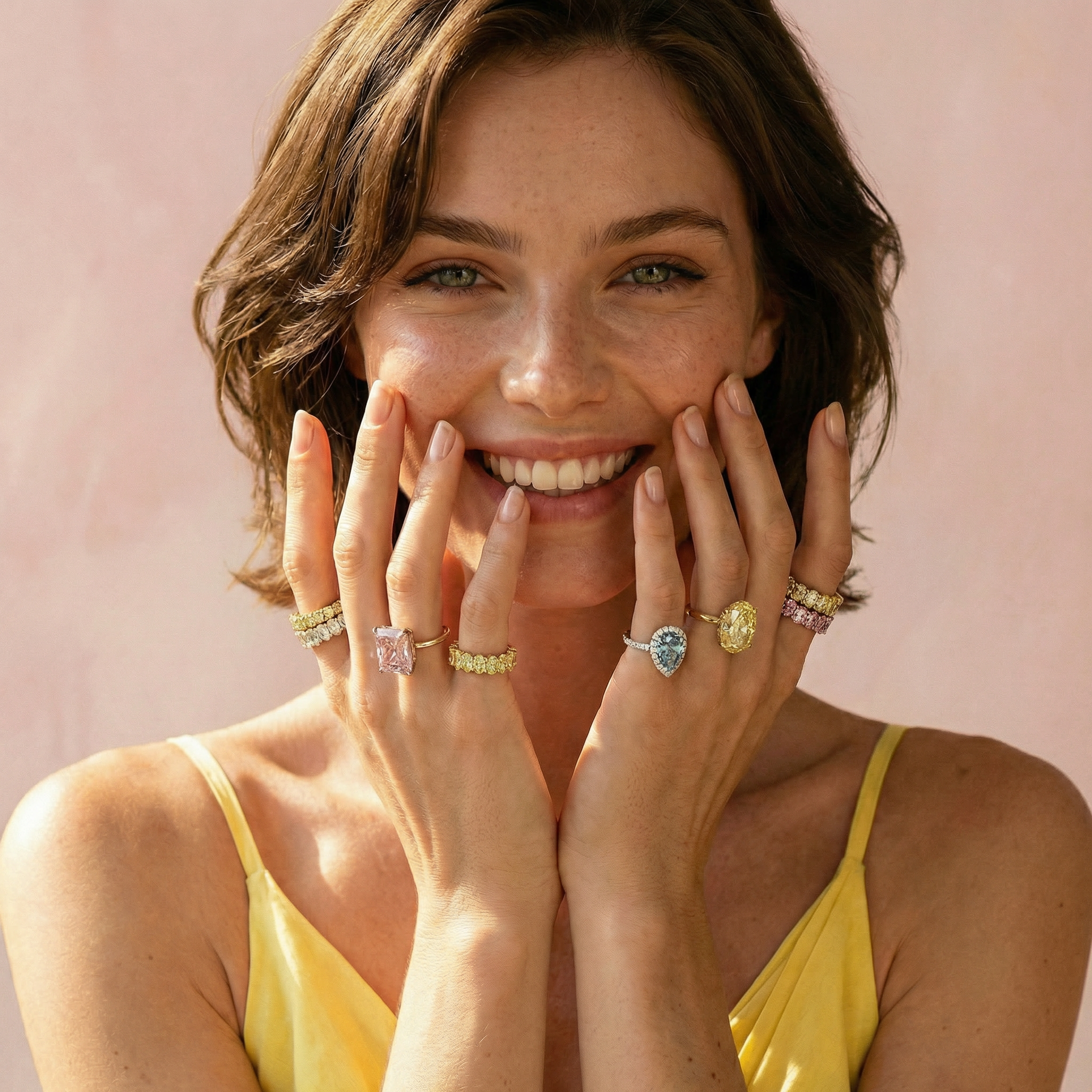
Start with the pieces you reach for on an ordinary morning. Perhaps almost everything you own is yellow gold. Maybe your jewelry box is full of silver chains, sculptural earrings, and angular shapes. You might wear the same watch every day without even thinking about it. Those habits are useful.
Rather than trying to create a completely new “engaged” jewelry style, look for something in your ring that already connects with the rest of your collection. An oval diamond has a softer outline that can work beautifully with rounded hoops or curved bangles. An emerald or radiant cut is more geometric and can sit naturally alongside a rectangular watch face or sharper jewelry.
The setting matters too. A plain solitaire leaves the diamond shape very clear, while diamond-set shoulders introduce more detail across the finger.
If you are still choosing yours, browsing collections from brands such as Lily Arkwright’s lab diamond collection can be useful for comparing different shapes, settings, and metal colors. Instead of looking at each ring in isolation, compare it with a photograph of the jewelry you already wear most. You might find that the ring that fits your everyday style is not the one you expected to choose.
#2. Mix Gold and Silver Without Overthinking It
A yellow-gold engagement ring does not mean retiring your silver watch. Mixed metals usually look most intentional when there is some repetition elsewhere in the outfit.
If your ring is yellow gold but your favorite watch is silver, try adding another small gold detail through your earrings or necklace. You do not need equal amounts of each metal; repeating one tone once can be enough to make the combination look connected.
Existing two-tone jewelry makes this even easier. A watch containing both gold and silver tones can bridge a yellow-gold ring and silver earrings without requiring everything else to match.
Finish matters as much as color. A brushed silver cuff beside a highly polished gold ring creates deliberate contrast. Pair similarly polished surfaces and the effect becomes much quieter, with the pieces reading as part of the same visual language. Treat all of this as an option rather than a rule. Some outfits look better precisely because one piece refuses to match anything else.
#3. Give Statement Jewelry Some Breathing Room
Your engagement ring does not always have to be the loudest accessory you are wearing. With a crisp white shirt and tailored trousers, a detailed diamond ring might provide most of the sparkle you need. Add small earrings and a watch and leave it there.
On another day, enormous earrings may be the entire point of the outfit. Let them be. Your engagement ring can remain visible without every necklace, bracelet, and ring competing for the same amount of attention.
The shape of the diamond can help you decide how much more to add. A substantial cluster or halo already creates plenty of detail around the hand, while a simple solitaire leaves more room for a cuff, bracelet or rings on the opposite hand.
There is room for deliberate excess too. A cocktail ring on the other hand, oversized earrings or a broad cuff can work brilliantly if they are spaced across the outfit rather than concentrated in one place. Think about where the eye lands first, then give the rest of the jewelry enough distance to register individually.
Step back and check the whole look in a mirror. Sleeves, buttons, belt buckles, bag hardware, and even glasses can all contribute to how busy an outfit looks. Jewelry does not exist in isolation, so sometimes the simplest way to edit your accessories is to consider the entire outfit rather than just what is happening on your hands.
Style Rave’s existing jewelry styling ideas are also useful if you want more inspiration for combining statement accessories with everyday clothes.
#4. Build Your Ring Stack Slowly
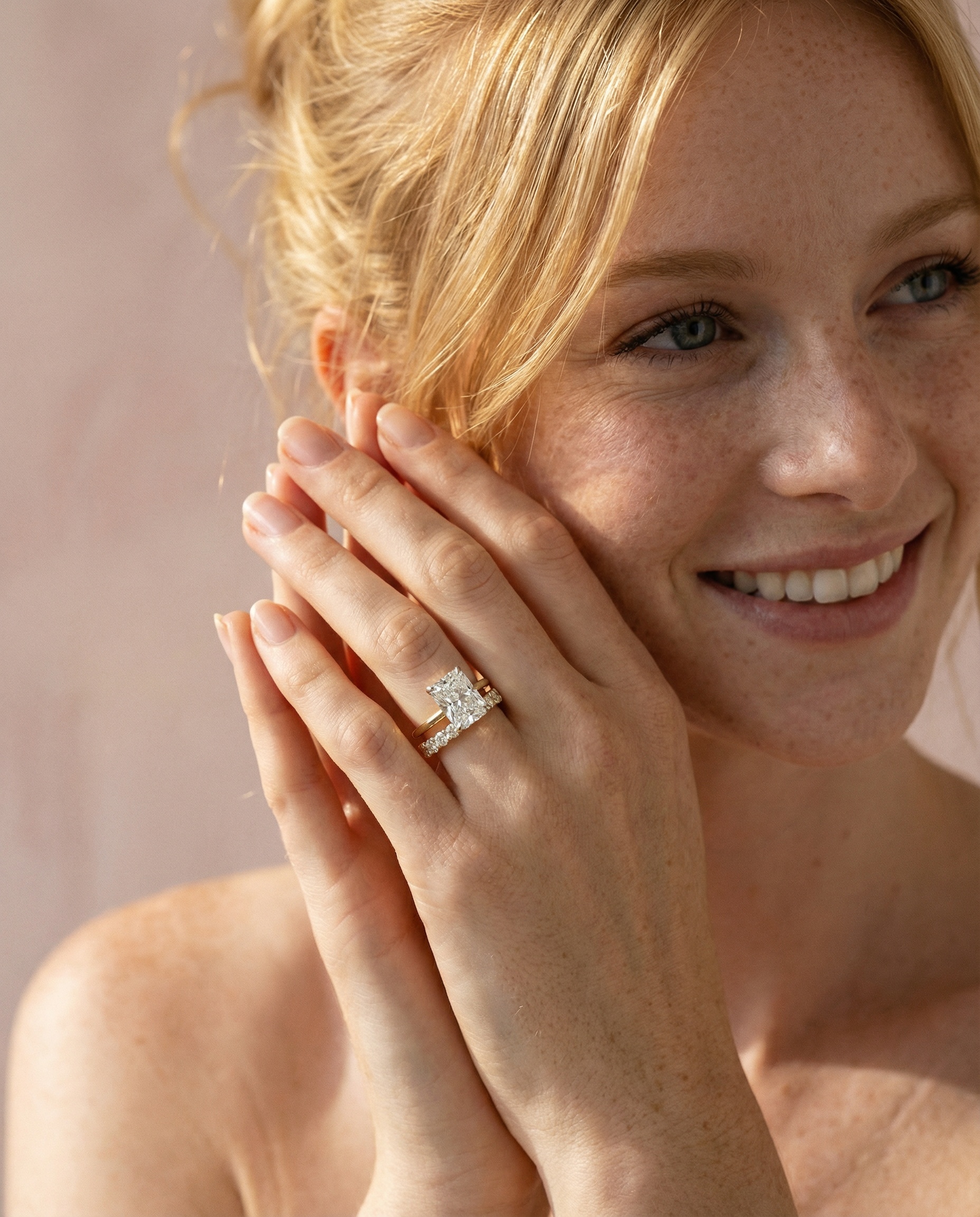
There is no reason to decide your entire ring stack on the day you choose the engagement ring. Start with the engagement ring and one band. A slim plain band can keep an elaborate setting visually clear. A wider band creates a stronger line across the finger and may make a simple engagement ring look more substantial.
Try both before assuming delicate automatically means better. Then check how the rings physically sit together. Some engagement-ring settings allow another band to sit flush against them. Others naturally create a small gap. Neither is a problem unless you expected something different.
Ask a jeweler whether either ring could rub against the setting or stones of the other. A beautiful combination is only useful if the pieces can coexist comfortably over time.
Then move your hand. Bend your fingers. Pick something up. Put your hand in a pocket. The stack has to work when your hand is doing something other than posing for a photograph. Pay attention to whether the rings shift, pinch, or catch as you move through ordinary tasks.
If you like layered jewelry but the engagement-ring finger starts to feel crowded, move additional rings to the other hand. Symmetry is optional.
#5. Style the Ring for the Clothes You Actually Wear
An engagement ring may be bought for a proposal, but most of its life will be spent nowhere near a wedding. Style it accordingly.
For Work
Try tailored trousers and a vest or crisp shirt with your engagement ring, small hoops, and a watch. If the jewelry starts to look too busy, remove one supporting piece rather than automatically changing the ring. A pared-back combination can often make a substantial diamond look even more considered.
For the Weekend
Straight-leg denim, a white T-shirt, and loafers create a useful neutral background. Add your engagement ring and a favorite chain necklace. Against relaxed clothes, even a highly detailed setting can look surprisingly easy to wear.
You can also use casual textures to take some of the formality out of the ring. A denim jacket, oversized knit, or worn-in leather bag can create an interesting contrast with polished stones and precious metal.
For Dinner
A slip dress or fluid jumpsuit works well with sculptural earrings and an engagement ring. If the neckline is already strong, leave it bare and let the earrings and ring do the work. There is no need to fill every open space with another necklace simply because the outfit is evening-appropriate.
For a Celebration
With a printed dress or embellished separates, look at what the clothes are already doing. If the sleeves are covered in detail, you probably do not need a bracelet as well. Earrings that repeat the metal tone of your ring may be enough.
Color can change the mood without adding another piece of jewelry. A deep manicure, colored shoe, or bright bag can completely alter how a diamond ring works with the same clothes. Sometimes the outfit needs a different accent, not more jewelry.
#6. Check How Everything Wears
This is the least glamorous styling tip and possibly the most useful. Once you think the outfit is finished, put your jacket on. Pick up your bag. Move your wrists. Notice whether a bracelet slides into the ring, a sleeve catches on the setting, or several rings press uncomfortably between your fingers. If something annoys you within five minutes at home, it is unlikely to become more charming after eight hours out.
If the engagement ring itself repeatedly catches or snags, have the setting checked by a jeweler rather than simply accepting it. GIA’s engagement-ring care guidance also recommends removing rings before activities such as exercise, gardening, and other situations that could damage them.
Keep a secure ring box somewhere practical rather than somewhere beautifully impractical. The easier it is to put your ring somewhere safe, the more likely you are to actually remove it when you should.
Your Engagement Ring Should Fit Into Your Style, Not Replace It
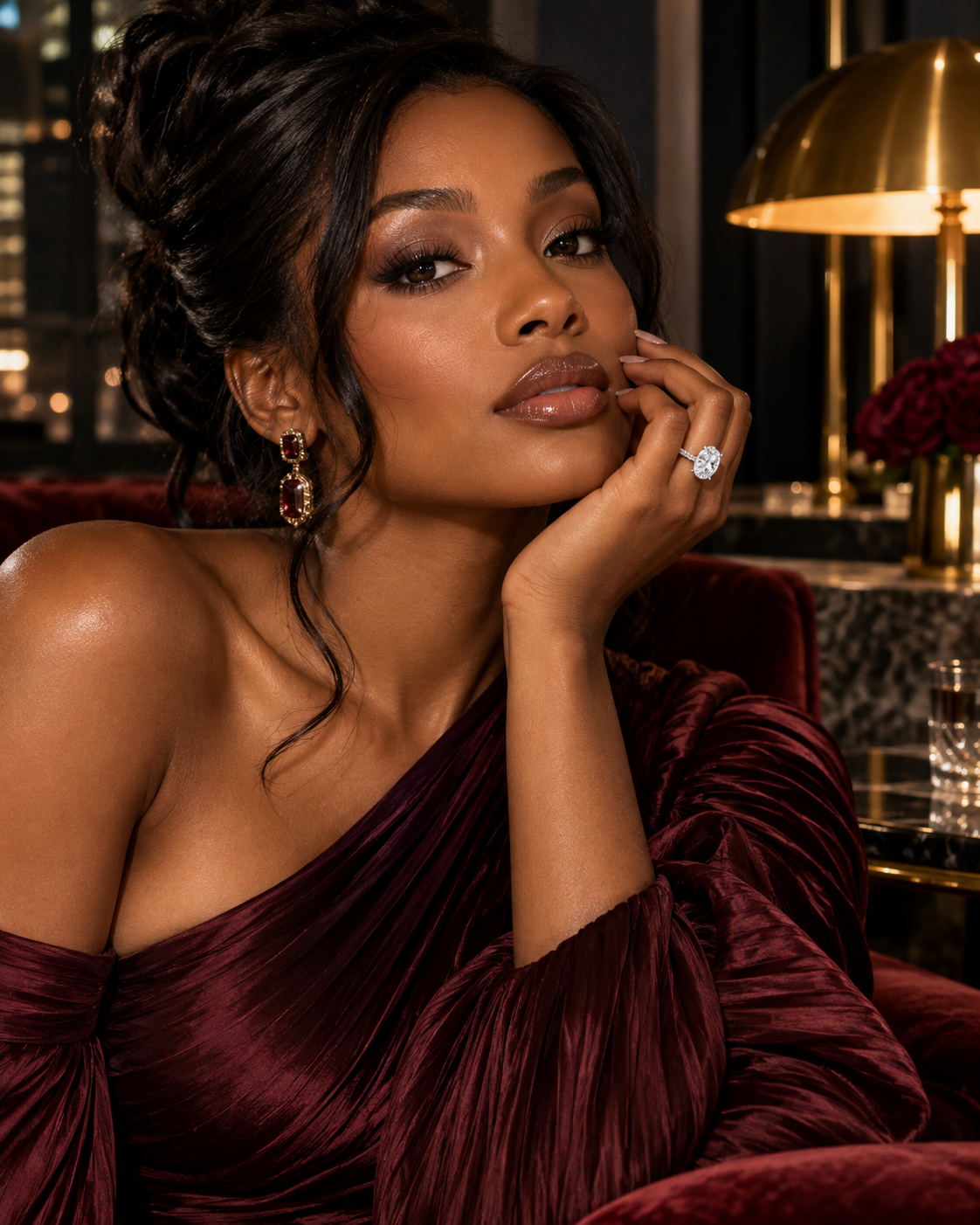
Getting engaged does not require a complete jewelry personality transplant. The rings, watches, and earrings you wore before the proposal are still yours. So are the jeans, oversized tailoring, vintage dresses, and slightly ridiculous earrings you love. Treat the engagement ring as another part of that collection.
Some days it can be the obvious focal point. On others, it can sit quietly beside a watch you have owned for ten years. There is no correct amount of matching, stacking or sparkle. The best combinations are usually the ones you stop noticing because they simply look like something you would wear.
Featured image: Style Rave Studio/AI-generated Visual
—Read also