
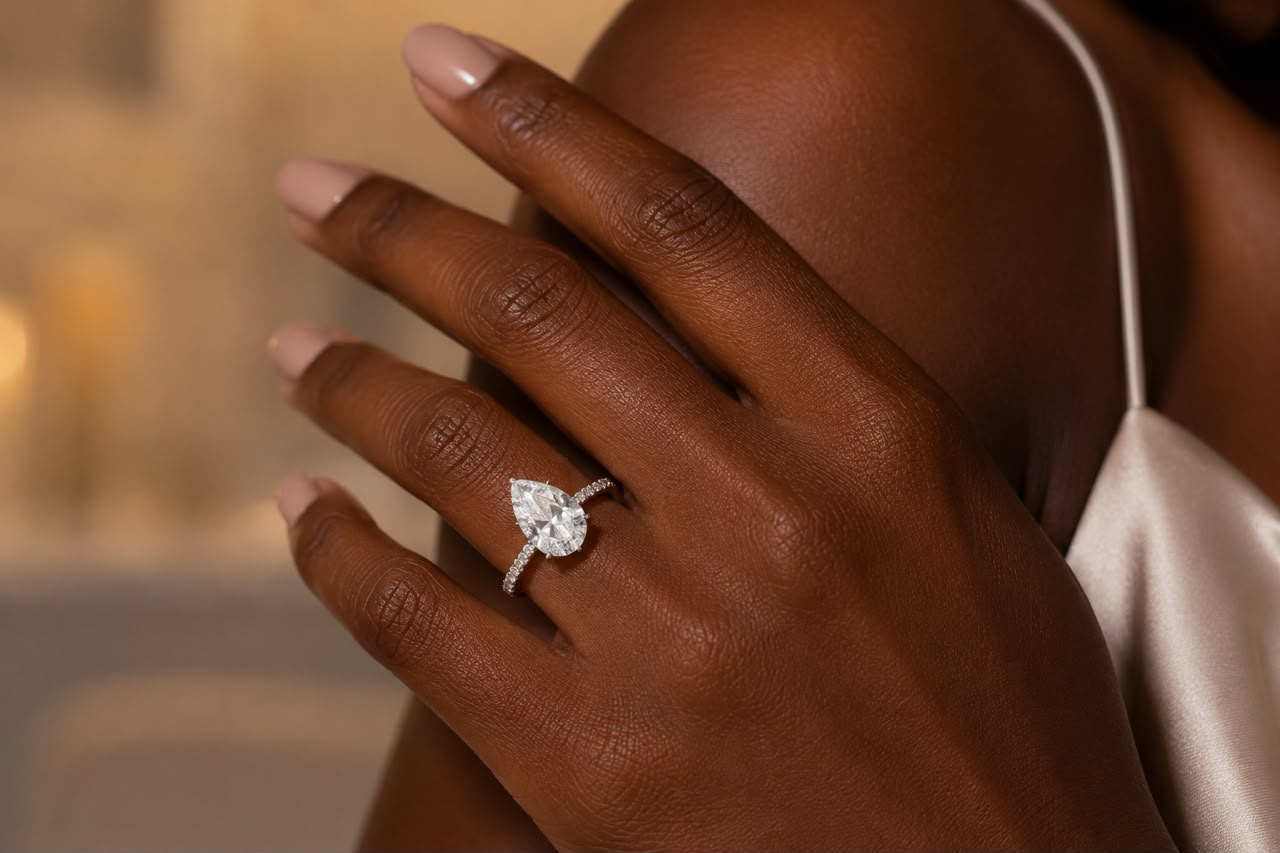

A ring dazzles in a seller’s video, every facet throwing flashes of light as the stone fills the frame. The box arrives a week later. Under the kitchen light, on an actual hand, the same ring looks smaller and calmer than the screen promised.
Nothing was necessarily faked. The video was simply captured the way most jewelry is photographed: under lighting and camera conditions designed to show a diamond at its very best. Everyday life looks different, and understanding why can help buyers set realistic expectations before they make a purchase.
The Lighting That Makes Diamonds Shine
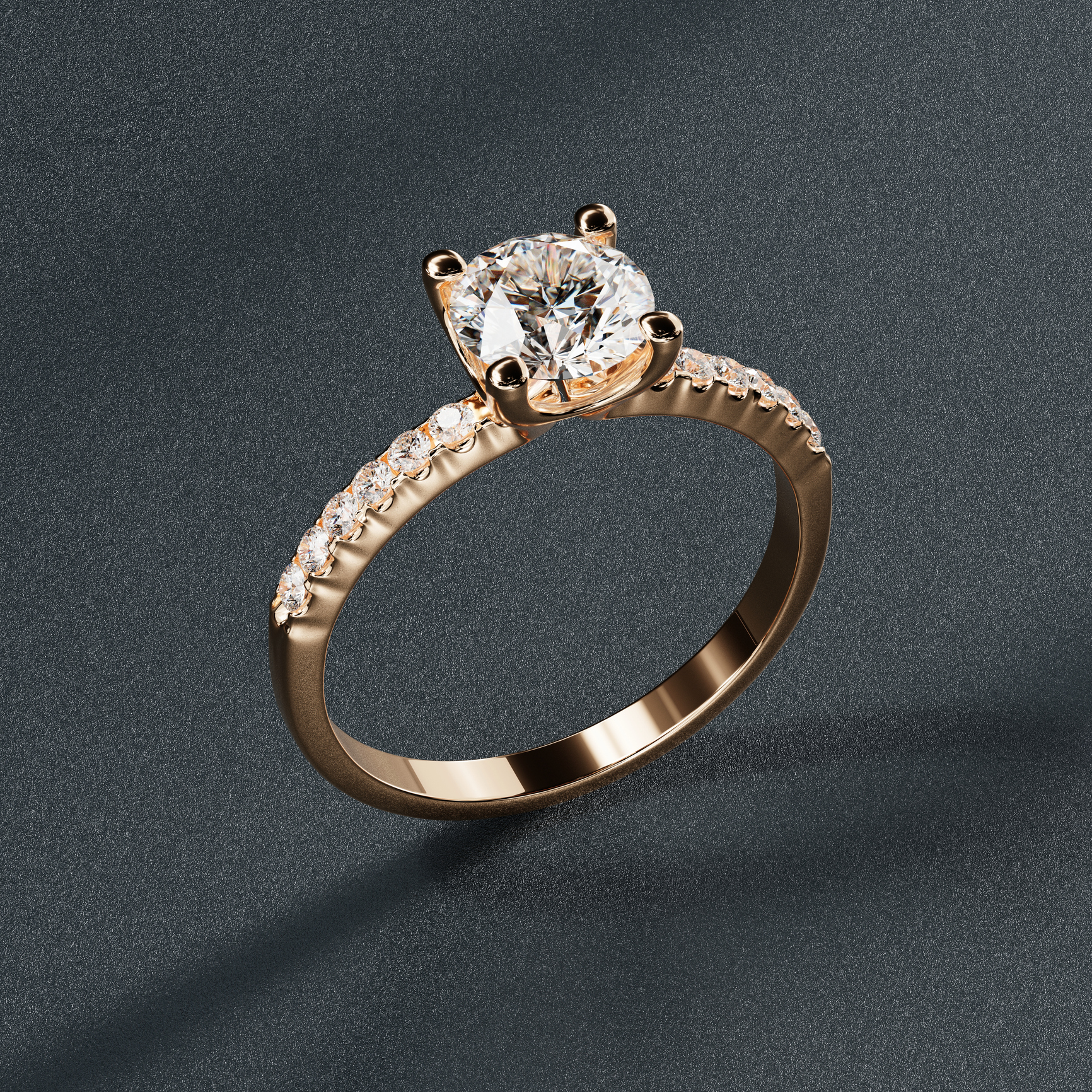
Almost every diamond a buyer sees online is photographed to maximize sparkle. Jewelry photographers use bright, carefully controlled lighting positioned to draw out the greatest brilliance and fire from a stone. Jewelry stores do something similar with their display lighting. Under those conditions, even an average diamond can appear exceptionally lively, while a high-quality stone looks even more spectacular.
At home, however, rings spend most of their time under softer, everyday lighting. Offices, restaurants, and living rooms simply don’t recreate the same effect, so the sparkle that fills a promotional video naturally appears more subtle.
Movement matters too. Many online videos slowly rotate a diamond beneath fixed lights, ensuring there’s always a flash of brilliance on screen. In everyday wear, a ring catches the light only as your hand moves, creating brief moments of sparkle rather than a constant shimmer. That’s perfectly normal, and it’s often the biggest difference buyers notice after receiving a ring.
The Scale Trick
Size is the second illusion. Jewelry images are often taken with macro lenses positioned just inches from the stone, allowing the diamond to fill almost the entire frame. Without familiar reference points, a 1-carat stone and a 3-carat stone can appear surprisingly similar in photos.
The most reliable indicators of size are hand shots, the width of the band, and the stone’s millimeter measurements. A buyer judging size from a tightly cropped image is essentially judging the stone without a ruler.
The same effect explains why a ring can appear enormous in a proposal photo yet look much more modest when viewed across a table. Before purchasing, it’s worth requesting both close-up beauty shots and photos of the ring on a hand taken at a normal viewing distance.
Why Pear Shapes Often Look Larger on Camera
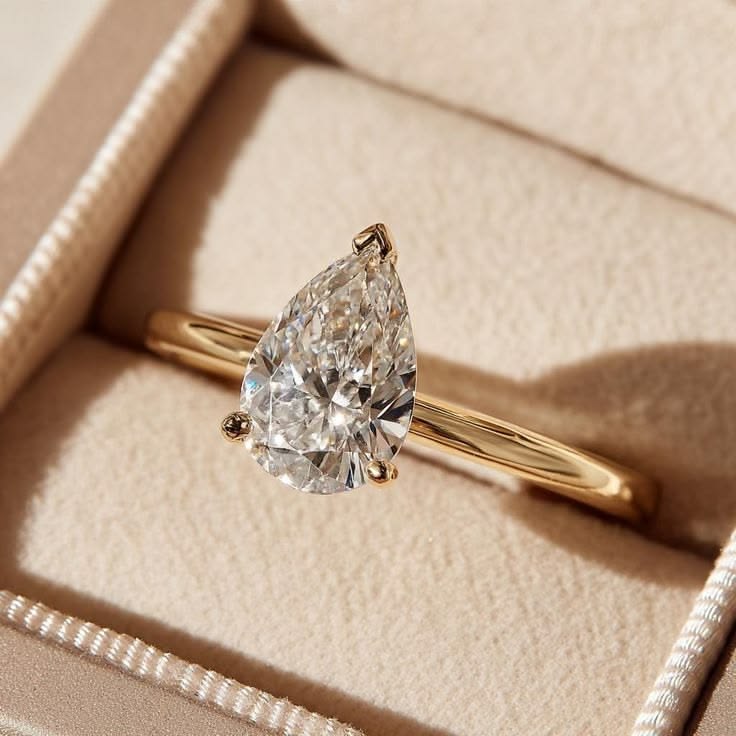
Elongated shapes naturally benefit from photography, which helps explain why they feature so prominently in online listings.
A pear ring often photographs larger because its long teardrop outline fills more of the frame and provides a face-up spread comparable to that of a larger round stone. The tapered shape also draws the eye down the finger, creating an elegant, lengthening effect that can appear even more dramatic in close-up photography.
In person, the same pear-shaped ring returns to its true proportions. It still creates a flattering, elongated look, but buyers may find it appears less dramatic than it did in carefully composed product images.
The Bowtie Effect
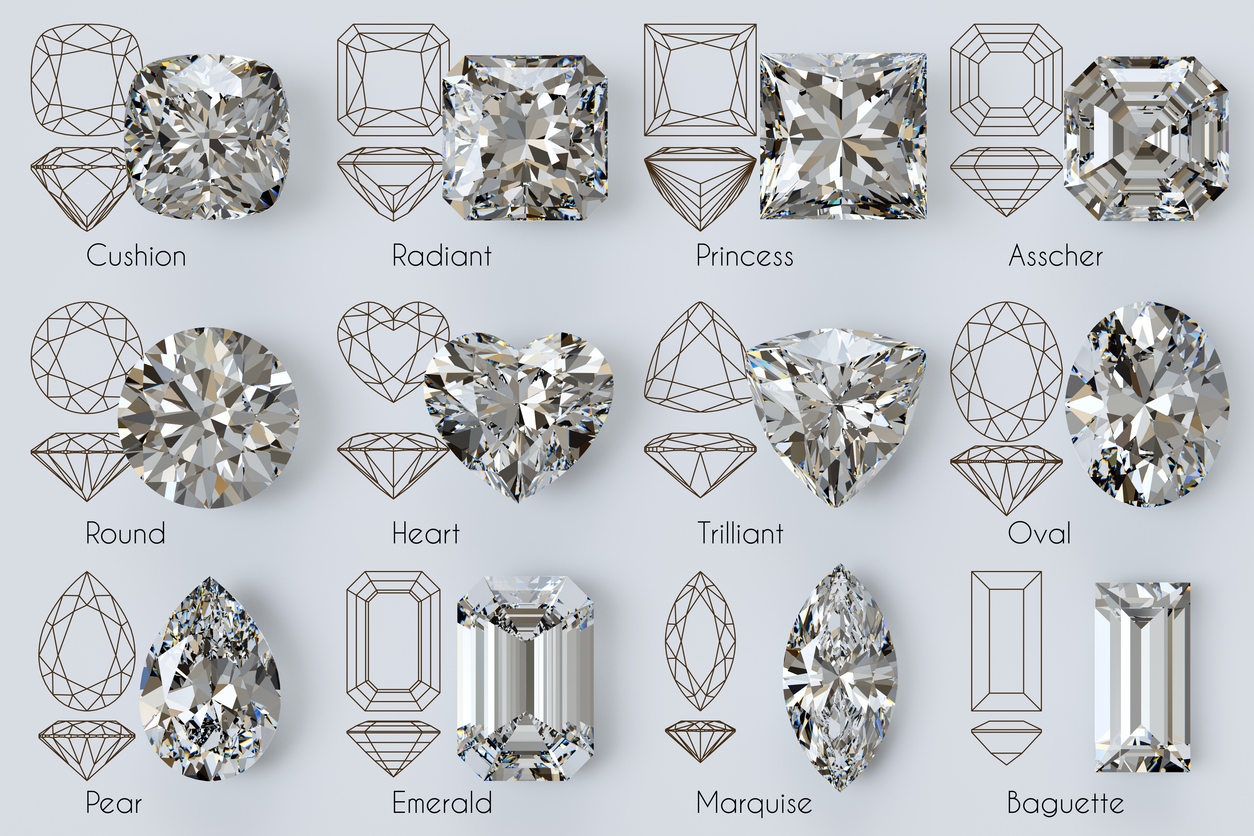
Elongated cuts such as pear, oval, and marquise diamonds can all display a bowtie—a dark band across the center where the faceting returns less light to the eye. A diamond is only a sparkling gem because its facets reflect light to the viewer, and the bowtie is the area where a long-cut stone returns comparatively less light.
Professional lighting and carefully chosen camera angles can make this effect appear less noticeable than it does under everyday lighting. On a hand in normal conditions, the bowtie may become more visible, particularly in stones with less balanced cutting, while well-cut diamonds tend to minimize the effect.
For buyers considering an elongated shape, it’s worth asking for additional images or videos taken under ordinary indoor lighting to better understand how the stone performs outside a studio setting.
How Settings Influence Perceived Size
Lighting and camera lenses aren’t the only factors that influence perception. The setting plays an important role as well.
Hidden halos can make a center stone appear larger from above without being immediately obvious in photos. Thin bands create contrast that visually emphasizes the diamond, while higher settings lift the stone closer to both the light and the camera.
These are all legitimate design choices that enhance a ring’s appearance. They simply help explain why a ring may look slightly different in real life than it does in a carefully styled product image.
Hand size also matters. The same ring photographed on a slim finger and a broader one can appear dramatically different in scale. The camera adds its own illusion as well. A close lens magnifies whatever is nearest to it—the basic rule of perspective that makes a stone photographed from inches away appear much larger than the same stone viewed across a table.
Can You Trust Online Jewelry Photos?
Yes, but it’s best to view them as a starting point rather than the complete picture.
Independent gem experts generally recommend evaluating a ring through several types of images before making a purchase. Alongside polished studio photos, look for hand shots, videos filmed under normal indoor lighting, and daylight images taken near a window. Together, these provide a more balanced impression of how a diamond performs in everyday settings.
Reputable jewelers are usually happy to provide additional photos or answer questions about lighting, dimensions, and visible characteristics such as a bowtie. The more transparent a seller is, the easier it becomes to buy with confidence.
How to Judge a Ring Before You Buy
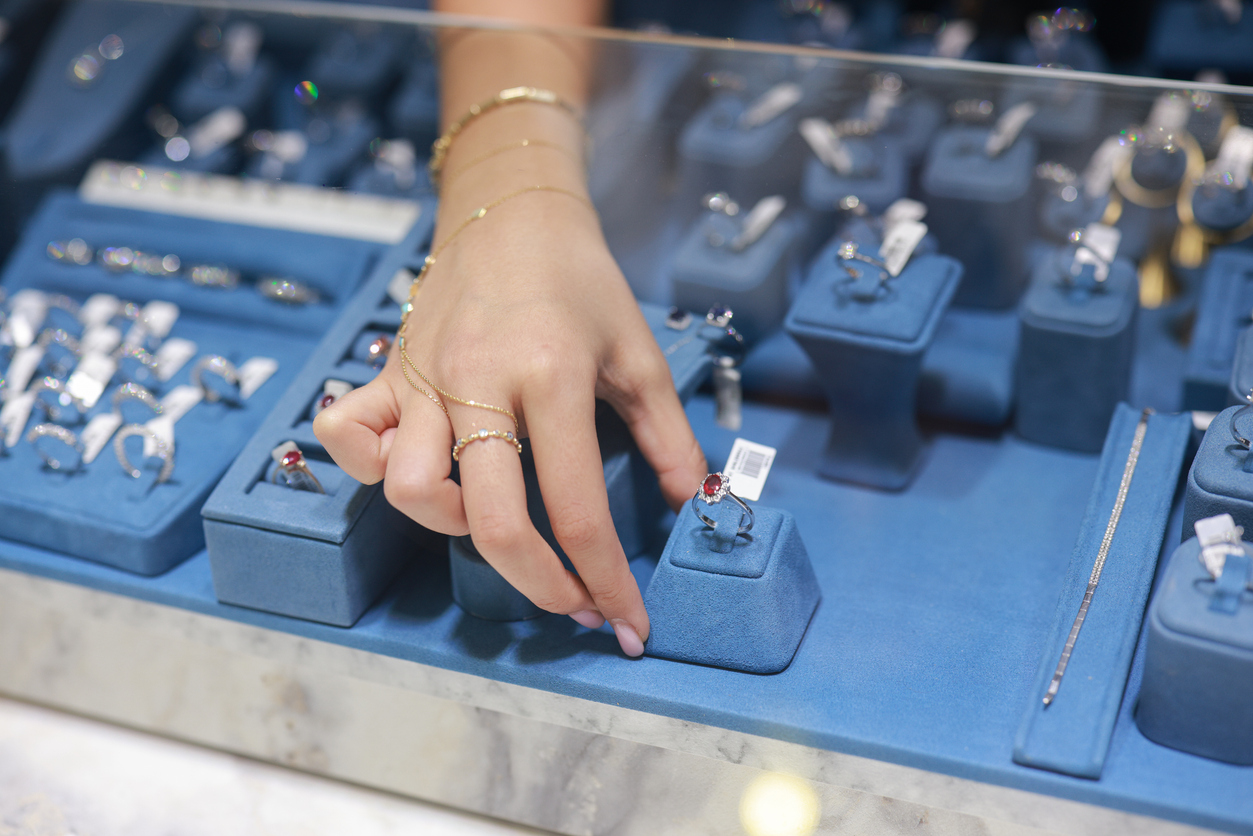
The best way to bridge the gap between online images and reality is to ask for the details the photos don’t always show.
Request a hand shot taken at a normal viewing distance, a video recorded under everyday room lighting, and the exact millimeter measurements of the center stone. A daylight photo taken near a window can often provide a more realistic impression than a highly polished studio video.
If you’re considering an elongated cut, ask specifically about the bowtie and request a straight-on image taken under even lighting. A reputable seller should be comfortable providing these details, helping you make a more informed decision.
The Case for the Quieter Stone
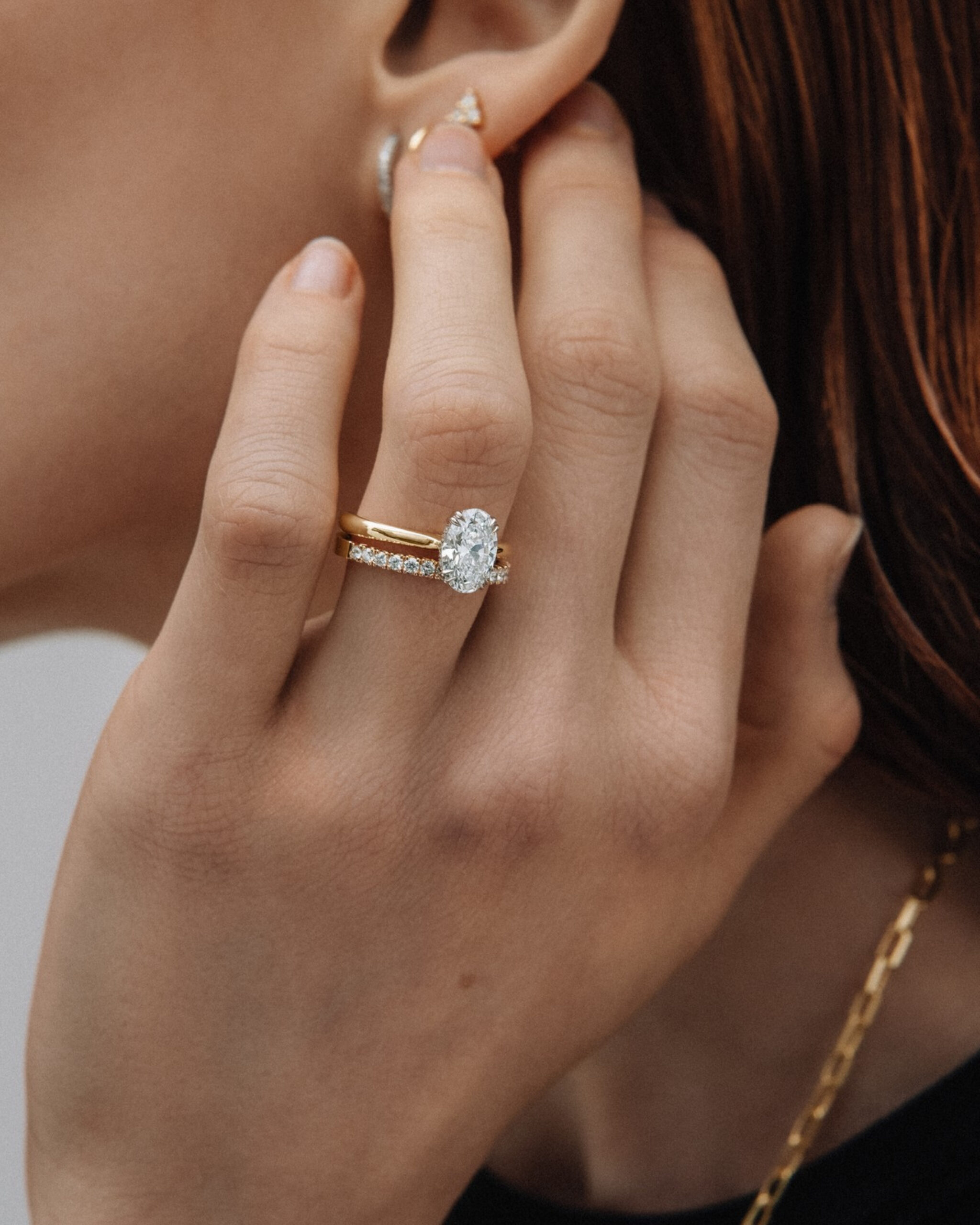
Here’s the surprising part: sometimes the ring that looks less dramatic in photos turns out to be the more satisfying purchase.
A diamond that appears attractive under everyday lighting is often giving you a more realistic preview of what you’ll see most of the time. By contrast, highly polished studio images naturally showcase a stone at its absolute best.
The goal isn’t to distrust beautiful photography; it’s to understand what it’s designed to do. Looking at a ring in ordinary daylight, asking for additional views, and focusing on how it performs beyond the studio can help ensure the ring you fall in love with online is the one you love just as much in person.
Featured image: Style Rave Studio / AI-generated visual
—Read also