

The best hair extensions for fine hair are seamless clip-ins at around 150g, or a 130g classic set for very fine hair. A flat silicone seam helps the extensions sit discreetly against the head. Choosing the right overall weight, meanwhile, adds fullness without pulling or creating bulk.
Ultimately, fine hair needs hair extensions that can be counted on to boost volume without overwhelming the natural hair. This means the lightest set possible won’t necessarily be the best overall choice.
This guide explains which extension types suit fine and thinning hair. It also outlines how many grams wearers should choose, safe alternatives, and which common mistakes to avoid.
Why Fine Hair Needs Different Extensions
Hair extensions for fine hair need to balance the extra volume they provide with the amount of natural hair available to support them.
Fine hair has a small individual strand diameter, while the term “thin hair” is used in reference to hair with less overall density. With fine hair not offering as much surface for clips to grip, the weight per clip becomes more critical than with thicker hair.
Seams and clip bases can show through more easily when there is less natural coverage to hide them. If wefts are heavy, these may pull at the roots, create visible lines, or cause tension that weakens already delicate strands.
As far as fine hair is concerned, it is the combination of a flatter seam and moderate overall weight that is especially likely to bring about a discreet result.
Fine Hair Extension Types Compared
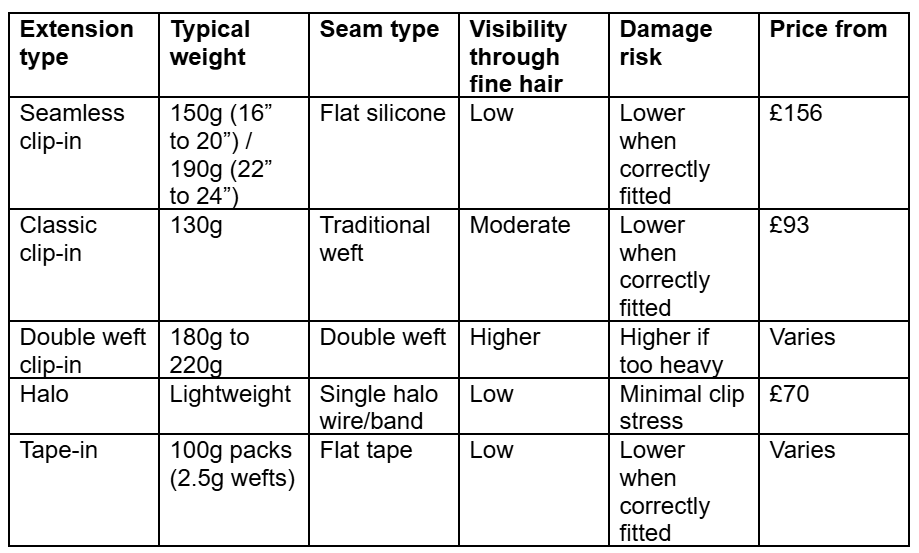
So, which are the all-round “best” hair extensions for thin hair or fine hair? Seamless clip-ins can be deemed the number one pick, due to the silicone seam lying flatter than lace or fabric wefts and delivering greater durability.
Why Seamless Clip-Ins Win for Fine Hair
Seamless clip-in hair extensions use a soft, silicone seam designed to lie flat against the head. This is as opposed to traditional stitched lace or fabric.
The silicone of seamless clip-ins moulds to the head and creates almost zero bulk. Such convincingly flat construction makes the weft trickier to see through fine hair. This helps bring about a more natural-looking finished style.
Up to three times greater durability is provided by this silicone base, compared to a lace weft. This means someone putting on seamless clip-ins can expect less shedding, less tangling, and longer wear between replacements.
For example, brands such as Cliphair offer seamless clip-in hair extensions in 150g full-head sets for 16 to 20-inch lengths, with 190g sets also available in 22 to 24-inch lengths.
The seamless range is made from 100% Remy double drawn hair and comes in 30 different shades. So, fine-haired admirers of this hair extension type have a broad choice when matching colour and length.
How Many Grams of Extensions for Fine Hair
The question of how many grams of hair extensions are needed for fine hair is a commonly asked and understandable one. The short answer is that fine hair generally needs about 130g to 150g for a full head.
A classic 130g full-head set is the lightest full-head option, with quality Remy sets starting from around £90. A set like this can be a great choice for very fine or thinning hair that only requires subtle density.
Double-weft sets weighing 180g to 220g are too heavy for fine hair. The extra weight of such sets can pull, create tension, and make the wefts more visible.
Whatever weight someone ultimately chooses for hair extensions, it is advisable for them to spread this weight across eight pieces of different widths, and to place the clips below the crown. Taking the latter step will help make sure the natural top layer covers the attachment points.
Alternatives for Very Fine or Thinning Hair
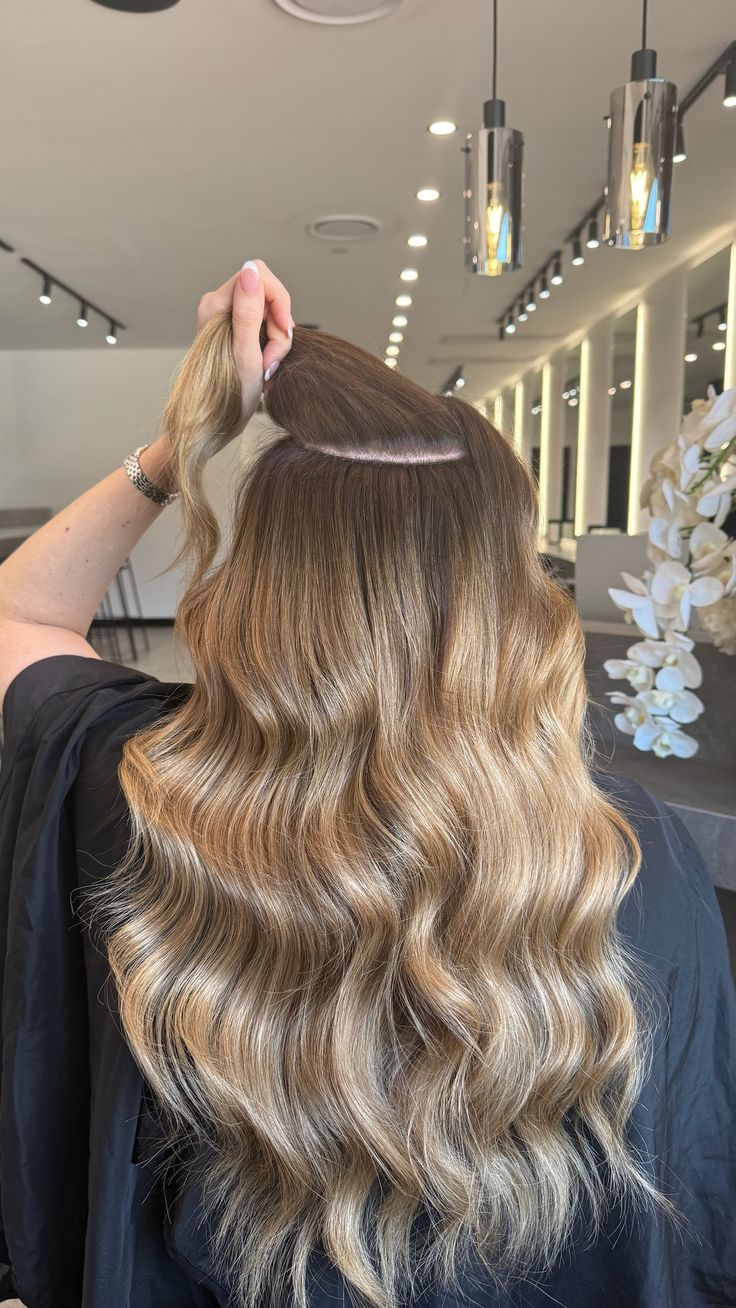
People seeking out the most suitable hair extensions for thinning hair or fine hair aren’t necessarily restricted to seamless clip-ins, even if these might be the best all-round choice in many cases.
Halo hair extensions, typically starting at around £70, sit on an invisible wire with no clips attached to the natural hair. They can therefore make a lot of sense in situations where reducing clip stress is the main concern.
Halos can work especially well for thinning at the crown, because the wire rests gently and the hair is simply pulled over the top.
When semi-permanent wear is preferred, tape-in extensions can be another attractive option for fine hair. A 100g tape-in pack containing 40 wefts weighing 2.5g each distributes the added hair across numerous attachment points.
Mistakes That Damage Fine Hair
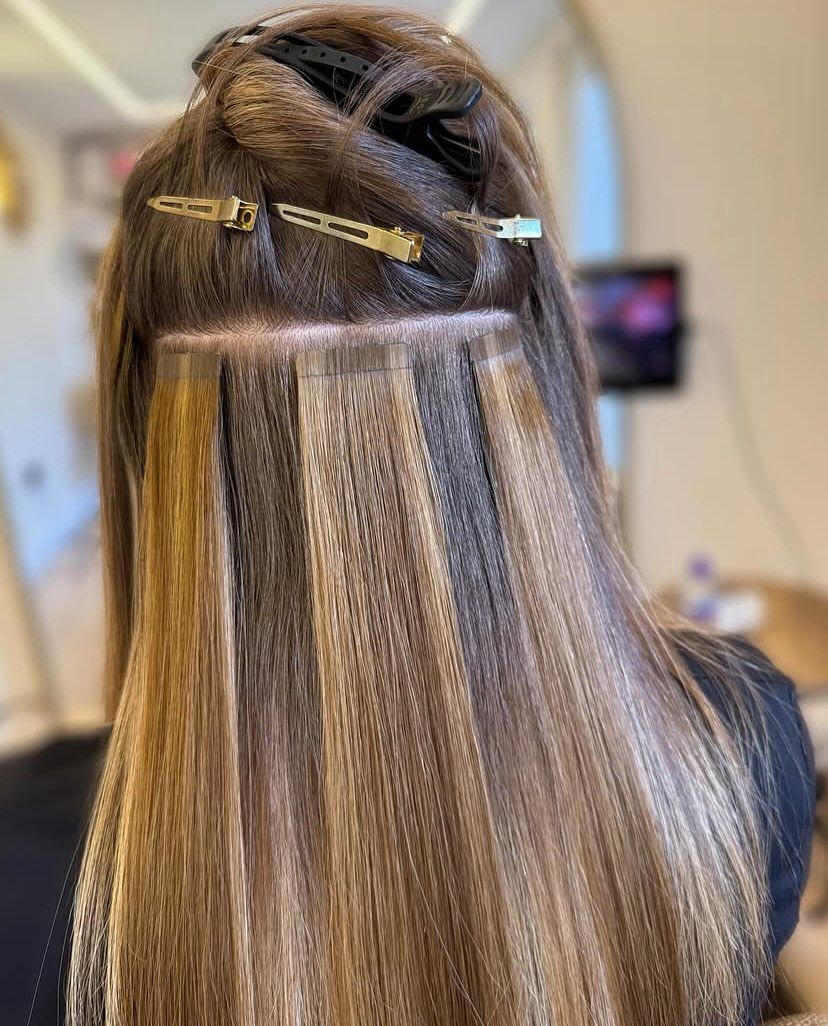
Whether a given individual chooses halo, tape-in, or clip-in extensions for their thin hair or fine hair, they should be careful to avoid buying too heavy a set. Adding 180g or more when the natural hair cannot comfortably support the weight can place unnecessary tension on delicate roots.
Another classic error is the placement of clips too close to the parting or hairline. This can leave the wefts exposed and heighten the likelihood of snagging.
Nor should people with fine or thin hair sleep while wearing clip-in extensions. As clip-ins are designed to be removed before sleeping, ignoring this can cause tangling and friction that weakens the extensions as well as the natural hair.
Heat protection is crucial as well, when styling hair extensions with heat tools. If the right heat protection isn’t applied, the high temperatures are likely to dry out fine strands faster and shorten the life of the hair pieces.
FAQ
#1. Will clip-ins show in fine hair?
The question “which extensions are best for thin hair?” is often met with a mention of clip-ins. However, there can be potential for clip-in extensions to show through the hair if the seams, clips, or attachment points are too bulky or positioned overly close to the surface. The flatter silicone seam of seamless clip-ins helps solve this problem.
#2. Can extensions cause thinning?
Hair extensions can sometimes place additional tension on natural hair if they are too heavy, attached incorrectly, or worn inappropriately. Extensions generally do not cause thinning when the weight is suitable for the wearer’s natural hair and the application is correct.
#3. What length suits fine hair?
Moderate lengths of 16 to 20 inches tend to provide the most natural result on fine hair. This is because such extensions can deliver additional length at the same time as keeping the overall weight manageable.
Conclusion
In summary, the best hair extensions for fine hair are seamless clip-ins at around 150g, with a 130g classic set as the lighter option for very fine hair. This is because these hair pieces combine a discreet attachment with an appropriate overall weight, which helps protect delicate strands.
Seamless sets come in multiple lengths and shades, while a 130g classic set or a halo offers a lighter alternative for very fine or thinning hair.
Featured image: jalisaevaughn/Instagram
—Read also