

The modern man no longer simply arrives somewhere; he makes an entrance. Airports have quietly become one of menswear’s most revealing stages, where soft tailoring, considered luggage, and effortless layering say as much as a passport stamp. Whether you’re catching a short domestic flight or crossing continents, travel dressing has evolved beyond comfort into a language of practicality, confidence, and personal style.
The best travel wardrobes balance movement with intention. They borrow from relaxed tailoring, performance fabrics, and timeless design to create outfits that survive security lines, changing temperatures, long flights, and spontaneous dinner plans after landing. After all, the journey has become part of the destination, and every departure lounge offers another opportunity to define your signature travel uniform.
The Modern Airport Uniform
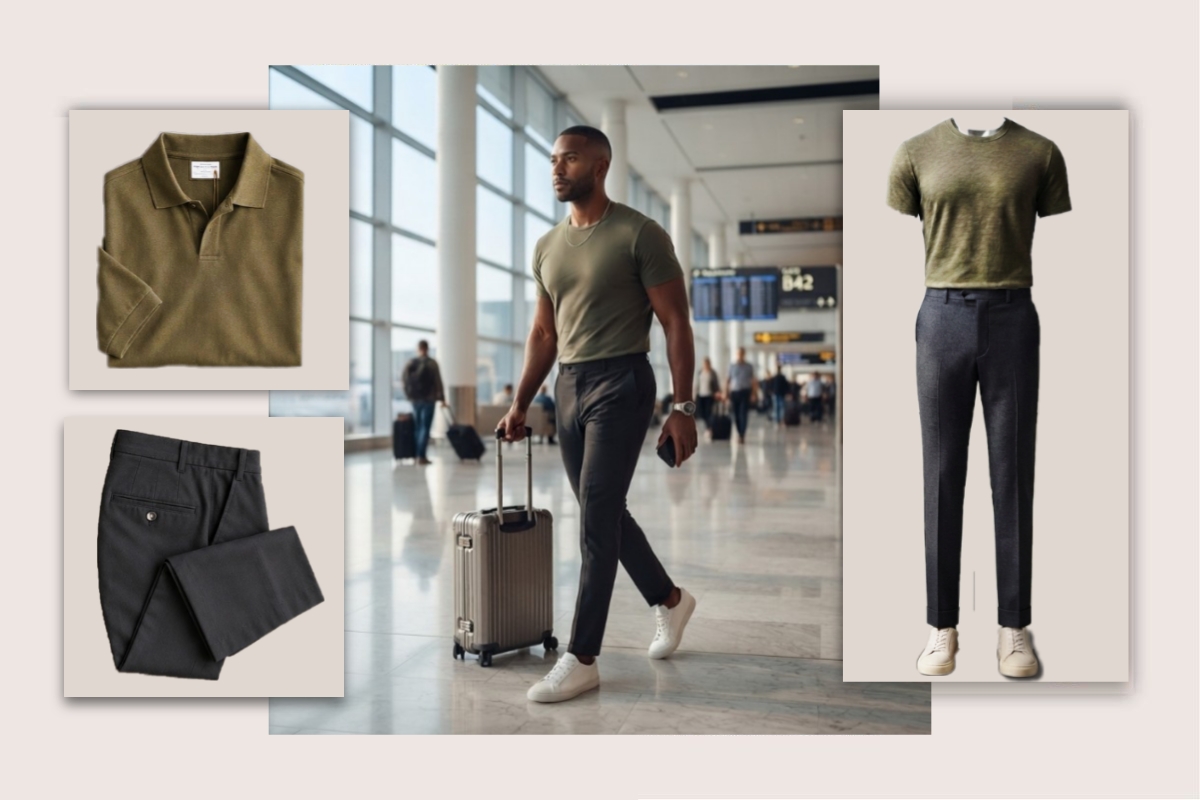 Photo: Style Rave Studios/AI-generated Visual
A decade ago, the standard travel outfit leaned heavily toward sweatpants and surrender. Today, however, frequent flyers understand the value of an outfit curated with intention and style. The trick is avoiding the trap of looking as though you dressed for a photograph rather than a twelve-hour journey. Getting it right comes down to a few key considerations.
Transit Tailoring
Long before you reach your destination, your outfit has already started working. It carries you through early alarms, crowded terminals, security checks, delayed departures, and the familiar search for an empty charging socket near your gate. The best airport outfit isn’t built around fashion trends alone. It’s built around movement.
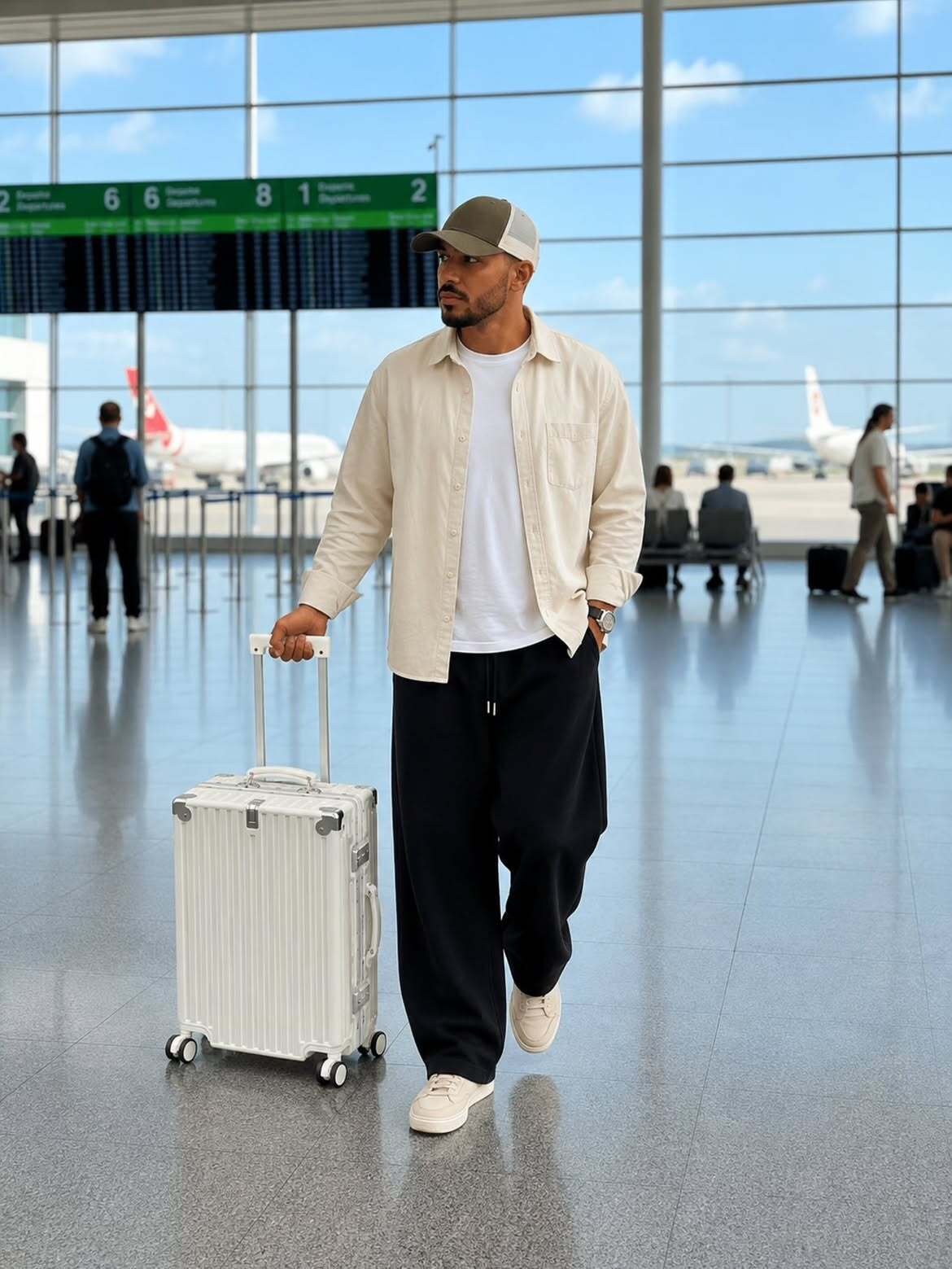
The modern airport uniform borrows heavily from relaxed tailoring, one of menswear’s defining shifts over the past decade. Designers have steadily moved away from rigid silhouettes in favor of softer construction, stretch fabrics, and pieces that hold their shape without restricting the body. Fortunately, you don’t need a designer wardrobe to benefit from the same principles.
A lightweight overshirt worn over a premium T-shirt or knitted polo creates structure without feeling overly formal. Meanwhile, tapered drawstring trousers or well-cut chinos strike the sweet spot between comfort and polish. They feel noticeably more refined than traditional sweatpants while offering enough flexibility for hours of sitting.
Imagine stepping off a six-hour flight and heading straight to lunch with friends or an afternoon meeting. The right outfit shouldn’t require an immediate wardrobe change. Instead, it should transition naturally between environments, allowing you to feel appropriately dressed from departure to arrival.
Yet beneath even the most carefully curated outfit lies one final detail that carries you through every stage of the journey: your footwear.
Choosing Travel Shoes That Go the Distance
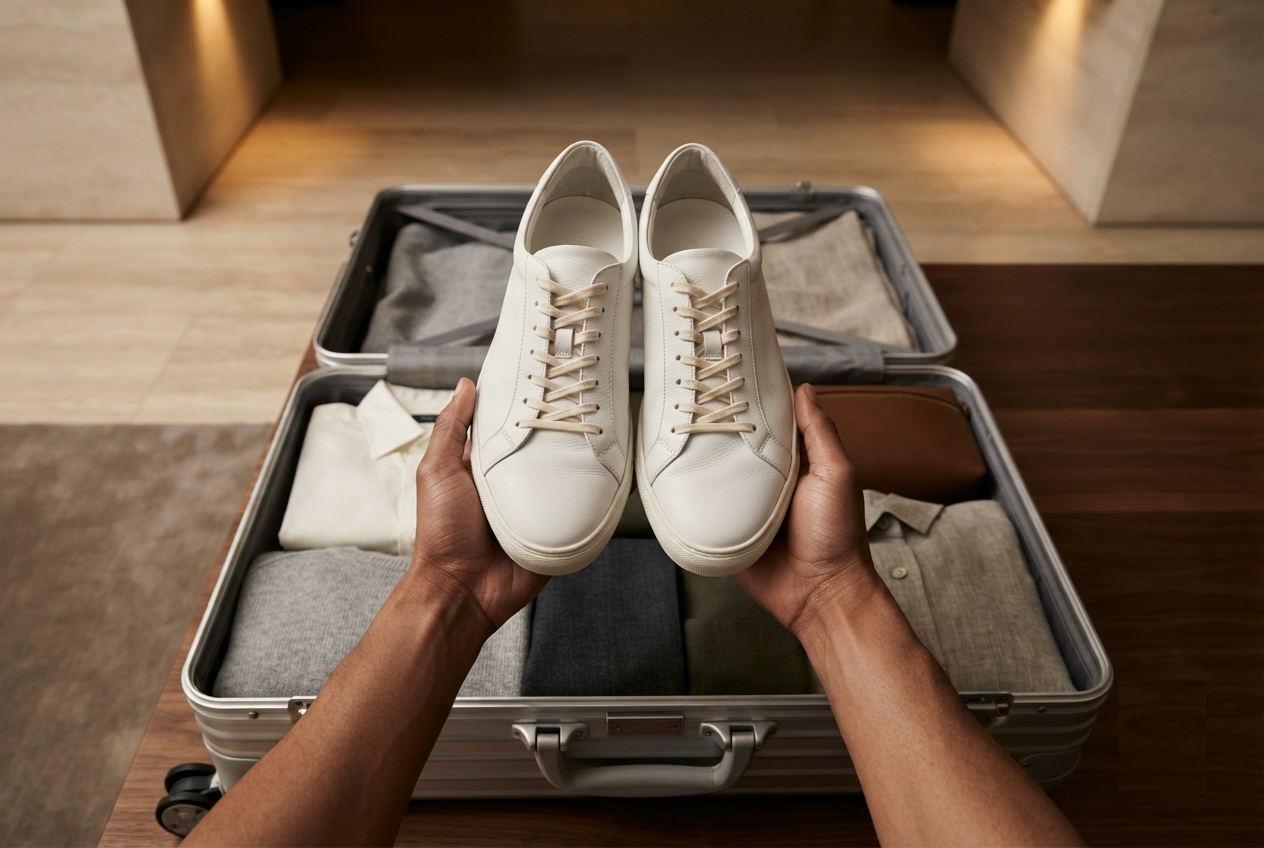 Photo: Style Rave Studios/AI-generated Visual
Footwear Mechanics
Shoes often determine whether a journey feels effortless or exhausting. After several hours on your feet, even the sharpest outfit loses its appeal if every step becomes uncomfortable. Airport footwear demands a careful balance; it must survive security lines, terminal marathons, unexpected weather, and the unforgiving scrutiny of someone sitting across from you in the lounge. Fortunately, practicality doesn’t require sacrificing style in the name of comfort.
The mistake many travelers make is choosing shoes that belong entirely to one category. Running sneakers may feel perfect on a long flight, yet they often undermine an otherwise sophisticated outfit. Formal leather shoes may look excellent, but they can become a punishment after hours of walking.
The sweet spot lies between those extremes. Minimal leather sneakers, flexible loafers, and refined travel boots create a visual bridge between comfort and polish. Your footwear should communicate that you appreciate thoughtful design, not that you packed specifically for an airport photograph.
Clean leather sneakers remain one of the smartest travel investments because they bridge multiple dress codes with ease. They pair effortlessly with tailored trousers, denim, or shorts while offering enough support for long walks through sprawling terminals and unfamiliar cities. Meanwhile, lightweight trainers with responsive cushioning make excellent companions for travelers who expect to cover serious ground after landing.
Airport security introduces another practical consideration. Footwear that slips on and off without a struggle saves time and frustration, particularly during busy travel periods. Small conveniences often become the details you’ll appreciate most after several connecting flights. Once your shoes are sorted, the next element of great travel style is preparing for the changing temperatures that come with modern travel.
The Outerwear Layer
Outside of footwear, effective layering allows a travel outfit to adapt throughout the day. Aircraft cabins rarely match the weather outside. You might leave behind summer heat, spend several hours in aggressively air-conditioned cabins, then arrive somewhere noticeably cooler or warmer. For that reason, a well-chosen outer layer becomes one of the most practical pieces you can pack—or wear.
A lightweight overshirt, unstructured chore jacket, or packable bomber offers enough warmth without adding unnecessary bulk. These pieces also work just as well once you’ve landed, making them far more versatile than heavy hoodies or oversized coats that spend most of the trip draped over your arm.
Here, fabric matters just as much as silhouette. Breathable cotton twill, lightweight wool blends, and modern technical materials regulate temperature more effectively than thick synthetic fleece alone. As a result, you’ll remain comfortable across changing environments while maintaining a cleaner, more intentional appearance.
When these elements come together—relaxed tailoring, versatile footwear, and thoughtful layering—you end up with a travel uniform that works long after boarding is complete. The strongest airport outfits rarely look as though they were assembled specifically for flying. Instead, they resemble the clothes you’d happily wear anywhere. That’s the quiet secret behind great travel style: it doesn’t announce that you’re traveling. It simply proves that good style moves as well as you do.
Yet beneath every well-balanced travel outfit lies an element that’s far less visible than the cut of a jacket or the color of a pair of trousers. Fabric ultimately determines how your clothes breathe, recover, regulate temperature, and perform after hours in transit. Before building a smarter travel wardrobe, it’s worth understanding why the material itself is often the most important style decision you’ll make.
Choosing the Right Travel Fabrics
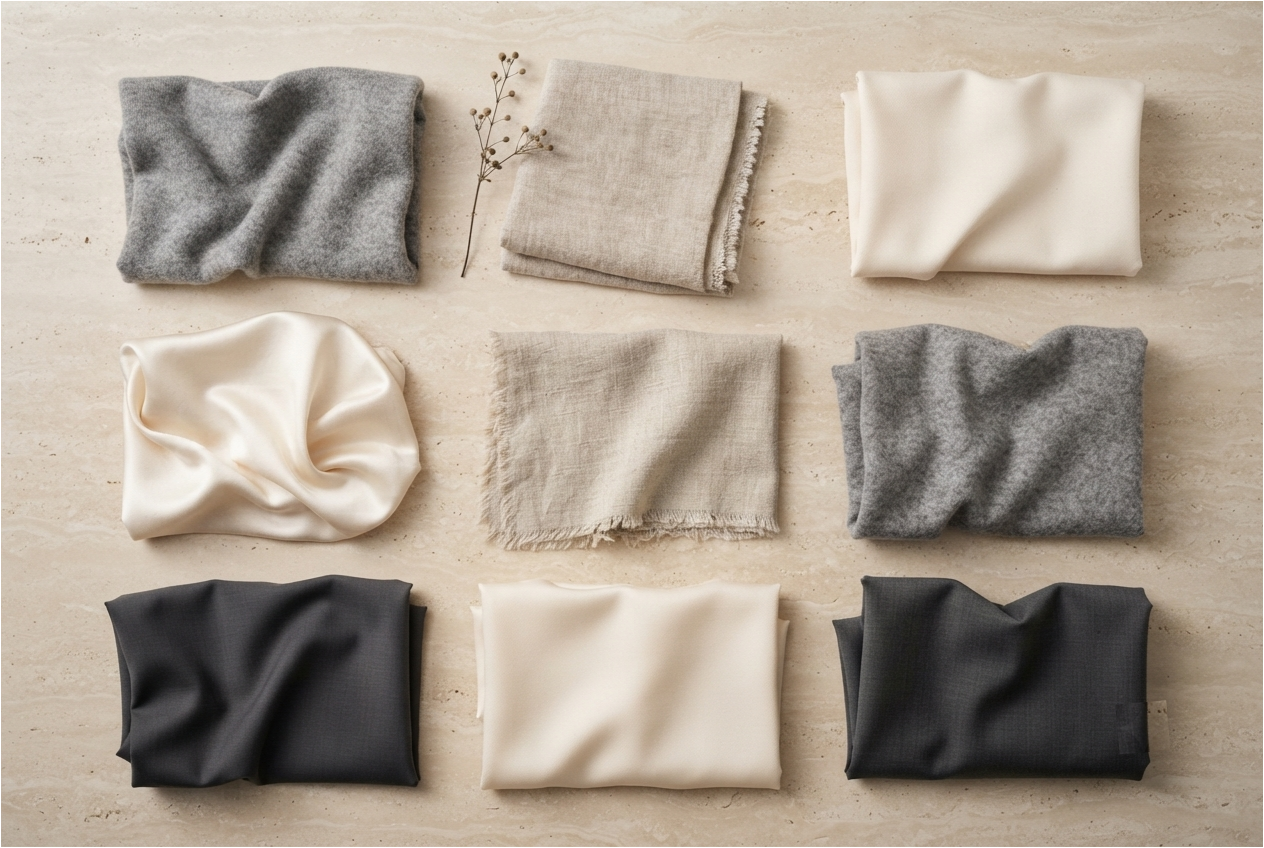 Photo: Style Rave Studios/AI-generated Visual
Why Fabric Matters More Than You Think
A great travel outfit often begins with a decision most people overlook. Before color, before fit, and certainly before accessories, fabric determines how your clothes will perform once the journey begins. Choosing the right materials can mean the difference between arriving fresh and feeling like you’ve spent the last eight hours folded into an overhead compartment.
Think about the moments that define travel. You rush to catch a train, wait on a crowded platform, sit through a chilly flight, then step into warm afternoon sunshine. Your clothing needs to respond to each change without becoming uncomfortable. That’s why experienced travelers pay close attention to what their garments are made from rather than simply how they look on a hanger.
Natural fibers continue to earn their reputation for good reason. Cotton feels soft and breathable, making it ideal for shorter trips and moderate climates. However, heavyweight cotton absorbs moisture and takes time to dry, which can become uncomfortable during humid weather or long travel days.
On the other hand, Merino wool has quietly become one of the smartest choices for frequent travelers. Unlike traditional wool, its fine fibers regulate body temperature exceptionally well. It keeps you warm in cool environments, remains breathable when temperatures rise, and naturally resists odors. That means a well-made Merino T-shirt or lightweight sweater can often be worn multiple times before needing a wash, freeing up valuable space in your luggage.
Performance Fabrics Without the Sporty Look
Technical clothing has evolved dramatically over the last decade. Fortunately, you no longer have to look like you’re climbing a mountain simply because your shirt dries quickly.
Modern performance fabrics blend natural fibers with materials such as nylon, elastane, and recycled polyester to improve stretch, wrinkle resistance, and durability. Meanwhile, advances in textile engineering have made these fabrics softer and more refined than ever, allowing them to resemble everyday menswear rather than outdoor gear.
Picture arriving at your hotel after a delayed flight. Your suitcase stays in the room, but dinner reservations begin in an hour. A wrinkle-resistant overshirt, stretch chinos, and a breathable knit polo still look polished because the fabrics recover naturally after hours of sitting. That’s not luck—it’s smart fabric selection doing exactly what it’s designed to do.
The same thinking applies to outerwear. Lightweight technical jackets offer protection against wind and light rain while packing into surprisingly small spaces. Instead of carrying a bulky coat for every possibility, you can rely on versatile layers that adapt as the forecast changes.
Choosing the right fabrics is only the first step. The real advantage comes from combining those materials into a wardrobe where every piece works across multiple outfits, climates, and occasions. That’s what allows you to travel lighter without sacrificing comfort or style.
Building a Wardrobe That Travels Well
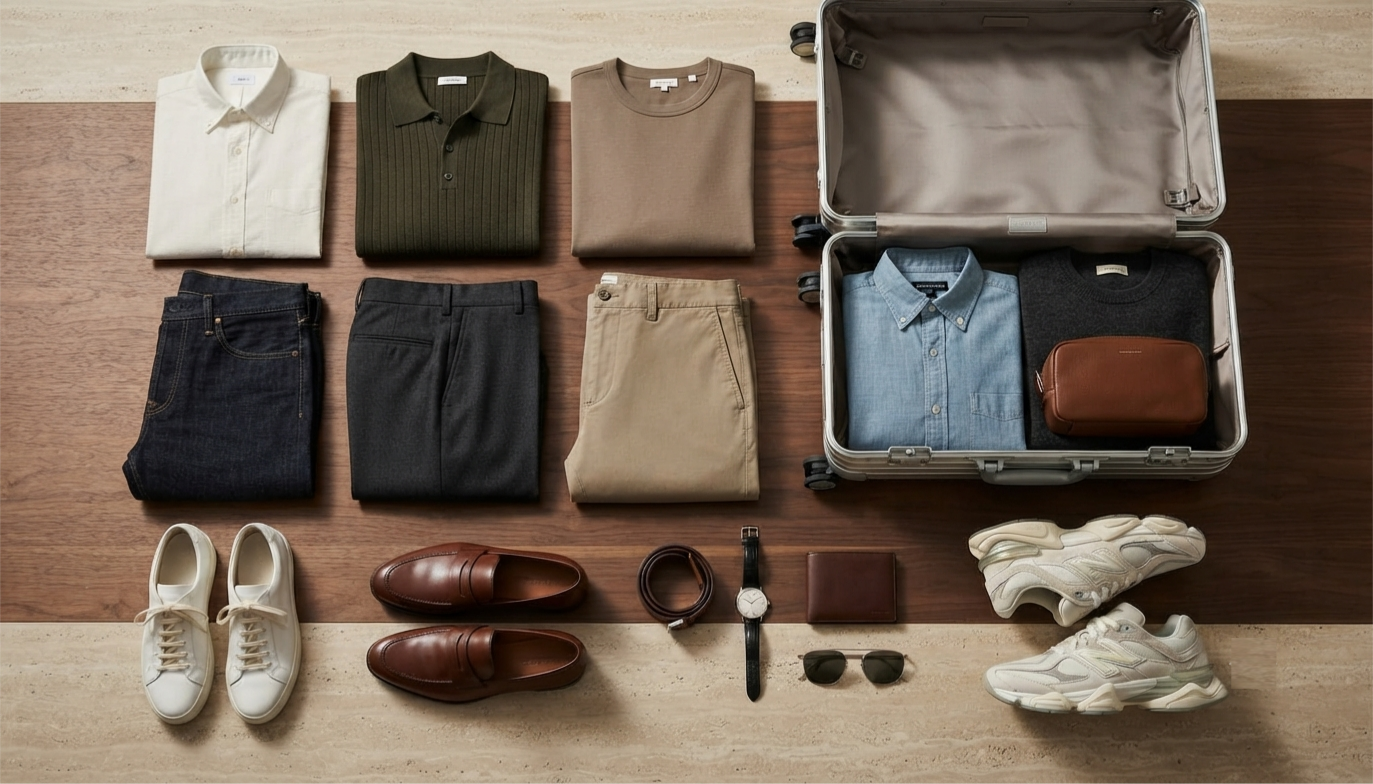 Photo: Style Rave Studios/AI-generated Visual
The strongest travel wardrobe isn’t necessarily the largest. Instead, it’s the one whose pieces work together across different situations. Fabric plays a central role in making that happen.
When selecting these foundational pieces, prioritize fabrics with the following performance qualities:
- Wrinkle resistance, which saves valuable time spent ironing after arrival.
- High breathability, which reduces physical discomfort during long days of walking.
- Quick-drying properties, which simplify washing clothes mid-journey, especially when laundry facilities are limited.
Together, these functional qualities allow you to pack less without ever feeling underprepared.
Equally important, fabric influences how clothes age throughout a journey. A quality Oxford shirt woven from long-staple cotton develops character as the day unfolds instead of looking tired. A well-constructed Merino knit maintains its shape after repeated wear. Likewise, durable twill trousers continue looking sharp despite hours spent sitting, walking, or navigating unfamiliar streets.
Good travel style isn’t built on expensive labels or overflowing suitcases. It begins with clothes engineered to move as confidently as you do. Once you’ve mastered fabric, every other wardrobe decision becomes noticeably easier, including one that many travelers underestimate until they’re standing in front of an open suitcase: color.
Building a Versatile Travel Color Palette
Open an overstuffed suitcase halfway through a trip, and you’ll usually find the same problem: plenty of clothes, yet surprisingly few complete outfits. More often than not, the issue isn’t a lack of options but a lack of coordination. Building a thoughtful travel color palette is one of the easiest ways to simplify packing while expanding what you can actually wear.
The best travel wardrobes rely on colors that naturally complement one another. Navy, charcoal, olive, stone, white, black, and varying shades of brown have remained menswear staples because they rarely compete for attention. Instead, they create a quiet foundation that allows each garment to work with several others.
Consider the 3-2-1-1 method: pack three tops, two pairs of trousers, one overshirt, and one lightweight jacket. If every piece shares a complementary color story, you’ve suddenly created multiple outfit combinations without adding extra weight to your luggage. That’s the quiet efficiency of a capsule wardrobe. It asks less of your suitcase while giving you more to wear.
Neutral doesn’t have to mean boring, either. Texture often creates more visual interest than color ever could. A ribbed knit polo, brushed cotton overshirt, or linen shirt introduces depth through the fabric itself, allowing understated colors to feel rich rather than predictable.
This approach also reduces decision fatigue. After a long flight or an early morning start, the last thing you want is to spend valuable time wondering whether your trousers match your shirt. A cohesive palette makes getting dressed almost instinctive, leaving you free to focus on the experiences ahead.
Using Accent Colors Without Overpacking
Once your foundation is established, accent colors become far more effective. They should complement your wardrobe rather than dominate it. Think of them as conversation starters rather than the entire discussion.
Earthy rust, deep burgundy, forest green, muted terracotta, or soft sky blue can inject personality without overwhelming the rest of your clothing. These shades feel timeless, photograph well in different environments, and pair effortlessly with the neutral base already sitting in your suitcase.
Your destination can also influence your choices. A coastal vacation naturally welcomes lighter shades that reflect the relaxed surroundings. Meanwhile, darker neutrals and richer tones often feel more appropriate in cooler cities or business-focused destinations. The goal isn’t to match the landscape perfectly but to ensure your wardrobe feels considered wherever your itinerary takes you.
There’s another benefit that often goes unnoticed. Coordinated colors make layering significantly easier. A navy overshirt over a white T-shirt, paired with olive chinos, looks intentional because each piece complements the others without competing for attention. Likewise, adding a camel sweater or charcoal jacket rarely disrupts the balance. Every layer feels like it belongs.
Travel also comes with countless photographs, whether planned or spontaneous. Years from now, you’ll remember the trip more vividly than the outfit. Still, wearing timeless colors helps those memories age gracefully. Loud, trend-driven combinations often date quickly, while a balanced palette remains effortlessly relevant.
Once you’ve mastered color, your wardrobe begins to work as a complete system rather than a collection of individual pieces. Yet even the most carefully coordinated outfit can miss the mark if it ignores one crucial detail. Style doesn’t exist in a vacuum. Every destination brings its own expectations, traditions, climate, and unspoken dress codes, rewarding travelers who know how to adapt without losing their sense of self.
Dressing for Your Destination
Respect Local Culture Without Losing Your Style
One of the easiest ways to elevate your travel style has nothing to do with buying new clothes. It begins with understanding where you’re going. Every destination has its own rhythm, climate, and unspoken dress code. Consequently, the most stylish traveler isn’t always the one wearing the trendiest outfit. More often than not, it’s the one who looks perfectly at ease in the environment.
Picture two travelers arriving in the same historic city. One wears athletic shorts, a sleeveless top, and flip-flops while heading straight into centuries-old churches and quiet neighborhoods. The other chooses lightweight trousers, a breathable linen shirt, and comfortable leather sneakers. Neither outfit is especially formal, yet one naturally feels more appropriate because it respects the setting without appearing overdressed.
Across much of Europe, smart casual remains the default for everyday life. In many parts of Asia, modesty and neat presentation often carry greater weight than overt displays of fashion. Meanwhile, destinations in the Middle East may require visitors to cover more skin, particularly when entering places of worship or traditional communities. Researching these expectations before departure takes only a few minutes, yet it demonstrates consideration for the people and places you’ll encounter.
Adapting doesn’t mean abandoning your personal style. It simply means expressing it thoughtfully. A well-fitted overshirt, tailored chinos, or a crisp linen shirt can feel authentic whether you’re wandering through Lisbon, exploring Kyoto, or enjoying an evening in Cape Town. Style becomes more convincing when it responds to its surroundings instead of competing with them.
Dress for the Day You Actually Have
Travel itineraries rarely unfold exactly as planned. A museum visit turns into an afternoon café stop. A walking tour stretches longer than expected. Someone recommends a rooftop restaurant for the evening, and suddenly you’re heading somewhere your original outfit never anticipated. That’s why versatility should guide every decision you make before leaving your hotel.
This is where thoughtful layering proves its worth once again. A lightweight overshirt can come off during the hottest part of the afternoon and go back on when the evening breeze arrives. Likewise, chinos transition effortlessly from sightseeing to dinner, while a knitted polo feels polished enough for both casual outings and slightly elevated settings.
It’s also worth thinking beyond the weather forecast. Cobblestone streets demand different footwear than smooth city sidewalks. Coastal humidity changes how fabrics feel against your skin. Mountain destinations can swing dramatically between warm afternoons and cool evenings. Dressing for the day you expect is sensible. Dressing for the day that might unfold is even smarter.
Experienced travelers often describe packing as preparing for possibilities rather than certainties. That mindset encourages flexibility without leading to an overstuffed suitcase. Every item should earn its place by serving more than one purpose.
Confidence Is the Best Thing You Can Wear
Every city has its own style language, but confidence translates remarkably well across all of them. It doesn’t come from chasing trends or wearing expensive labels. Instead, it comes from knowing your clothes fit well, suit the occasion, and allow you to move comfortably through unfamiliar places.
There’s a subtle difference between being well dressed and looking like you’re trying too hard. The former feels effortless because the clothing supports the experience rather than becoming the experience itself. You notice this when watching seasoned travelers. They don’t constantly adjust their jackets, worry about wrinkles, or avoid walking because their shoes are uncomfortable. They’re free to enjoy the journey because their wardrobe works with them, not against them.
That freedom is ultimately what great travel style delivers. It gives you one less thing to think about while opening you up to everything happening around you. Whether you’re navigating a bustling market, catching the last train, or accepting a spontaneous dinner invitation, your clothes quietly keep pace with the moment.
Of course, no outfit is truly complete without the right accessories. You can have the perfect jacket, impeccable trousers, and a carefully balanced color palette, but uncomfortable or unsuitable footwear will quickly undermine the entire experience. That’s why the next step in building a dependable travel wardrobe starts from the ground up.
Travel Accessories That Elevate Your Style
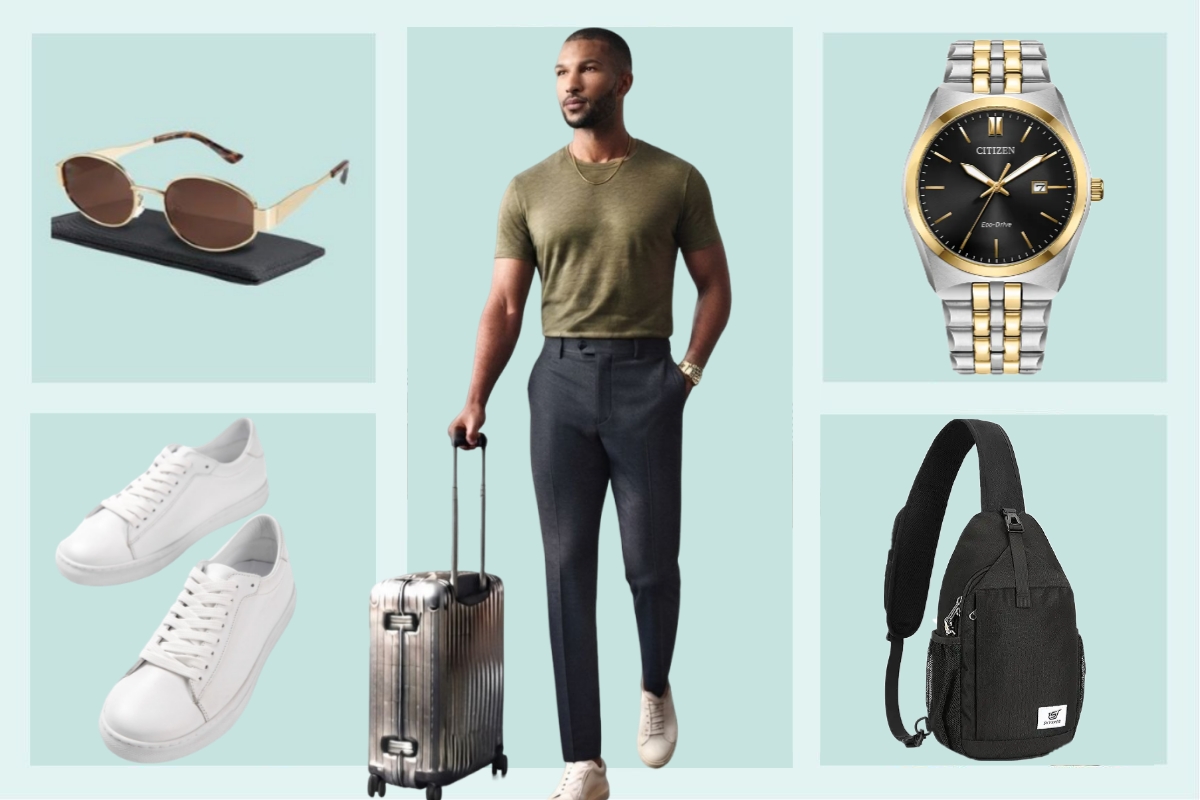 Photo: Style Rave Studios/AI-generated Visual
Less Clutter, More Confidence
Travel has a way of revealing the difference between carrying what you need and carrying what you think you might need. Every extra item adds weight, takes up space, and demands your attention. The best travel accessories do the opposite.
A well-chosen accessory should prioritize function first and style second, although the best pieces accomplish both effortlessly. That’s why editing your accessories can make your entire journey feel lighter.
- Bags: Choose clean lines, durable materials, and smart organization to keep your essentials within reach without looking overstuffed.
- Sunglasses: Opt for timeless frames that complement your face shape rather than chasing short-lived trends, ensuring they look just as good in photos years from now.
- Watches: A quality watch lets you check the time discreetly while adding personality without the constant distraction of reaching for your phone.
- Belts: Pack one versatile leather belt that works with multiple outfits instead of bringing several different options.
- Wallets: Choose a slim, compact wallet to reduce bulk, minimize clutter, and make cards or cash easier to access.
There’s also something satisfying about traveling with accessories that have already earned your trust: the headphones that comfortably survive a long-haul flight, the reusable water bottle that’s accompanied you across several countries, or the notebook that collects restaurant recommendations, train schedules, and the occasional thought worth remembering. These aren’t just possessions. Over time, they become part of your travel ritual.
Ultimately, the best accessories are the ones that simplify your day. They reduce distractions, support your routine, and complement your wardrobe without competing with it.
Once you’ve refined your wardrobe, streamlined your accessories, and polished the finishing touches, one final skill brings everything together. It’s not choosing what to wear—it’s knowing how to pack with purpose.
Packing Smarter Without Sacrificing Style
Pack with a Plan, Not for Every Possibility
Packing has a curious way of testing even the most organized traveler. The temptation to prepare for every imaginable scenario often leads to an overfilled suitcase, heavier bags, and, ironically, fewer outfit options. The smartest packers don’t focus on bringing more—they focus on bringing better.
One helpful way to approach packing is to imagine your trip unfolding one day at a time. You’ll need clothes for the flight, comfortable outfits for exploring, something polished for dinner, and perhaps a slightly dressier option if business or a special occasion appears on the itinerary. Once those moments are covered, every additional item should justify the space it occupies.
This mindset changes how you evaluate every piece of clothing. Instead of asking, “Do I like this shirt?” ask, “How many outfits can this shirt create?” A lightweight Oxford shirt worn open over a T-shirt during the day can easily be buttoned up for dinner. Likewise, the chinos you wore through the airport may feel just as appropriate at a museum, a casual restaurant, or an evening stroll through the city. When every garment serves more than one purpose, your suitcase suddenly feels much larger than it actually is.
Leave Room for the Journey to Surprise You
One of the most overlooked packing strategies has nothing to do with folding techniques or compression cubes. It’s simply leaving space.
An overpacked suitcase limits flexibility before your trip has even begun. A little extra room makes traveling noticeably easier, whether you’re bringing home local finds, carrying an extra layer after the weather changes, or simply avoiding the daily struggle of forcing everything back into place.
Packing lighter also changes the way you move. You walk through train stations more comfortably, lift your luggage with less effort, and spend less time searching for items buried beneath clothes you never end up wearing. There’s a quiet confidence that comes from knowing exactly what’s in your bag—and exactly where to find it.
That confidence reflects the broader philosophy behind great travel style. Every choice has been made with intention. Your clothes work together. Your shoes support every step. Your accessories serve a purpose. Nothing feels excessive, yet nothing essential is missing.
In many ways, packing is the final edit. It’s where good style becomes practical style, transforming a collection of thoughtfully chosen pieces into a wardrobe that’s ready for whatever the journey brings.
Once you’ve mastered that balance, there’s only one thing left to do: step through the departure gate knowing your clothes won’t define the trip—but they’ll help you experience it with greater ease, confidence, and freedom.
The Final Boarding Call
Travel has always promised more than a change of scenery. It offers the chance to see familiar things differently, discover new routines, and carry a little of every destination home with you. The clothes you wear simply support that experience. They should move easily, adapt effortlessly, and help you feel prepared for whatever the day brings, whether that’s navigating a bustling airport, wandering quiet side streets, or accepting an invitation you never expected.
The best travel style isn’t measured by designer labels, overflowing suitcases, or perfectly curated social media photos. It’s measured by confidence, versatility, and thoughtful choices that make every journey smoother. When your wardrobe fits well, your fabrics suit the climate, your shoes keep you comfortable, and your packing reflects intention rather than impulse, getting dressed becomes one less thing to think about.
Ultimately, the goal isn’t to look like a seasoned traveler—it’s to become one. Build a wardrobe that earns its passport one trip at a time, invest in pieces that improve with every journey, and let your style evolve alongside the places you explore. The destination may be the reason you booked the ticket, but the journey is where your personal style truly finds its stride.
Featured image: @thedappergents.zm/Instagram
—Read also