

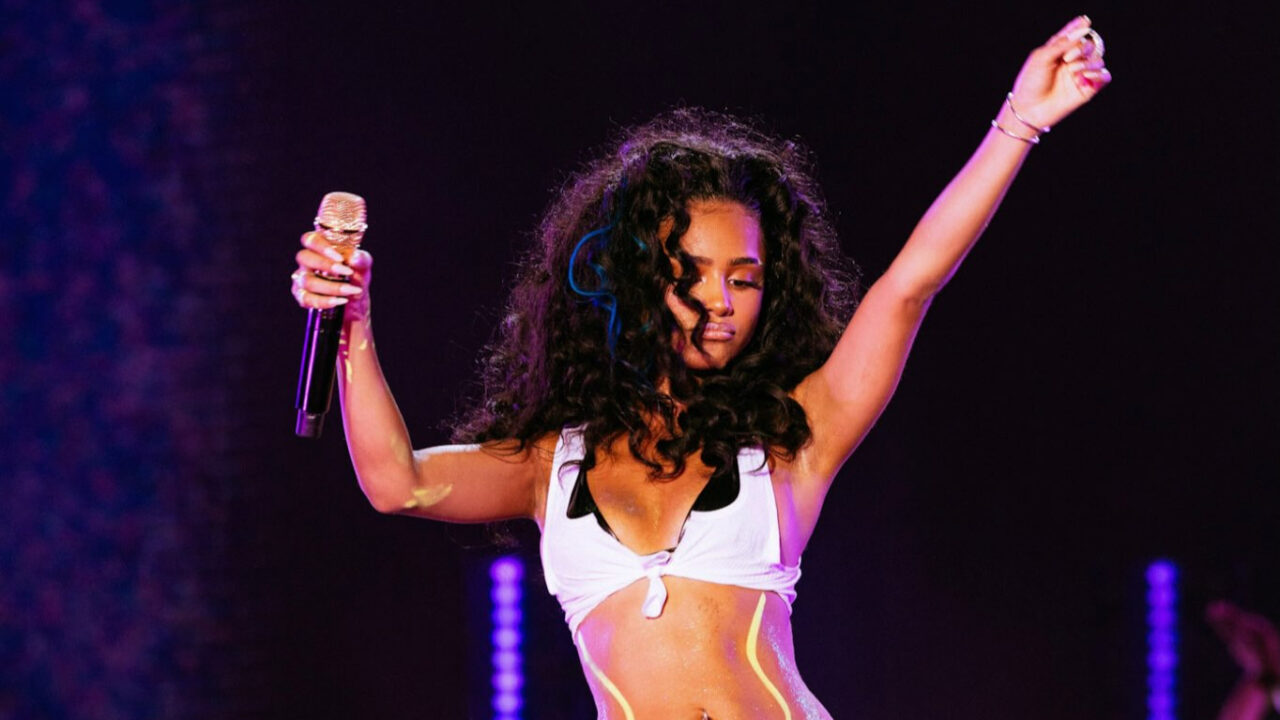

South African Grammy-winning singer Tyla has removed Lagos from her world tour schedule after mounting calls for a boycott over renewed xenophobic attacks against Nigerians in South Africa. The Lagos concert, which had been scheduled for December 22 as part of the APOP world tour, no longer appears on Tyla’s official website, although the remaining dates across Europe, North America, and South Africa remain unchanged. Neither the singer nor her management has explained why the Nigerian stop was removed.
The development comes just days after the announcement of Tyla’s world tour sparked heated debate online. While many Nigerians called for the concert to be canceled in solidarity with victims of xenophobic violence, others argued that artists should not be blamed for political or social issues beyond their control. As of Friday, concert organizers had also not issued a statement confirming whether the Lagos show had been canceled, postponed, or removed for logistical reasons.
Lagos Stop Removed Without Explanation
TYLA’s Team has now removed Lagos, Nigeria from the “A*POP” Tour pic.twitter.com/9mcRAGsumR
— keepingupwithTYLA (@Tyla_Tygrs) July 30, 2026
When Tyla announced the APOP world tour earlier this week, Lagos was listed as the only Nigerian stop before the tour concluded with performances in Cape Town on January 4 and Johannesburg on January 9.
However, checks of the singer’s official website on Friday showed that the December 22 Lagos date had disappeared from the itinerary. Every other previously announced show remained on the schedule, making the omission particularly noticeable.
Neither Tyla’s representatives nor the concert promoters have publicly addressed the change. The absence of an official explanation has fueled speculation. . However, there is no confirmation that the removal was directly linked to the backlash surrounding the concert announcement.
Boycott Calls Grew Across Nigerian Social Media
Nigerians are reacting with anger to the news about South African singer Tyla wanting to perform in Lagos on December 22, 2026. With a wave of social media users calling for the show to be boycotted outright as the country reels from a fresh surge of xenophobic violence against… pic.twitter.com/GsEegj4yd3
— OloriSuperGal (@OloriSupergal) July 30, 2026
The announcement of the Lagos concert immediately divided opinion online.
Many Nigerians argued that hosting a South African artist while reports of xenophobic attacks continued in South Africa would send the wrong message. Several users called for a boycott, insisting that solidarity with Nigerians allegedly facing attacks abroad should take priority over entertainment.
Others, however, rejected that position, arguing that musicians should not be held responsible for government policies or criminal acts committed by individuals. Supporters of the singer said cultural exchanges should continue despite diplomatic tensions between the two countries.
The debate quickly spread across X, Facebook, Instagram, and other social media platforms, becoming one of the week’s biggest entertainment stories in Nigeria.
VeryDarkMan Threatened to Stop the Concert
TYLA SHOW WILL NOT BE HAPPENING IN
NIGERIA 🇳🇬~ Verydarkman sends message to the show organizers and show promoters pic.twitter.com/EQi07OEESy
— Nigeria Stories (@NigeriaStories) July 30, 2026
The controversy intensified after activist Martins Otse, popularly known as VeryDarkMan (VDM), publicly declared that the Lagos concert would not be allowed to take place.
In posts shared on Facebook and X, the activist said members of his “Ratel Movement” would mobilize against the event if organizers proceeded with the concert.
He argued that Nigerians should not support a South African performer while fellow Africans, including Nigerians, were allegedly facing xenophobic attacks in South Africa. He also referenced the legal challenges involving Chidimma Adetshina and broader concerns about the treatment of Nigerians living in the country.
VeryDarkMan maintained that allowing the show to proceed would ignore the suffering of victims and called on promoters to cancel the event.
Although there was no indication that authorities were involved, his comments significantly increased public attention surrounding the concert.
Sowore Opposed Holding Tyla Responsible
Sowore says Nigerians should target political leaders over xenophobia, insisting Tyla should not be blamed and her Lagos concert should proceed. https://t.co/3B3QtlXEEU pic.twitter.com/LOH1vocPLJ
— ARISE NEWS (@ARISEtv) July 29, 2026
Not everyone agreed with the boycott campaign.
African Action Congress (AAC) leader Omoyele Sowore publicly argued that Tyla should not be blamed for acts of xenophobia committed by others.
Writing on X, Sowore said Nigerians should direct their anger toward those responsible for the attacks rather than a musician. He maintained that no artist should be held vicariously liable for political or social violence and insisted that Tyla’s Lagos concert should have gone ahead.
His comments reflected the broader divide among Nigerians, with some supporting the boycott while others believed canceling concerts would do little to solve the underlying issues fueling anti-immigrant violence.
Xenophobic Attacks Continue to Strain Relations
Heartbreaking video of Nigerian evacuee, Richard Itoro, sharing how he fled South Africa without his wife and children due to Xenophobic tensions despite having legal documents to live and work in the country. pic.twitter.com/HSXj4kjAF3
— Pulse Nigeria (@PulseNigeria247) July 30, 2026
The controversy surrounding the removed Lagos concert comes against the backdrop of renewed diplomatic tensions between Nigeria and South Africa.
Recent reports of attacks targeting foreign nationals, including Nigerians, have once again drawn criticism from Nigerian officials and citizens. The alleged killing of Nigerian national Chika Ibe in Cape Town has further intensified concerns, while reports indicate that hundreds of Nigerians have returned home amid fears for their safety.
South Africa has experienced repeated waves of anti-immigrant violence over the years, with migrants often blamed for unemployment, crime, and pressure on public services. Analysts, however, have argued that immigrants are frequently used as scapegoats for broader economic and governance challenges.
The recurring incidents have periodically strained relations between Africa’s two largest economies, prompting diplomatic discussions and renewed calls for stronger protections for foreign nationals.
Fans Await an Official Statement
For now, questions remain unanswered.
Neither Tyla nor her management has confirmed whether the Lagos show was canceled, postponed, or simply removed from the world tour schedule for reasons unrelated to the backlash. Concert promoters have also remained silent, leaving fans without clarity on whether the performance could eventually be reinstated.
Until an official explanation is provided, the disappearance of Lagos from Tyla’s world tour is likely to remain the subject of speculation. What is clear, however, is that the controversy has become a reminder of how entertainment, diplomacy, and public sentiment can quickly intersect, especially when regional tensions are already running high.
Featured image: @tyla/Instagram
—Read Also